
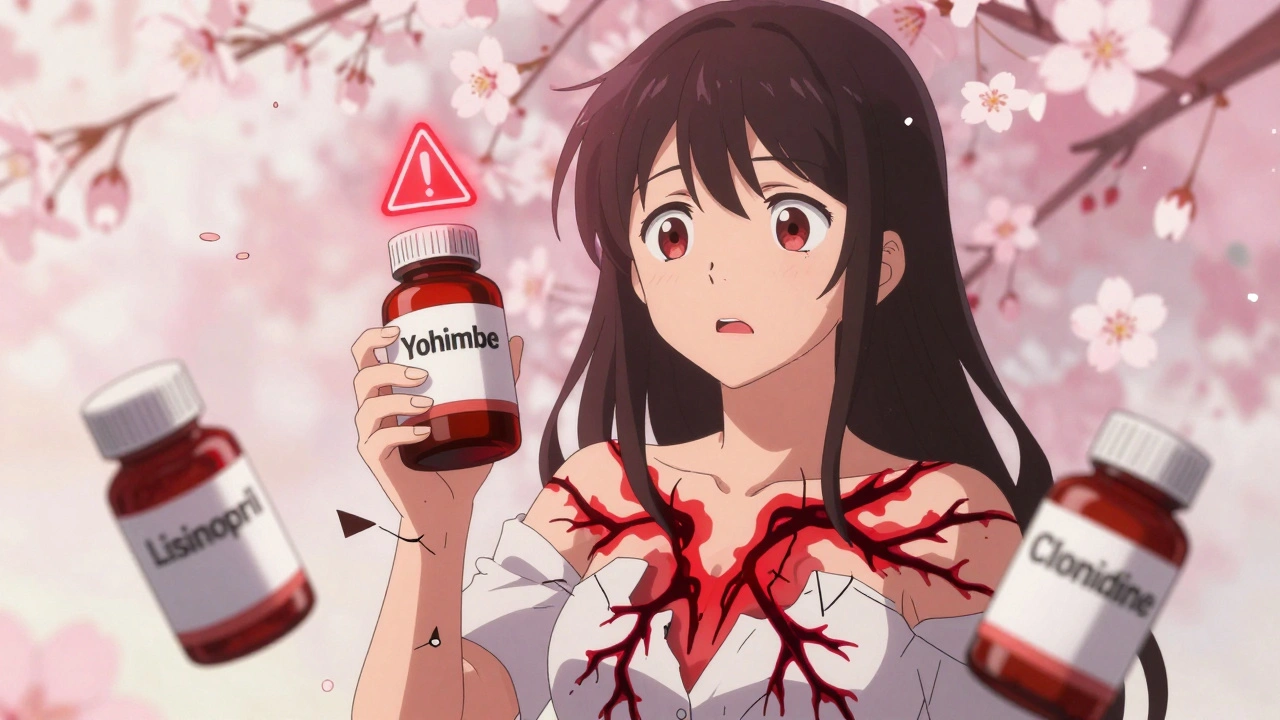
Blood Pressure Impact Calculator
Yohimbe Interaction Calculator
See how yohimbe can affect your blood pressure. This tool uses scientific data from the article to estimate potential risks.
Estimated Blood Pressure Impact
If you're taking medication for high blood pressure, yohimbe could be more dangerous than you think. It’s sold as a natural supplement for weight loss, energy, or sexual performance-but what’s natural isn’t always safe. For people with hypertension or heart conditions, mixing yohimbe with blood pressure meds can trigger a medical emergency. This isn’t speculation. It’s documented in hospital records, poison control data, and FDA warnings.
What Exactly Is Yohimbe?
Yohimbe comes from the bark of a tree in West Africa. Its main active ingredient, yohimbine, was first isolated in 1896. In 1989, the FDA approved a purified form called Yocon for erectile dysfunction. But today, it’s rarely used in medicine. Instead, yohimbe bark extract is sold as a supplement-often in capsules or powders-marketed for fat burning, stamina, or libido.
Here’s the problem: these supplements don’t contain consistent amounts of yohimbine. A 2015 study tested 49 U.S. brands and found yohimbine levels ranged from undetectable to over 6 mg per serving. Some products didn’t even contain real yohimbe-they used synthetic versions. That means you might take what’s labeled as a 5 mg dose and end up with 15 mg, or none at all. There’s no way to know what you’re actually getting.
How Yohimbe Affects Your Blood Pressure
Yohimbine blocks alpha-2 receptors in your nervous system. These receptors normally act like brakes on norepinephrine, a chemical that raises your heart rate and blood pressure. When yohimbine disables those brakes, norepinephrine surges. Your heart pounds. Your arteries tighten. Blood pressure spikes.
That spike isn’t mild. Studies show yohimbine can raise systolic blood pressure by 20 to 30 mmHg in sensitive individuals. For someone already on medication to keep their BP under control, that’s like slamming the gas pedal while someone else is trying to brake.
The effects kick in fast-peak levels hit your bloodstream within an hour. And they don’t last long. But even a single dose can be enough to trigger a crisis.
Why It’s Deadly With Blood Pressure Medications
Yohimbe doesn’t just add risk-it actively cancels out the effects of common blood pressure drugs.
Take clonidine (Catapres), a medication that lowers blood pressure by stimulating alpha-2 receptors. Yohimbine blocks those same receptors. The result? A dangerous tug-of-war. Clinical reports show blood pressure can jump 30 to 50 mmHg when these two are combined.
The same thing happens with guanfacine and guanabenz. Even ACE inhibitors like lisinopril, beta-blockers like metoprolol, and calcium channel blockers like amlodipine don’t stand a chance. Yohimbine overrides their mechanisms by flooding your system with norepinephrine.
It’s not just about high blood pressure, either. Some people experience a sudden drop in BP after the initial spike, leading to dizziness, fainting, or even falls. That’s because yohimbine can also affect other receptors unpredictably.
Real Cases, Real Consequences
The data isn’t theoretical. From 2000 to 2007, the California Poison Control System recorded 78% of yohimbe-related calls required medical intervention-far higher than for other supplements. Sixty-seven percent of those cases involved a heart rate over 100 bpm. Fifty-eight percent had dangerously high blood pressure.
One Reddit user shared how, after taking yohimbe while on lisinopril, their systolic pressure hit 210 mmHg. They ended up in the ER. Another user on WebMD wrote: “I felt like my chest was going to explode.” Out of 214 reviews from people with hypertension, 87% reported negative cardiovascular effects.
In 2021, the FDA issued a public warning after collecting 127 reports of cardiovascular complications linked to yohimbe. Nineteen of those cases required hospitalization for hypertensive crisis. In 2023, the FDA recalled 17 brands after finding doses as high as 28.7 mg per capsule-nearly six times the labeled amount.

Who’s at Highest Risk?
You don’t have to be elderly or severely hypertensive to be in danger. The average age of people hospitalized for yohimbe reactions is 37. Many are otherwise healthy men using it for weight loss or performance enhancement.
But the risk multiplies if you:
- Take any blood pressure medication (even if it’s “just one”)
- Have heart disease, kidney disease, or liver problems
- Use antidepressants like amitriptyline, venlafaxine, or duloxetine
- Take stimulants like caffeine, ephedrine, or clenbuterol (some fat burners contain these)
Combining yohimbe with norepinephrine reuptake inhibitors (SNRIs or tricyclics) can cause blood pressure to soar above 180 mmHg-enough to cause stroke or heart attack. A 2022 study documented 17 such cases requiring emergency treatment.
What the Experts Say
The American Heart Association rates yohimbe as “high risk” for hypertensive emergencies. The Memorial Sloan Kettering Cancer Center says bluntly: “Do not use if you have high blood pressure.”
Dr. David Kiefer, an integrative medicine expert, called yohimbe “one of the most dangerous herbal supplements for patients with hypertension.” Why? Because of the unpredictable dosing and the fact that it interacts with nearly every class of blood pressure drug.
The American College of Cardiology now recommends doctors specifically ask patients about yohimbe use during medication reviews-especially if their blood pressure won’t stay under control despite treatment.
Regulatory Actions and Market Trends
Yohimbe is banned in Canada, Australia, and across the European Union. In the U.S., it’s still sold-but under increasing scrutiny. The FDA lists it as a “high-risk supplement” in its 2023-2025 enforcement plan. Draft guidelines now propose mandatory warning labels: “WARNING: May cause dangerous increases in blood pressure, especially when taken with blood pressure medications. Not for use by persons with heart disease or hypertension.”
Despite the risks, the U.S. market for yohimbe supplements hit $38.7 million in 2021. Most are sold as “male enhancement” or “fat burner” products. ConsumerLab’s 2022 testing found 68% of brands mislabeled their yohimbine content-some under-labeling by 200%, others over-labeling by 400%.
Pharmacists are seeing more interactions. A 2022 survey found 89% of community pharmacists had identified at least one yohimbe-blood pressure interaction in the past year. Nearly a third of those cases led to emergency care.
What Should You Do?
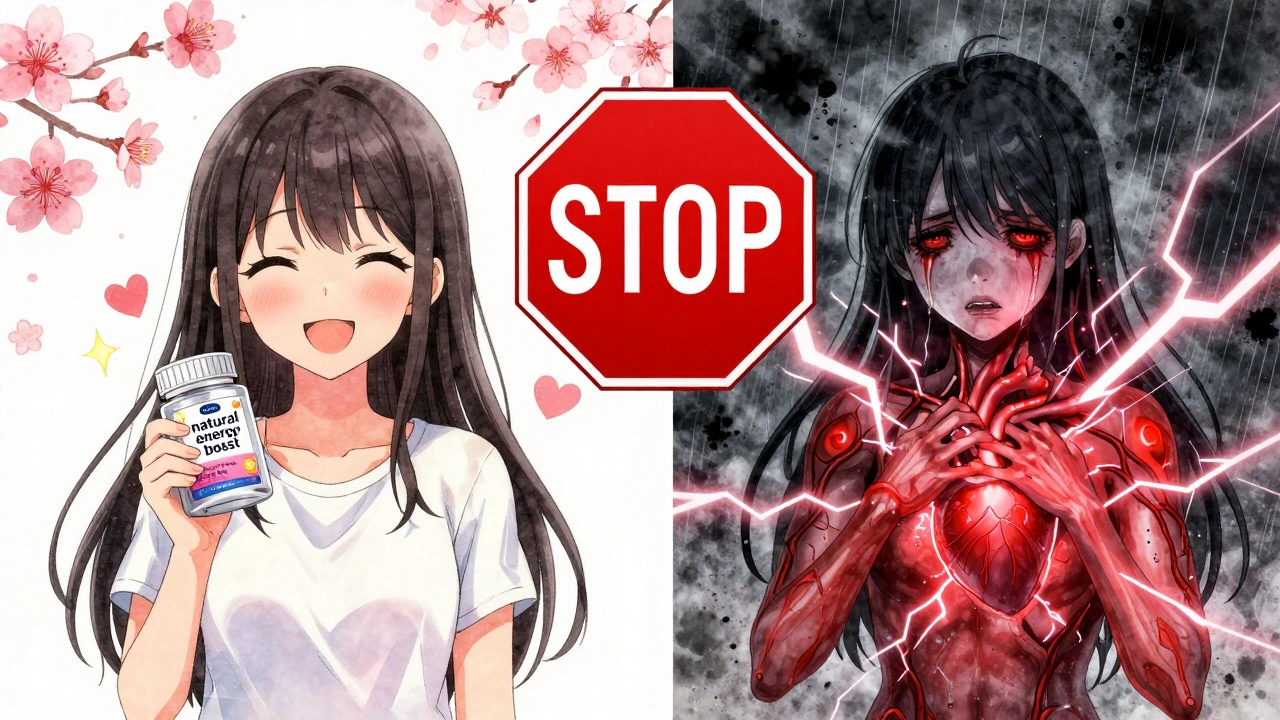
If you’re taking any blood pressure medication-whether it’s a beta-blocker, diuretic, ACE inhibitor, or anything else-avoid yohimbe completely. No exceptions. Not even “just once.”
Check every supplement label. Look for “yohimbe,” “yohimbine,” or “Pausinystalia yohimbe.” If you’re unsure, don’t take it. Many weight loss and energy supplements contain hidden yohimbe. Even products labeled as “natural” or “herbal” can be dangerous.
If you’ve already taken yohimbe while on blood pressure meds, monitor yourself. Watch for:
- Severe headache
- Chest pain or tightness
- Rapid or irregular heartbeat
- Dizziness or blurred vision
- Nausea or sweating
If you experience any of these, seek medical help immediately. Don’t wait. A hypertensive crisis can strike fast-and it’s life-threatening.
There are safer alternatives for weight loss, energy, or sexual health. Talk to your doctor. Don’t risk your heart for a supplement that’s poorly regulated, inconsistently dosed, and proven to cause harm.
Frequently Asked Questions
Can I take yohimbe if I have slightly elevated blood pressure but am not on medication?
No. Even if you’re not on medication, yohimbe can push your blood pressure into dangerous territory. Studies show it can raise systolic pressure by 20-30 mmHg. If you already have elevated BP, that increase could put you at risk for stroke, heart attack, or kidney damage. The American Heart Association advises against yohimbe use for anyone with hypertension or cardiovascular risk factors-even if they’re not yet on drugs.
Is there a safe dose of yohimbe for people with high blood pressure?
There is no safe dose. Because supplement labels are often inaccurate and yohimbine’s effects vary by individual, even a 5 mg dose-what’s considered “standard”-can trigger a hypertensive crisis. The Mayo Clinic and Memorial Sloan Kettering both state that yohimbe is contraindicated for anyone with hypertension. The risk isn’t about dosage-it’s about the drug’s mechanism. It directly opposes how blood pressure medications work.
What if I took yohimbe once and felt fine? Is it safe to try again?
Feeling fine once doesn’t mean it’s safe. Yohimbine’s effects depend on your current physiology, what else you’ve taken, your hydration level, and even your genetics. One day you might have a mild reaction. The next, with the same dose, you could have a life-threatening spike. The California Poison Control System found that 78% of cases required medical care-even in people who thought they’d handled it before.
Can I take yohimbe if I stop my blood pressure meds for a few days?
Never stop your blood pressure medication without your doctor’s guidance. Stopping suddenly can cause rebound hypertension, which is dangerous on its own. Adding yohimbe on top of that creates a double risk. Even if you think you’ve “cleared” the meds from your system, your body’s sensitivity to norepinephrine remains elevated. This combination is never safe.
Are there any supplements that are safer alternatives to yohimbe?
Yes. For energy, try regular exercise, adequate sleep, and balanced meals. For weight loss, focus on diet and movement-no supplement replaces that. For sexual health, talk to your doctor about FDA-approved options like sildenafil or tadalafil. If you’re looking for natural support, L-arginine or pomegranate extract have been studied for circulation benefits without the same risks. Always check with your provider before starting any new supplement, especially if you have heart or blood pressure concerns.
Next Steps
If you’re currently taking yohimbe and blood pressure medication, stop immediately. Don’t wait for symptoms. Contact your doctor or pharmacist to discuss a safe plan. If you’ve experienced dizziness, chest pain, or a racing heart after taking it, seek medical attention now.
If you’re considering yohimbe for weight loss or performance, pause. The risks far outweigh any unproven benefits. The supplement industry doesn’t regulate these products like drugs. You’re gambling with your heart.
Your blood pressure matters. Your heart matters. Don’t let a misleading label or a bold marketing claim put either at risk.
Yohimbe is just another scam the supplement industry sells to guys who think they’re too cool for pharma. The data’s clear - it’s a crapshoot with your BP. Why risk it for a fake libido boost? Just get a prescription if you need it.
One must interrogate the epistemological foundations of ‘natural’ as a moral category. The bark of Pausinystalia yohimbe, harvested by indigenous laborers under colonial extractive regimes, is then commodified into a psychoactive compound marketed as ‘libido enhancement’ - a neoliberal fantasy of bodily autonomy masking structural violence. The FDA’s warnings are merely bureaucratic appeasement; the real crisis is ontological: we have normalized risk as consumer choice.
People are dying because they think ‘natural’ means ‘safe.’ This isn’t just negligence - it’s criminal. Yohimbe supplements are unregulated poison disguised as wellness. If you’re dumb enough to take this while on blood pressure meds, you deserve what happens to you. Stop being a guinea pig for snake oil merchants.
USA got the best meds in the world, but we let some Indian guy sell yohimbe powder in a baggie with a sticker that says ‘ancient wisdom.’ This is why America’s falling apart. 🇺🇸
Thank you for posting this. I’ve seen too many friends take these ‘miracle’ supplements and then end up in the ER. I wish more people knew how dangerous this stuff is. Your post could save a life.
I’m a pharmacist. I’ve counseled 12 patients this year alone who didn’t realize their ‘fat burner’ had yohimbe. One guy had a systolic of 220 and thought it was just ‘caffeine jitters.’ It’s not. It’s a medical emergency. Always check the full ingredient list - even if it’s on the back in tiny font. And if you’re on BP meds? Just say no.
From a clinical pharmacology standpoint, the alpha-2 adrenergic antagonism induced by yohimbine creates a catecholamine cascade that directly antagonizes the pharmacodynamic targets of most antihypertensives. The risk-benefit ratio is catastrophically skewed. No legitimate healthcare provider would endorse this outside a controlled trial. Period.
Perhaps the real issue isn't yohimbe - it's our addiction to biohacking. We want to optimize everything: sleep, libido, fat loss. But biology isn't a software update. You can't patch your nervous system with a capsule from a website that looks like it was built in 2005. 🤔
India has been using yohimbe for centuries in Ayurveda for vitality and strength. Why do Westerners always assume their science is better? You ban it because you don't understand it. Maybe your body just needs to learn balance. The truth is hidden in tradition not lab reports
I took it once. Felt fine. So I took it again. Then I felt like my heart was trying to escape my chest. Ended up in the ER. Don’t be me.
So what you're saying is if I buy a supplement that says 'natural energy booster' and it has yohimbe, I'm basically playing Russian roulette with my heart? Cool. I'll just stick to coffee then. 😏
Yohimbe is just the tip of the iceberg. The FDA doesn’t regulate supplements because they’re in bed with Big Supplement. The same companies that sell yohimbe also fund ‘natural health’ influencers. You think this is about safety? Nah. It’s about profit. They want you addicted to pills that don’t work but cost $60 a bottle. Wake up. The system is rigged.
This is exactly why I stopped trusting American medicine. You all treat herbs like toxins, but in Africa, where yohimbe comes from, we use it with respect - in rituals, with guidance, with intention. You turn sacred plants into Walmart snacks and then panic when they hurt you. It’s not the herb. It’s your ignorance.