
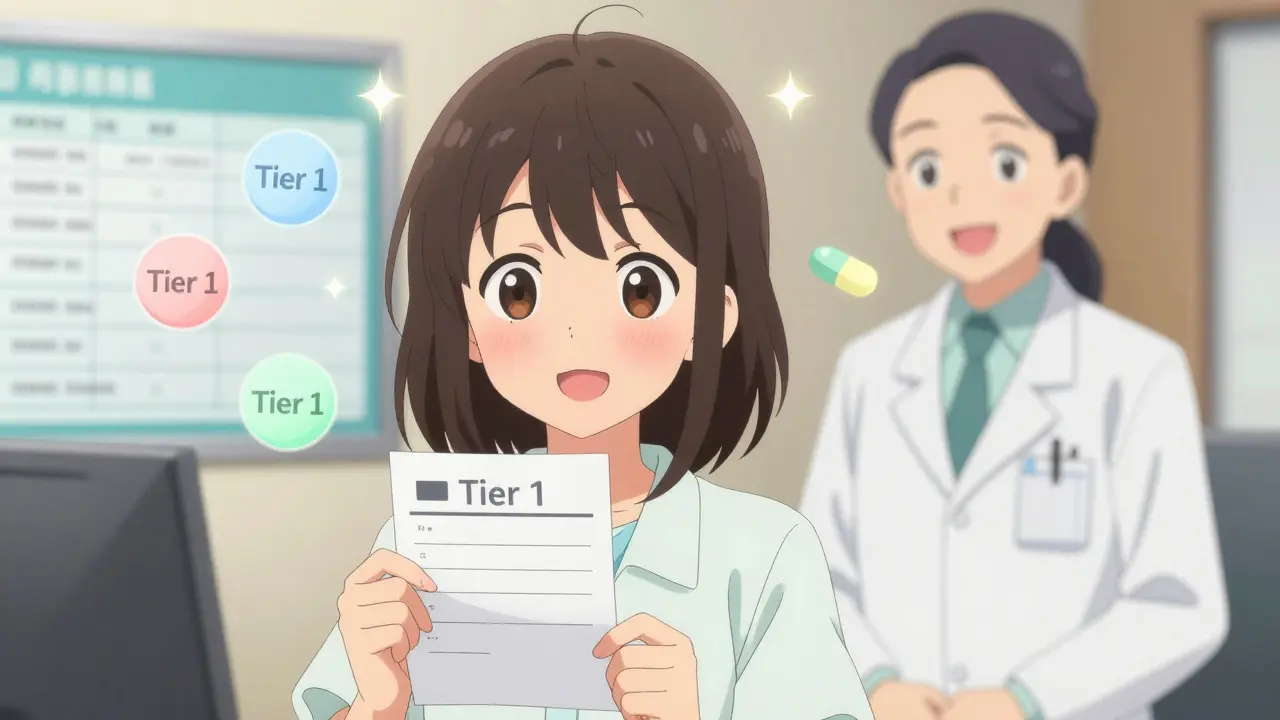
When you pick up a prescription, you might not realize the system behind it is carefully engineered to save money - not just for your insurer, but for you too. That little slip of paper listing your meds? It’s not random. It’s the result of a complex, data-driven decision made by insurance companies using something called a preferred generic list. These lists aren’t just about cutting costs. They’re about steering you toward medications that work just as well but cost a fraction of the price.
How Preferred Generic Lists Work
Insurance companies don’t just cover any drug that’s FDA-approved. They organize prescriptions into tiers - like levels in a pricing game. Tier 1 is where you’ll find preferred generics. These are the cheapest options, often with a $5 to $15 copay for a 30-day supply. Tier 2 might include brand-name drugs or higher-cost generics. Tier 3 is for non-preferred brands, with copays that can hit $50 to $100. And Tier 4? That’s where specialty drugs live - biologics, cancer treatments, rare disease meds - often costing hundreds or even thousands per month.This structure isn’t arbitrary. It’s built by teams of doctors and pharmacists who review every drug for safety, effectiveness, and price. The goal? Make sure you get the right treatment without paying more than you need to. And it works. According to the FDA, generic drugs cost 80% to 85% less than their brand-name versions. When six or more generic versions of a drug are on the market, prices can drop by up to 95%.
Why Insurers Push Generics - And Why It Matters to You
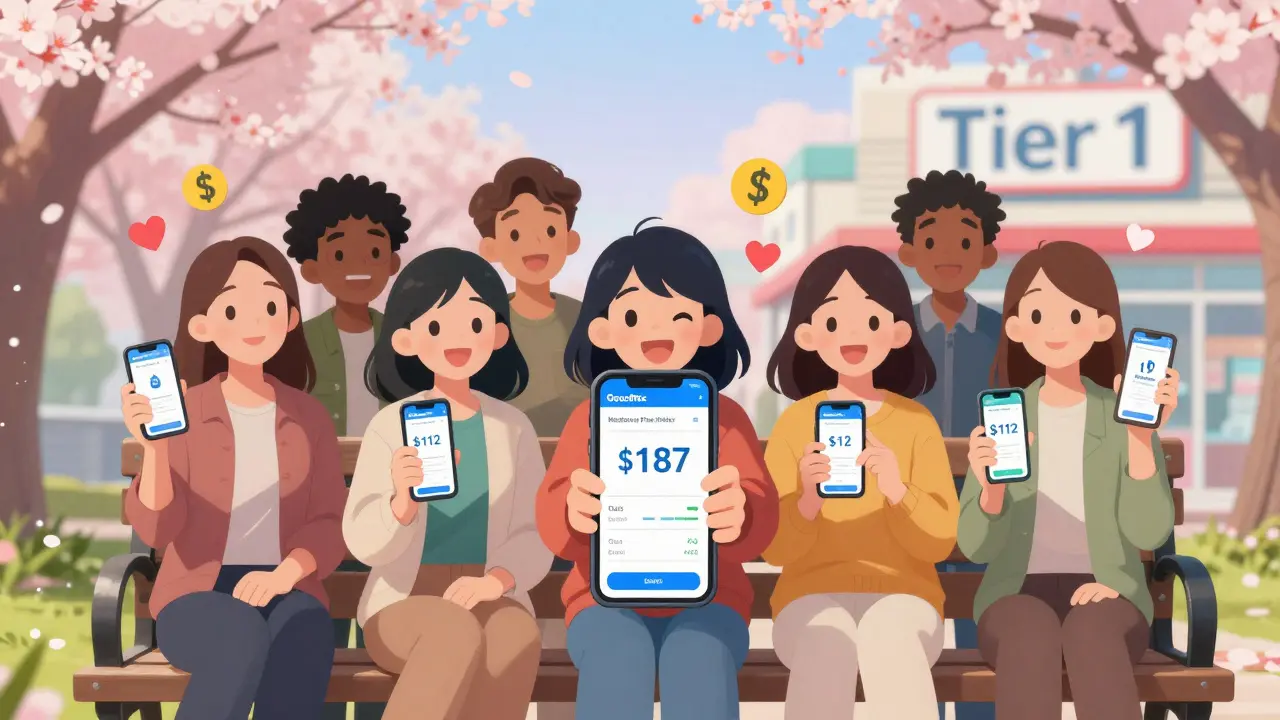
It’s simple math. In 2023, generics made up 90% of all prescriptions filled in the U.S. But they accounted for only 23% of total drug spending. That’s because insurers know that if you can take a generic version of a blood pressure pill, a cholesterol med, or even thyroid hormone, you’re saving them - and yourself - hundreds of dollars a year.Take levothyroxine, a common thyroid medication. One user on Reddit reported paying $187 a month for the brand name. After switching to the generic, the cost dropped to $12. That’s a 93% savings. And that’s not rare. GoodRx’s 2023 survey of 15,000 patients found 76% of people saved money using preferred generics.
But here’s the catch: insurers don’t just want you to use generics. They want you to use the preferred ones. Why? Because they’ve negotiated direct deals with manufacturers. These deals lock in lower prices, and those savings get passed down - sometimes as lower copays, sometimes as higher coverage.
The Hidden Trade-Offs: When Generics Don’t Work as Well
For most drugs, generics are identical in effect. The FDA requires them to match brand-name drugs within 80% to 125% of the same pharmacokinetic profile - meaning they absorb into your body the same way. In fact, 98.5% of generic approvals meet this standard.But not all drugs are created equal. Take warfarin, a blood thinner. A 2022 study by the American College of Clinical Pharmacy found that 23% of doctors avoid switching patients to generic warfarin because even tiny differences in how the drug behaves can lead to dangerous clots or bleeding. For these narrow-therapeutic-index drugs, stability matters more than savings.
Then there’s the biosimilar problem. Biosimilars are the generic version of biologic drugs - things like Humira, Enbrel, or insulin. They’re cheaper, but they don’t come with co-pay cards. Brand-name biologics often offer patient assistance programs that can reduce your out-of-pocket cost to $0. Biosimilars? No such luck. One patient reported paying $1,200 for Humira versus $850 for Amjevita (the biosimilar), but after losing the manufacturer’s co-pay card, their actual cost went up.
What Happens When Your Doctor Says ‘No’ to the Generic
Doctors aren’t just passive players in this system. They can fight back. If your doctor believes a brand-name drug is necessary - maybe because of allergies, side effects, or a history of treatment failure - they can file a prior authorization request. This is a formal appeal asking the insurer to cover the non-preferred drug.And it works more often than you think. Kaiser Family Foundation data from 2023 shows 68% of these appeals are approved when supported by proper medical documentation. But here’s the problem: the process takes time. The American Medical Association found that 42% of physicians report delays in treatment because patients have to fail on a preferred generic before getting the drug they need. That’s called step therapy - and it’s a major pain point.
How to Navigate the System (And Save Money)
You don’t have to be a passive participant. Here’s how to take control:- Check your plan’s formulary during open enrollment. Every year, insurers change which drugs are preferred. A drug that was Tier 1 last year might be Tier 3 this year.
- Ask your pharmacist if automatic substitution is allowed. In 89% of states, pharmacists can swap a brand for a generic unless the doctor writes “dispense as written.”
- Use tools like GoodRx or Medicare’s Plan Finder. These show real-time prices and tier placements. Medicare’s tool scores 4.2 out of 5 for usability - most commercial plans score under 3.
- Request a formulary exception if your drug isn’t covered. You’ll need a letter from your doctor explaining why the generic won’t work.
- Don’t assume your co-pay is the full cost. Some plans use coinsurance, meaning you pay a percentage of the drug’s price. A $500 brand-name drug with 30% coinsurance costs you $150 - way more than a $15 generic.
People who spend just 45 minutes a year reviewing their formulary save an average of 32% on medication costs - that’s over $400 per year per drug, according to CMS data.
The Bigger Picture: Why This System Exists
The U.S. spends more on prescription drugs than any other country. In 2023, PBMs (Pharmacy Benefit Managers) processed 5.8 billion prescriptions - 89% of them generics. The top three PBMs - CVS Health, Cigna’s Evernorth, and UnitedHealth’s OptumRx - control nearly 80% of the market. That kind of concentration gives them massive leverage to negotiate prices.Insurers use preferred lists because they have to. Drug prices in the U.S. are among the highest in the world. Without these lists, premiums would climb even faster. The system isn’t perfect, but it’s designed to keep healthcare affordable for millions.
And change is coming. Starting in 2025, Medicare will require all Part D plans to place biosimilars in the same tier as the original biologic drugs. That’s expected to boost biosimilar use from 15% to 45%. The Inflation Reduction Act also caps out-of-pocket drug costs at $2,000 per year by 2025 - which will push even more people toward generics.
But there’s a dark side. Some PBMs now use “accumulator adjuster” programs - which means the money you pay for a biosimilar doesn’t count toward your out-of-pocket maximum. So even if you’re spending hundreds on a cheaper drug, you’re not getting closer to your cap. That’s a loophole that’s quietly undermining the whole system.
Final Thoughts: It’s Not About Choice - It’s About Smart Savings
Insurers don’t prefer generics because they hate brand-name drugs. They prefer them because they work. And because they’re cheaper. For 90% of prescriptions, that’s a win-win. You get the same result, and your wallet stays full.The real issue isn’t the list. It’s the lack of transparency. Most people don’t know their plan’s formulary tiers. Medicare’s 2023 survey found 58% of enrollees couldn’t name which tier their meds were on. That’s why so many get hit with surprise bills.
Knowledge is power. Know your tier. Ask your pharmacist. Challenge a denial if it’s wrong. And remember: the cheapest option isn’t always the best - but it’s almost always good enough.
What is a preferred generic list?
A preferred generic list is a tiered drug list used by health insurers to encourage the use of lower-cost, FDA-approved generic medications. These lists group drugs into tiers based on price and effectiveness, with preferred generics in Tier 1 - the lowest-cost option for patients. Insurers negotiate directly with manufacturers to secure the best prices, and those savings are passed on through lower copays.
Why do insurers put generics in Tier 1?
Insurers put generics in Tier 1 because they’re therapeutically equivalent to brand-name drugs but cost 80-85% less. With multiple generic manufacturers competing, prices can drop even further - up to 95% in some cases. Placing them in Tier 1 encourages patients to choose these cheaper options, reducing overall drug spending for both the insurer and the patient.
Can my doctor override the preferred generic list?
Yes. If your doctor believes a brand-name drug is medically necessary - due to allergies, side effects, or treatment history - they can submit a prior authorization request. Insurers approve these appeals in about 68% of cases when supported by strong clinical documentation. Some states also allow doctors to write “dispense as written” on prescriptions to block automatic generic substitution.
Are all generics the same?
For most medications, yes. The FDA requires generics to match brand-name drugs in strength, dosage, and how they’re absorbed by the body. But for drugs with narrow therapeutic indexes - like warfarin, lithium, or levothyroxine - even small differences can matter. Some doctors prefer to stick with one brand or generic to avoid fluctuations in how the drug works.
Why are biosimilars harder to switch to than regular generics?
Biosimilars are cheaper versions of complex biologic drugs, but unlike regular generics, they don’t come with co-pay assistance programs from manufacturers. Brand-name biologics often offer $0 co-pays through patient support programs. Biosimilars don’t, so even if the list price is lower, your out-of-pocket cost might not be. Plus, insurers sometimes don’t count biosimilar payments toward your out-of-pocket maximum, which can make them less attractive financially.
How can I find out which tier my drug is on?
Check your insurer’s formulary online - most plans have a searchable list. Medicare beneficiaries can use the Plan Finder tool on Medicare.gov. If you can’t find it, call your insurer or ask your pharmacist. Many commercial plans make this hard to find, but Medicare’s tool is rated 4.2 out of 5 for usability. Knowing your tier helps you avoid surprise costs.
Do preferred generic lists save money for patients?
Yes - if you use them wisely. Patients who switch from brand-name drugs to preferred generics save an average of $194 per prescription. One person saved $175 a month on thyroid medication by switching to a generic. Those who spend 45 minutes a year checking their formulary reduce their medication costs by 32% on average. The savings are real - but only if you know how the system works.
Man, I used to pay $200 for my blood pressure med until I switched to the generic. Now it’s $12 at Walmart. I didn’t even know this system existed until my pharmacist pulled me aside one day. Don’t be shy - ask for the formulary. It’s free money.
It’s not about ‘steering’ patients - it’s about corporate greed disguised as cost-saving. The FDA’s 80–125% bioequivalence window is a joke. If your drug has a narrow therapeutic index, you’re playing Russian roulette with your life. This system is a regulatory capture fantasy.
OMG I JUST REALIZED MY THYROID MED IS TIER 1!! 🙌 I was crying over $187/month 😭 then switched to generic and now I’m saving $175?! Like… I can afford coffee again?? 💸☕️ #GenericWin #PharmaIsRigged
You’re not alone. I was terrified to switch my asthma inhaler to generic - I thought it wouldn’t work. But my pharmacist sat with me for 15 minutes, showed me the data, and even called my doctor to confirm. Now I’m paying $5. I feel so much better knowing I’m not being ripped off. You got this. 💪
Generic drugs are not identical. For warfarin, even 5% variation can cause clotting. Doctors know this. Insurers don’t care. This is systemic negligence disguised as efficiency.
Let’s be clear: this isn’t healthcare - it’s PBM oligopoly engineering. The U.S. is the only country where PBMs control formularies like feudal lords. We’re not patients - we’re balance sheet line items. The American healthcare model is a failed experiment in capitalism.
Hey everyone - if you’re struggling with drug costs, don’t give up. Call your insurer. Ask for a formulary exception. Get your doctor to write a letter. I helped my mom fight a denial last year - it took three weeks, but they approved it. You’re not powerless. Keep pushing. 💛
While the economic rationale for preferred generic lists is sound, the lack of patient education remains a critical flaw. Transparency must be institutionalized, not left to the discretion of pharmacists or the diligence of patients.
Wait - so you’re saying this system is actually *good*? That’s hilarious. The same companies that charge $1,000 for insulin then slap a $5 generic label on it are the ones ‘saving’ us? This isn’t capitalism - it’s psychological manipulation wrapped in a white coat.
Everyone’s acting like generics are magic. But what about the 1.5% of patients who have adverse reactions? You think they get a say? No. They’re forced to fail on three generics before they get the drug they need. That’s not cost control - it’s medical abuse.
There’s a deeper truth here: we’ve outsourced our healthcare decisions to algorithms and spreadsheets. The real question isn’t whether generics work - it’s whether we’ve forgotten how to trust doctors, patients, and science over profit margins. We need to rebuild the human layer in this system.
GoodRx? Please. I used it last month and it showed $12 for my generic - but when I got to the pharmacy, it was $48 because my insurance didn’t cover that pharmacy. The system is rigged. Everyone knows it. Stop pretending tools like GoodRx fix anything.
I know it sounds boring, but spending 45 minutes a year checking your formulary? That’s the single best financial move you can make for your health. I did it last January - saved $600 on my diabetes meds alone. It’s not glamorous, but it’s real. You don’t need a PhD - just a little time and a printer.
Interesting that you mention the accumulator adjuster loophole. That’s a silent killer. I’ve seen patients pay $1,000 a year toward their deductible - but because they’re on biosimilars, none of it counts. Insurers are literally gaming the system to keep profits high. This needs a congressional hearing.
Generic drugs are just as good. Stop whining. If you can’t afford your meds, get a job.