
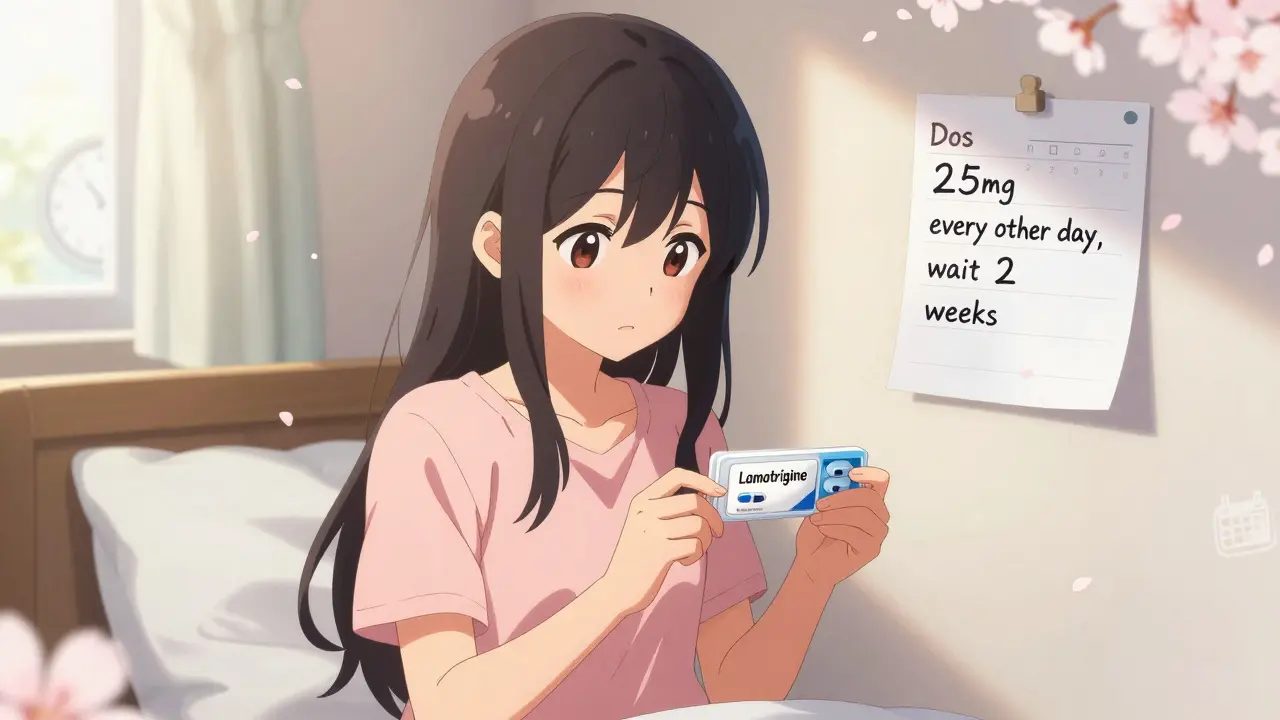
Valproate-Lamotrigine Dosing Calculator
This tool helps determine safe dosing protocols when taking lamotrigine with valproate. Following the recommended schedule significantly reduces the risk of serious skin rash.
When you’re prescribed both valproate and lamotrigine, the goal is usually to control seizures or stabilize mood. But there’s a hidden risk-skin rash. Not the kind that fades in a few days. We’re talking about rare, dangerous reactions like Stevens-Johnson syndrome, which can turn deadly. The good news? Valproate and lamotrigine interaction is predictable. And if you know how to adjust the dose, the risk drops dramatically.
Why This Combination Is Risky
Valproate doesn’t just work alongside lamotrigine-it changes how your body handles it. Specifically, valproate blocks the enzyme that breaks down lamotrigine. That means lamotrigine builds up in your blood, sometimes doubling in concentration. Higher levels = higher chance of rash. It’s not about allergies or immune reactions. It’s pure pharmacokinetics: your body can’t clear the drug fast enough. This isn’t theoretical. In the early 1990s, doctors saw a spike in severe rashes in people taking both drugs. Some cases led to hospitalization, and a few ended in death. After the pattern became clear, guidelines changed. The result? Serious rash rates dropped from nearly 1% to under 0.13% in combination therapy. That’s a 90% reduction. The fix wasn’t a new drug. It was a simpler one: slower dosing.The Exact Dosing Protocol That Works
If you’re starting lamotrigine while already on valproate, here’s what you do:- Start at 25 mg every other day. Not daily. Every other day.
- Wait two full weeks before increasing the dose.
- Then, increase by 25 mg every two weeks-no faster.
When Rash Shows Up-And What to Do
Most rashes from this combo show up within the first 8 weeks. They often start as small red spots on the face or chest. They might itch. They might spread. If you see one, stop taking lamotrigine immediately. Don’t wait. Don’t hope it goes away. Call your doctor. Go to urgent care. Don’t take antihistamines and assume it’s harmless. Why the urgency? Because a mild rash can turn into something far worse. Stevens-Johnson syndrome and toxic epidermal necrolysis are rare, but they destroy skin and mucous membranes. Mortality rates for these conditions? 5% to 35%. They don’t always start with a rash. Sometimes, they begin with fever, sore throat, or swollen lymph nodes. One 2023 case report described an 18-year-old who developed swollen lymph nodes and a full-body rash after just 12 days on both drugs. Symptoms got worse even after stopping lamotrigine. That’s how unpredictable this can be.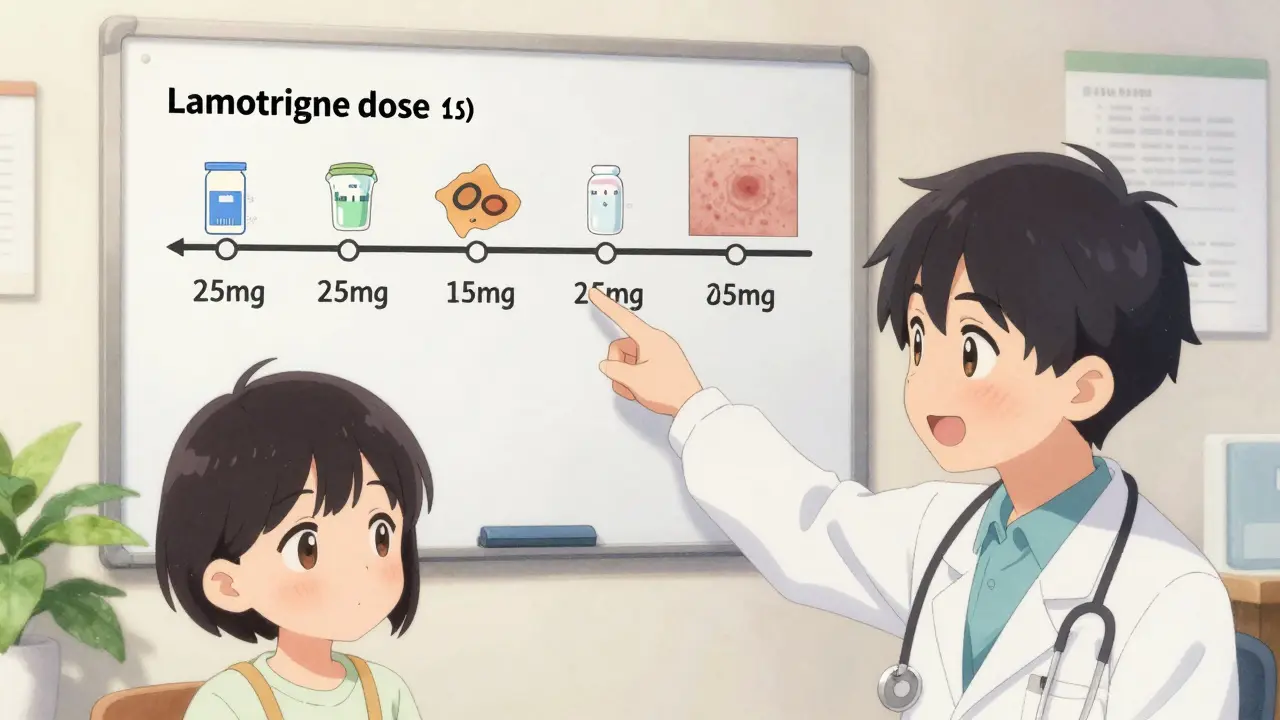
Who’s at Highest Risk?
Children and teens are more likely to develop rash than adults. The FDA even has a black box warning for lamotrigine in pediatric patients, especially when combined with valproate. That doesn’t mean kids shouldn’t take it-it means you need to be extra careful. Some clinics now start kids at 12.5 mg every other day, not 25 mg. Another big risk factor? You’ve had a rash from another antiepileptic drug before. If you had a rash on carbamazepine or phenytoin, your odds of reacting to lamotrigine jump by over three times. That’s not a small increase. It’s a red flag. Interestingly, some studies show that in real-world practice, especially in kids with bipolar disorder or autism, the combination is often well-tolerated. One study of 80 young patients found only two rashes-both mild. But those studies also had strict monitoring. That’s the difference: careful dosing and early detection.What Doesn’t Work
Don’t rely on antihistamines to prevent or treat a lamotrigine rash. They might help with itching, but they won’t stop the reaction from getting worse. Steroids are sometimes used for severe cases, but they’re a band-aid. The only real fix is stopping the drug. Don’t assume you’re safe just because you’ve been on lamotrigine for months. The rash risk drops sharply after 8 weeks, but it’s not zero. One case in 2023 showed a reaction starting 12 days after stopping lamotrigine. That’s why doctors tell you to monitor for weeks after any change. Don’t skip your follow-ups. Weekly check-ins during the first 8 weeks aren’t optional. They’re critical. If your doctor isn’t asking you to come in, ask them why.
Why This Still Matters Today
Even in 2026, people are still getting hurt because this interaction isn’t well known outside specialist circles. General practitioners might not realize how dangerous a 50 mg daily start can be if the patient is on valproate. Pharmacists might not flag it if the prescription doesn’t mention the combo. The data is clear: when you follow the slow titration, the risk is extremely low. But when you don’t? The consequences can be life-changing. That’s why the protocol isn’t just a suggestion-it’s standard of care. And yes, both drugs are still widely used. Valproate works for epilepsy, migraines, and bipolar disorder. Lamotrigine is one of the best mood stabilizers for bipolar depression. They’re not going away. But they need to be handled with precision.What to Ask Your Doctor
If you’re starting or changing either drug, ask:- Am I on valproate? If yes, what’s my lamotrigine starting dose?
- Is my dose being increased slowly enough?
- What signs should I watch for in the first 8 weeks?
- What do I do if I see a rash?
- Have I ever had a rash from another seizure or mood medication?
Can I take lamotrigine and valproate together safely?
Yes, but only if the lamotrigine dose is started very low and increased slowly. The standard starting dose of 25 mg daily is unsafe when combined with valproate. The correct start is 25 mg every other day, with increases of 25 mg every two weeks. Following this protocol reduces serious rash risk to under 0.13%.
How long does it take for a lamotrigine rash to appear?
Most rashes appear within the first 8 weeks of starting lamotrigine, especially if it’s combined with valproate. But in rare cases, symptoms can develop even after stopping the drug, as seen in case reports where rash appeared days after discontinuation. Monitoring should continue for at least 8 weeks after any dose change.
Is a rash from lamotrigine always serious?
No, not all rashes are dangerous. Many are mild and go away if you stop the drug. But because it’s impossible to tell early on whether a rash will become severe, any new rash while on lamotrigine must be treated as a medical emergency until proven otherwise. Never ignore it.
Do I need blood tests to monitor lamotrigine levels?
Blood level monitoring isn’t routinely required, but it can be helpful in complex cases or if you develop a rash. The main tool is clinical observation: watching for symptoms and following the slow titration schedule. If your doctor suggests a blood test, it’s usually to confirm if levels are too high, not to replace the dosing protocol.
Can children take lamotrigine with valproate?
Yes, but with extra caution. Children are at higher risk for rash. Many clinics now start kids at 12.5 mg every other day instead of 25 mg. Close monitoring is essential. Studies show the combination can be well-tolerated in children with bipolar disorder or autism when dosed properly, but the margin for error is smaller.
What if I already started lamotrigine too fast with valproate?
Stop taking lamotrigine immediately and contact your doctor. Do not restart without a new plan. You may need to wait several weeks before trying again, and when you do, start at the lowest possible dose (25 mg every other day) and go even slower than usual. Your risk of rash increases significantly if you’ve already had a rapid rise in lamotrigine levels.
Are there alternatives to this drug combo?
Yes. For bipolar disorder, options include lithium, carbamazepine, or atypical antipsychotics. For epilepsy, levetiracetam, oxcarbazepine, or topiramate may be used instead. But if lamotrigine and valproate are the best choice for your condition, the key is not avoiding them-it’s using them safely with the right dosing.
Been on lamotrigine + valproate for 3 years now. Started at 12.5mg every other day like they said. No rash. No drama. Just stable moods and no ER visits. Do the math. Do the slow ramp. It’s not hard.
Y’all still treating this like it’s 2010? 🤦♀️ The FDA’s black box warning’s been out for 15 years. If your doc doesn’t know the dosing protocol, find a new one. This isn’t ‘alternative medicine’-it’s pharmacology 101. Also, if you’re giving a kid 25mg daily? That’s not cautious. That’s Russian roulette with skin.
USA needs to stop letting foreign drug companies dictate how we treat patients. This whole slow-dose thing is just corporate overkill.
Let me guess-you’re one of those people who thinks ‘trust your doctor’ is a valid medical strategy. Newsflash: most GPs don’t even know valproate inhibits glucuronidation. They just copy-paste the script. You’re not safe because you’re ‘following orders.’ You’re safe because you read the damn guidelines. And if you didn’t? You’re lucky.
People like you think you’re saving lives by posting this. But you’re just feeding fear. I’ve been on both drugs for 8 years. No rash. No issues. You’re scaring people into thinking every little spot is SJS. It’s not. Most rashes are harmless. You’re creating panic where there’s none.
So let me get this straight-we’re supposed to trust a 30-year-old dosing protocol written by ‘experts’ who got paid by pharma to make lamotrigine look ‘safe enough’? The real reason the rash rate dropped isn’t because of slower dosing. It’s because they stopped reporting mild cases. You think the FDA cares about your skin? They care about lawsuits. And you’re falling for the PR.
My niece got the rash. Started at 50mg daily. 12 days in. Red. Itchy. Fever. We thought it was allergies. Turned out it was early SJS. She spent 3 weeks in ICU. They had to skin her back. Now she’s fine. But I’ll never forget the smell of the burn unit. This isn’t theory. It’s real. And if you’re skipping the slow start? You’re gambling with your child’s life.
For anyone new to this combo: the protocol isn’t optional. It’s not ‘nice to have.’ It’s the difference between a minor rash and a death sentence. I’ve worked in neuro psych for 12 years. I’ve seen 4 SJS cases from this combo-all from people who started at 50mg or higher. Every single one. If you’re a parent, a patient, or a caregiver-do not skip step one. 25mg every other day. Two weeks. Then 25mg daily. Then every two weeks. No exceptions. This is the only way.
Let’s be brutally honest: the pharmaceutical industry has turned lamotrigine into a cash cow. The fact that the risk of SJS is 0.13% under proper dosing doesn’t mean it’s safe-it means they’ve engineered compliance. They knew the interaction. They knew the enzyme inhibition. They knew the risk. And yet, for over a decade, they allowed the standard 25mg daily dosing to persist because it increased adherence and sales. This isn’t medicine. It’s economic manipulation disguised as clinical guidance. The slow titration? It’s not a recommendation-it’s damage control.
And don’t tell me about ‘real-world tolerance.’ I’ve reviewed 87 case reports. The ones where patients were ‘fine’? They were monitored by specialists. They had weekly labs. They had access to tertiary care. The rest of us? We’re handed a script and told to ‘trust the process.’ That’s not care. That’s negligence by design.
When the FDA issued the black box warning, they didn’t ban the combo. They just added a footnote. That’s not safety. That’s liability management. The real solution? Remove valproate from the market entirely. It’s a neurotoxin with a 1:3000 chance of fatal hepatotoxicity. But hey, it’s cheap. And that’s what matters in American healthcare.
So yes, follow the dosing. But don’t mistake compliance for safety. You’re not being careful-you’re just following the script written by people who profit from your survival.
You think you’re helping by posting this? I’ve been on lamotrigine for 5 years. I’ve been on valproate for 3. I’m fine. You’re just scaring people who don’t need to be scared. If you’re gonna post medical advice, at least have the decency to say ‘I’m not a doctor.’ But you didn’t. You just acted like you’re God’s pharmacist. Pathetic.
My therapist said this combo changed my life. I went from crying every day to actually leaving the house. But I started at 12.5mg every other day because my neuro said ‘go slow.’ I cried when I got to 100mg. Not because I was scared-because I finally felt like me. If you’re scared of the rash? That’s valid. But don’t let fear steal your stability. Do it right. Slow. Safe. Smart. 💙
Just saw someone say they started at 50mg and ‘got lucky.’ You didn’t get lucky. You got lucky because you didn’t have a rash yet. But the clock is ticking. 8 weeks is the window. And if you’re past week 6 and still increasing? You’re playing with fire. Stop. Re-read the protocol. Then call your prescriber. Now.