
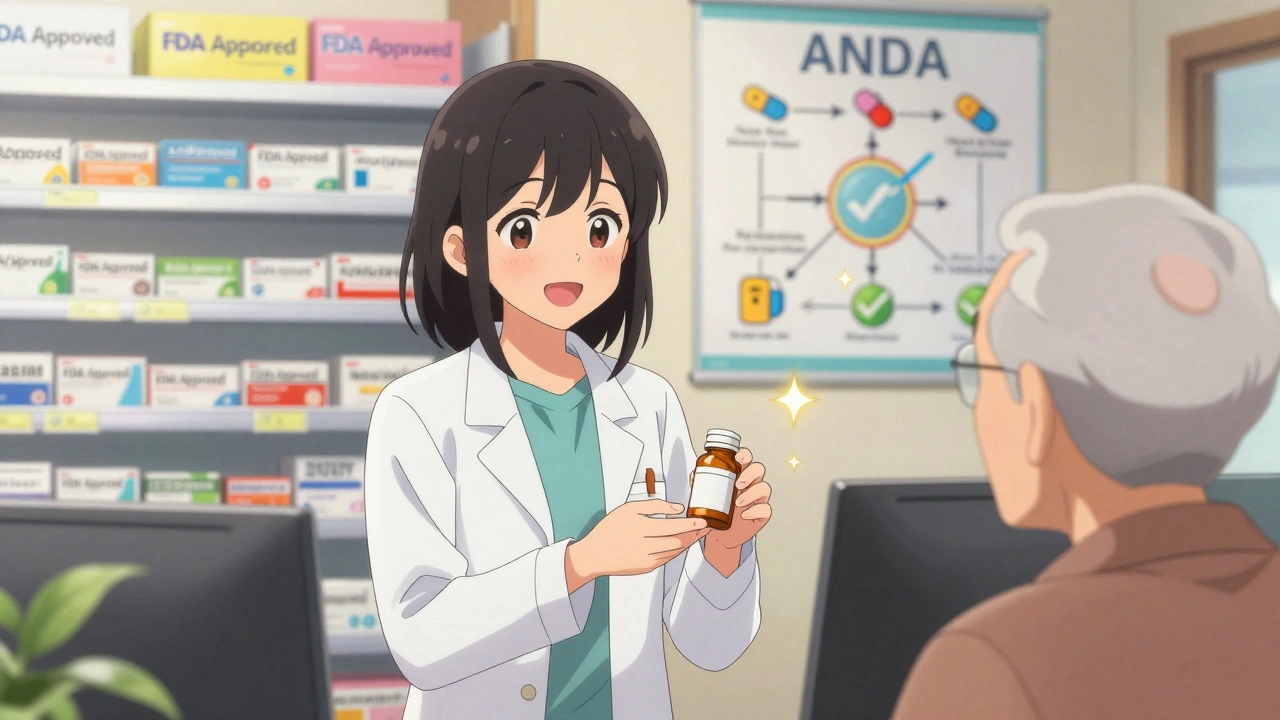
Every year, over 90% of prescriptions filled in the U.S. are for generic drugs. That means if you’ve taken a pill for high blood pressure, cholesterol, or even acid reflux lately, there’s a very good chance it wasn’t the brand name you saw on TV-it was the generic version. But how does the FDA make sure these cheaper pills work just as well? And why should you trust them?
What Exactly Is a Generic Drug?
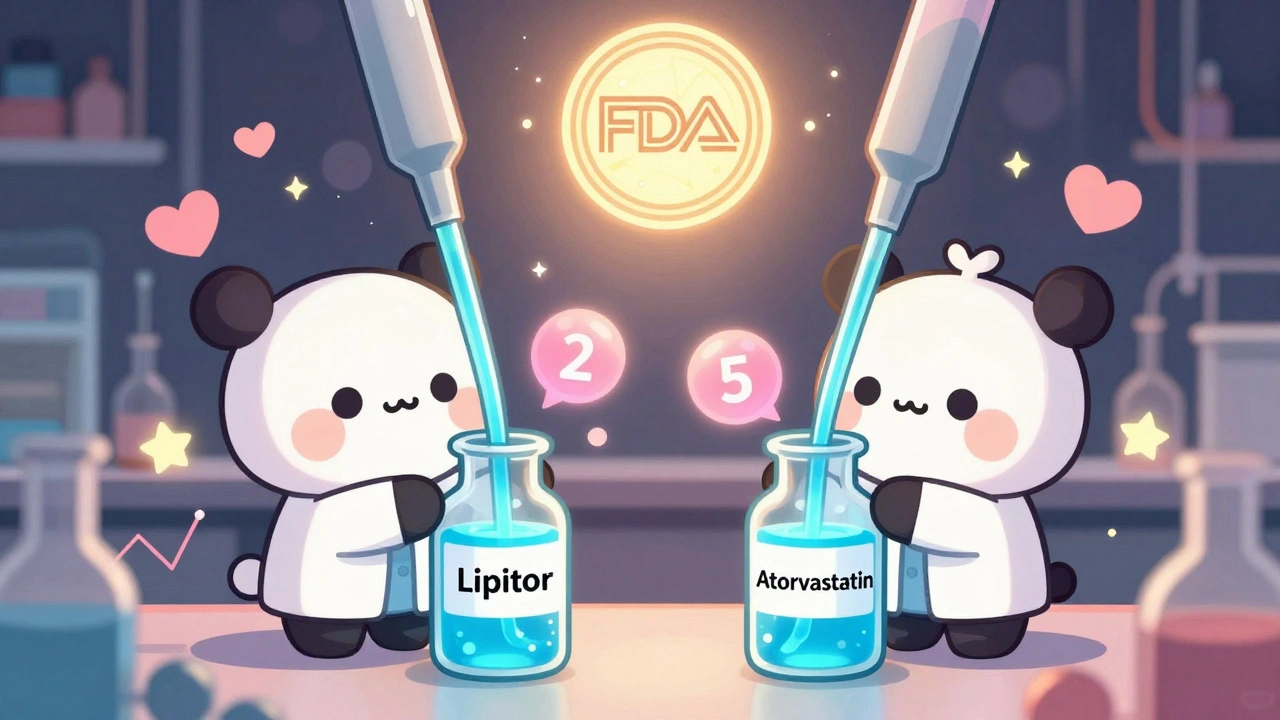
A generic drug is a copy of a brand-name drug that has the same active ingredient, strength, dosage form, and way of taking it (like swallowing a tablet or injecting it). It’s not a substitute. It’s not a similar version. It’s the exact same medicine, just without the marketing, patent protection, or high price tag.For example, the brand-name drug Lipitor (atorvastatin) for lowering cholesterol has a generic version called atorvastatin. Same molecule. Same effect. Same side effects. Just cheaper-often 80-85% less expensive.
The FDA doesn’t approve generics because they’re cheap. They approve them because they’re proven to be just as safe and effective as the original. And that’s the whole point.
The ANDA Process: How Generics Get Approved
The FDA doesn’t make generic drug companies run full clinical trials again. That would be expensive, slow, and unnecessary. Instead, they use a shortcut called the Abbreviated New Drug Application, or ANDA. This process was created in 1984 under the Hatch-Waxman Act to balance patient access with innovation.An ANDA doesn’t need to prove the drug works. That’s already been done by the brand-name company. What it must prove is two things:
- Pharmaceutical equivalence: The generic has the same active ingredient, strength, dosage form, and route of administration as the brand-name drug (called the Reference Listed Drug, or RLD).
- Bioequivalence: The generic delivers the active ingredient into your bloodstream at the same rate and amount as the brand-name drug.
Bioequivalence is tested in healthy volunteers-usually 24 to 36 people. Researchers measure how quickly and how much of the drug enters the blood. The results must fall within 80% to 125% of the brand-name drug’s levels. That’s a tight range. It means your body absorbs the generic almost identically to the original.
That’s why a generic version of levothyroxine (for thyroid issues) or warfarin (a blood thinner) must be especially carefully tested. These are drugs where even small differences in absorption can matter. The FDA requires extra scrutiny for these “narrow therapeutic index” drugs.
What’s in an ANDA Application?
An ANDA isn’t just a form. It’s a massive package of data-sometimes 5,000 to 50,000 pages long. Here’s what’s inside:- Chemistry, Manufacturing, and Controls (CMC): Exactly how the drug is made, what equipment is used, how it’s tested for purity and stability.
- Bioequivalence study results: Full reports from the clinical trials showing blood levels match the brand.
- Labeling: The package insert must be identical to the brand’s, including warnings and instructions.
- Patent certifications: The company must state whether it’s challenging any existing patents. This is where legal battles often start.
Manufacturing facilities must also pass an FDA inspection. The FDA checks for cleanliness, proper procedures, and quality control. About 1,500 inspections happen each year for generic drug plants-many overseas. The FDA doesn’t trust paperwork alone. They show up unannounced.
How Long Does It Take?
The FDA aims to review 90% of standard ANDAs within 10 months. But it’s not always that simple.Simple pills and capsules? Usually fast. Complex products like inhalers, eye drops, or topical creams? Much harder. These drugs don’t dissolve the same way in the body, so proving bioequivalence is tricky. In 2022, complex generics made up only 15% of applications but caused nearly 40% of review delays.
The FDA launched the Complex Generic Drug Product Initiative in early 2023 to fix this. They’ve written 18 new guidance documents to help manufacturers get it right the first time. In September 2023, they approved the first generic EpiPen after 15 years of effort-a big win for complex generics.
Why Are Generics So Much Cheaper?
Brand-name drugs cost $2.6 billion on average to develop. Generics? Around $5-10 million. Why? No need to pay for decades of research, animal testing, or large-scale clinical trials. The original company already did that.Generics also don’t spend millions on TV ads. No celebrity endorsements. No fancy packaging. Just the medicine.
That’s why generics save the U.S. healthcare system an estimated $2.2 trillion over the last decade. In 2023, they made up 90% of prescriptions but only 23% of total drug spending.
Are Generics Always Safe?
For most people, yes. The FDA approves over 1,000 generic drugs a year. Most patients report no difference between brand and generic. In a 2022 survey, 87% of patients using generics were satisfied.But there are exceptions. A small group of patients-especially those taking drugs like warfarin, levothyroxine, or certain epilepsy medications-sometimes notice changes when switching between generic brands. That’s not because the generics are unsafe. It’s because the body is sensitive to tiny differences in how the drug is absorbed. In those cases, staying on the same generic manufacturer is often recommended.
Pharmacists are trained to watch for this. In a 2022 survey, 94% of community pharmacists said they always or usually recommend generics when available. If you feel different after switching, tell your doctor. Don’t assume it’s all in your head.
What About First-to-File Generics?
When a brand-name drug’s patent expires, the first company to file an ANDA gets 180 days of exclusive rights to sell the generic. This creates a rush. For popular drugs, six or seven companies may file on the same day.That’s why you sometimes see multiple generic versions of the same drug hit the market at once. It drives prices down even further. But it also means legal battles over patents can delay approval. About 72% of first-to-file applications involve challenging patents-sometimes in court.
Some brand-name companies use tactics called “evergreening”-filing new patents on minor changes to delay generics. The FTC says this can delay generic entry by over three years on average.
What’s Changing in 2025?
The FDA is working on new tools to speed things up. By 2025, they plan to use artificial intelligence to help review ANDAs faster. They’re also pushing manufacturers to use modern techniques like continuous manufacturing-making drugs in a steady flow instead of in batches.More patents are expiring soon. Over $250 billion in branded drug sales will lose protection by 2027. That means a wave of new generics is coming. The FDA expects a 25% increase in ANDA submissions.
But there’s a catch. The FDA’s funding for reviewing generics comes from user fees paid by manufacturers. Those fees went up 15% in 2024. If they don’t rise again, the agency may struggle to keep up.
What You Should Know as a Patient
You don’t need to be a scientist to understand generics. Here’s what matters:- Generics are not inferior. They’re held to the same standard as brand-name drugs.
- They save you money. Often hundreds of dollars a year per prescription.
- Ask your pharmacist. If you’re switching from brand to generic, ask if it’s the same manufacturer as before-especially for sensitive medications.
- Report changes. If you feel different after switching, tell your doctor. It’s not just “in your head.”
- Don’t fear generics. The FDA has approved over 15,000 generic drugs. Millions of people use them safely every day.
The system isn’t perfect. Complex drugs still take too long. Patent games still delay access. But overall, the ANDA process is one of the most successful public health tools in modern medicine. It’s how we make life-saving drugs affordable for everyone-not just those who can afford the brand name.
Are generic drugs as effective as brand-name drugs?
Yes. The FDA requires generic drugs to have the same active ingredient, strength, dosage form, and route of administration as the brand-name version. They must also prove bioequivalence-meaning they deliver the same amount of medicine into your bloodstream at the same rate. Thousands of studies and millions of patient experiences confirm that generics work just as well.
Why do some generics look different from the brand name?
The law only requires the active ingredient to be the same. Color, shape, size, and inactive ingredients (like fillers or dyes) can be different. These don’t affect how the drug works. They’re changed to avoid trademark issues or to make the pill easier to swallow. If you’re used to a certain look, you can ask your pharmacist to fill your prescription with the same generic manufacturer.
Can I switch between different generic brands?
For most people, yes. But if you’re taking a drug with a narrow therapeutic index-like warfarin, levothyroxine, or certain seizure medications-your doctor may recommend sticking with one manufacturer. Even small differences in absorption can matter. If you notice changes in how you feel after switching, talk to your doctor or pharmacist.
Are generic drugs made in the same facilities as brand-name drugs?
Sometimes. Many brand-name companies also make generic versions of their own drugs. Other times, generics are made in facilities overseas. The FDA inspects all of them-whether in the U.S., India, or China-to ensure they meet the same quality standards. You can’t tell where a drug is made just by looking at the label.
Why do some generic drugs cost more than others?
Price depends on competition. When only one or two companies make a generic, prices stay higher. When five or six companies are selling it, prices drop fast. Insurance plans and pharmacy benefit managers also influence what you pay at the counter. Sometimes, the same generic from two different companies costs different amounts at the same pharmacy.
How do I know if a generic drug is FDA-approved?
Check the FDA’s online database called the Orange Book. It lists all approved brand-name and generic drugs with their active ingredients, manufacturers, and approval status. If it’s not in the Orange Book, it’s not FDA-approved. Be cautious of online pharmacies selling “generic” drugs that aren’t listed there.
Is it true that some generics aren’t as good as others?
All FDA-approved generics meet the same strict standards. There’s no official ranking of “better” or “worse” generics. However, some patients report feeling different when switching between manufacturers-especially with sensitive medications. This isn’t because one is inferior, but because absorption can vary slightly. If you notice a change, talk to your doctor. You can often request the same generic brand each time.
What’s Next?
If you’re on a long-term medication, ask your pharmacist if a generic is available. It could save you hundreds a year. If you’ve been hesitant to switch, now’s the time to reconsider. The science is clear: FDA-approved generics are safe, effective, and backed by decades of real-world use.The system isn’t perfect-but it works. And for millions of people, it’s the reason they can afford to take their medicine every day.
Let me get this straight - we’re trusting pills made in some back-alley Indian factory to save our lives? The FDA’s got no business approving generics when they can’t even inspect every plant. I’ve seen what’s in those pills - fillers from China, binders that should be in glue. This isn’t medicine, it’s a gamble.
I switched my thyroid med to generic last year and my energy dropped through the floor. Told my doctor. They said it was 'all in my head.' Turns out, the generic had a different filler that messed with absorption. Now I pay extra to stick with the same brand. Don't let anyone tell you it doesn't matter. Your body knows.
Generics = WIN 🎉💯 The FDA’s ANDA process is one of the most brilliant public health moves ever. Same active ingredient? Same bioequivalence? Same results? YES. And you’re saving $300/month on your statin? That’s not a discount - that’s freedom. Keep pushing for more generics, folks. 💊🚀
Wait… so you’re telling me… that the same drug… that costs $500… is now $40… and it’s just as good??!!?? That’s insane. Who’s profiting here?? The pharma CEOs?? Or the FDA?? I don’t trust this. And why are the pills different colors?? That’s not random - that’s a scam. I’m switching back to brand. My heart can’t take this risk!!
The bioequivalence range of 80-125% is a joke. That’s a 45% swing. One pill could be half as effective as another. You think your blood levels are stable? You’re deluding yourself. The FDA’s standards are outdated. This isn’t science - it’s corporate appeasement.
There’s a quiet revolution happening here. We’ve moved from ‘brand = trust’ to ‘science = trust.’ Generics aren’t cheaper because they’re worse - they’re cheaper because we stopped paying for ads, fancy packaging, and shareholder dividends. The real innovation isn’t in the pill - it’s in the system that lets ordinary people live longer. That’s worth celebrating.
Did you know the FDA lets Chinese labs test their own samples? And the inspectors only show up once every 3 years? I’ve got a cousin who works at a generic plant - they mix the batches in the same room as the toilets. The ‘same active ingredient’? Yeah right. They just add more starch and call it a day. 🤫💉 #FDAcorruption
While the regulatory framework surrounding the Abbreviated New Drug Application (ANDA) is indeed robust, one must acknowledge the structural limitations inherent in bioequivalence testing. The n=24-36 cohort size, while statistically acceptable under current guidelines, fails to capture inter-individual pharmacokinetic variability across diverse populations. Furthermore, the 80–125% confidence interval, though mathematically defensible, may mask clinically significant absorption disparities in geriatric or renally impaired subpopulations. The FDA’s reliance on single-dose studies in healthy volunteers is a methodological compromise that warrants reevaluation in light of real-world polypharmacy scenarios.
It’s funny how we think medicine is about science… but really it’s about who can afford to pay for the story behind the pill. The brand-name drug tells you a story of innovation, of hope, of corporate heroism. The generic? Just a number on a label. We don’t trust the number. We trust the myth. But the truth? The pill doesn’t care what you call it. It just works. Or it doesn’t. And that’s the real philosophy.
Look, I used to be skeptical too - until my dad got on generic warfarin after his bypass. He was on brand for years, paid $180 a month. Switched to generic - $12. Same lab results, same INR numbers, same no-blood-clots life. I’ve talked to 12 other people in my neighborhood who’ve done the same. The system works. Yeah, some people feel weird when they switch - but that’s not because the drug’s bad. It’s because our brains are wired to think ‘expensive = better.’ Time to rewire that. You’re not losing anything. You’re gaining freedom.
People have no idea how dangerous this is. The FDA approves generics based on data submitted by the same companies that profit from them. There’s no independent verification. No third-party labs. No transparency. And now they’re using AI to speed up reviews? That’s not innovation - that’s negligence. We’re turning healthcare into a factory line. One day, someone’s kid will die because a generic pill didn’t dissolve right, and nobody will care because it was ‘FDA-approved.’ And you’ll be the one saying, ‘I didn’t know.’ Well, now you know. And you still didn’t do anything.