

Drug Interaction Safety Checker
Check Statin-Antifungal Interactions
This tool helps you determine if your statin and antifungal combination is safe based on medical guidelines.
When you’re on a statin to lower cholesterol and need an antifungal for a stubborn infection, things can go wrong-fast. It’s not just about taking two pills. Some systemic antifungals, especially the azole class, can turn your statin into a ticking time bomb for your muscles. This isn’t theoretical. People end up in the hospital with muscle breakdown, kidney failure, even death-because these interactions are ignored, misunderstood, or simply overlooked.
Why Azole Antifungals Are So Risky
Azole antifungals like fluconazole, itraconazole, voriconazole, posaconazole, and ketoconazole work by blocking a fungal enzyme called lanosterol 14-alpha-demethylase. But here’s the catch: that same enzyme family exists in your liver. It’s part of the cytochrome P450 system, specifically CYP3A4, which handles the breakdown of over 50% of all prescription drugs-including most statins. When an azole antifungal shuts down CYP3A4, your body can’t clear statins the way it should. The statin builds up. And when it builds up too much, it starts damaging muscle cells. This isn’t just soreness. It’s myopathy, and in its worst form, rhabdomyolysis. That’s when muscle tissue breaks down so badly that it floods your bloodstream with proteins that can crash your kidneys. Ketoconazole and posaconazole are the worst offenders. They can make statin levels spike by 10 times or more. Itraconazole isn’t far behind. Even fluconazole, which is often seen as "safer," still inhibits CYP2C9 and CYP2C19, which can interfere with some statins too.Which Statins Are Most at Risk?
Not all statins are created equal when it comes to drug interactions. The ones that rely heavily on CYP3A4 for metabolism are the most vulnerable:- Simvastatin - Highest risk. Even a small dose can become dangerous with an azole.
- Atorvastatin - Also metabolized by CYP3A4. Risk increases sharply with strong inhibitors.
- Lovastatin - Same profile as simvastatin. Avoid combinations entirely.
- Pravastatin - Mostly cleared by the kidneys, not the liver. Lower interaction risk.
- Rosuvastatin - Minimal CYP metabolism. Still, ketoconazole can raise its levels by blocking the OATP1B1 transporter.
- Fluvastatin - Metabolized by CYP2C9, so fluconazole might interfere, but less than with CYP3A4 statins.
Immunosuppressants Make It Worse
If you’ve had a transplant, you’re likely on cyclosporine, tacrolimus, or sirolimus. These drugs don’t just suppress your immune system-they also block the same liver enzymes and transporters that statins need to get cleared. Studies show that when cyclosporine is combined with a statin, statin levels can jump 3 to 20 times higher than normal. That’s not a typo. In transplant patients, the rate of muscle damage from statins is up to 25%. And when you add an azole antifungal on top? That risk skyrockets. One case report documented a patient with a kidney transplant who developed rhabdomyolysis after starting fluconazole while on simvastatin and cyclosporine. His creatine kinase (CK) level hit over 10,000 U/L-normal is under 200. He needed dialysis. He survived. But many don’t.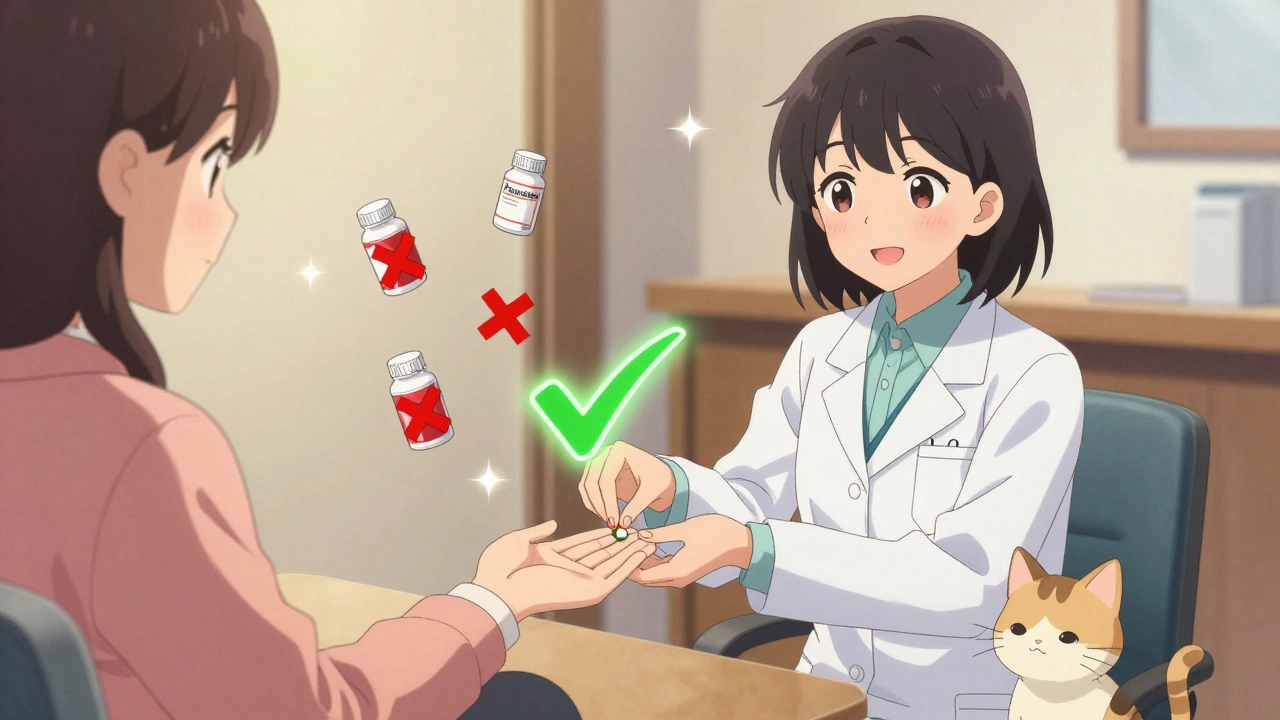
What Should You Do? A Clear Action Plan
Here’s what actually works in real-world practice:- Stop high-risk statins during antifungal treatment. If you’re on simvastatin, atorvastatin, or lovastatin, pause them entirely while taking ketoconazole, posaconazole, or itraconazole. Restart only after the antifungal is fully out of your system. Posaconazole lingers for days-wait at least 3 to 5 days after your last dose before restarting.
- Switch to a safer statin. If you need ongoing cholesterol control, use pravastatin (10-40 mg daily) or rosuvastatin (5-20 mg daily). Even then, start low. Don’t assume you can keep your old dose.
- Check for genetic risk. About 12% of people have a gene variant (SLCO1B1) that makes them extra sensitive to statin toxicity. If you’ve had muscle pain on statins before, ask your doctor about testing.
- Monitor your CK levels. If you’re on any combination of statin + azole + immunosuppressant, get a baseline CK test before starting. Repeat it after 1-2 weeks. If CK rises more than 10 times the upper limit of normal, stop the statin immediately.
- Ask about alternatives. Isavuconazole is a newer antifungal that inhibits CYP3A4 less strongly. Olorofim, still in trials, doesn’t touch liver enzymes at all. These may be options if your infection allows it.
Why Do These Interactions Keep Happening?
You’d think with all the warnings, this wouldn’t be a problem. But it is. In 2012, a study found that doctors were still prescribing simvastatin with CYP3A4 inhibitors like antifungals and antibiotics-even though the labels said not to. Why? Because statins are everywhere. Over 39 million Americans take them. Fluconazole alone is prescribed over 5 million times a year in the U.S. alone. It’s easy to miss the overlap. Pharmacists catch a lot of these errors. In academic hospitals, a mandatory pharmacist review before dispensing azoles cut dangerous combinations by 63%. But in community pharmacies? No such safety net. Electronic health records help-some systems now block prescriptions or pop up alerts. But not all do. And if your doctor doesn’t know your full med list, or if you got the antifungal from a different provider, the system fails.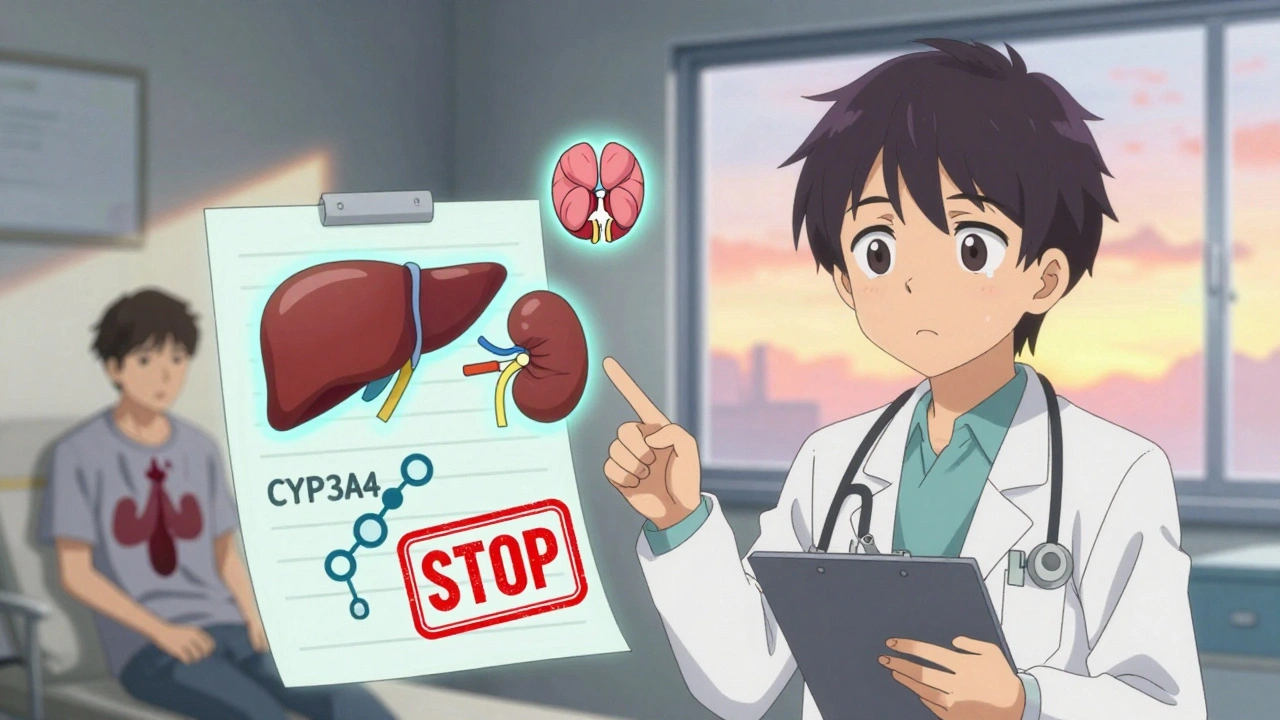
What About Over-the-Counter Antifungals?
Topical creams, sprays, and shampoos-like clotrimazole or miconazole-don’t cause these problems. They’re not absorbed enough to affect liver enzymes. But if you’re using oral antifungals, even over-the-counter ones in other countries (like fluconazole in some places), the risk is real. Don’t assume "natural" or "OTC" means safe with your other meds.What If You’re Already on All Three?
If you’re currently taking a statin, an azole antifungal, and an immunosuppressant-stop taking the statin. Now. Call your doctor or pharmacist. Don’t wait for symptoms. Muscle pain? Unexplained fatigue? Dark urine? These are red flags. Rhabdomyolysis doesn’t always start with pain. Sometimes it starts with just feeling "off." If you’re on this combo, treat any muscle symptom as urgent.Bottom Line: Don’t Guess. Ask.
This isn’t about being scared of meds. It’s about being smart. Antifungals save lives. Statins prevent heart attacks. Immunosuppressants keep transplants working. But when they collide, the consequences can be deadly. If you’re prescribed an azole antifungal, ask: "Which of my statins are safe to keep taking?" If you’re on a statin and need an antifungal, ask: "Will this interact with my cholesterol pill?" If you’re a transplant patient, ask: "Should I hold my statin while I’m on this antifungal?" Your life isn’t a guessing game. The science is clear. The risks are real. And the solutions? They’re simple-if you know to ask.Can I take fluconazole with my statin?
It depends on which statin you’re taking. Fluconazole inhibits CYP2C9 and CYP2C19 more than CYP3A4, so it’s less risky than ketoconazole or itraconazole. But it can still raise levels of fluvastatin and rosuvastatin slightly. If you’re on simvastatin, atorvastatin, or lovastatin, avoid fluconazole entirely. If you’re on pravastatin or rosuvastatin, you may be able to continue, but only at a reduced dose and with monitoring. Always check with your pharmacist.
What happens if I accidentally take a statin with an azole antifungal?
You may not notice anything right away. But over days or weeks, muscle damage can build up silently. Watch for unexplained muscle pain, weakness, or dark urine. If you see any of these, stop the statin and call your doctor immediately. A blood test for creatine kinase (CK) can confirm muscle breakdown. Don’t wait for symptoms to get worse.
Is there a safe statin to take with ketoconazole?
No. Ketoconazole is a strong inhibitor of both CYP3A4 and the OATP1B1 transporter. Even pravastatin and rosuvastatin-usually considered safer-can have their levels raised significantly. The only safe approach is to stop the statin entirely while taking ketoconazole. There is no recommended dose combination that’s considered safe.
How long should I wait after stopping an azole before restarting my statin?
It depends on the antifungal. For fluconazole, wait 2-3 days. For itraconazole, wait 5-7 days. For posaconazole, wait at least 7-10 days because it stays in your system longer. Never restart without checking with your doctor. If you’re on a high-risk statin, consider switching to a safer one permanently if you’ll need antifungals again in the future.
Do I need to stop my statin if I’m only taking a short course of antifungal?
Yes. Even a 3-day course of a strong azole like posaconazole can cause dangerous statin buildup. The risk isn’t tied to duration-it’s tied to the level of enzyme inhibition. If you’re on simvastatin, atorvastatin, or lovastatin, pause it for the entire course and for several days after. It’s not worth the risk.
bro i took fluconazole with my atorvastatin for a week and felt like my legs were made of concrete 😅 glad i didn't ignore the weird muscle ache
It is imperative that patients be made aware of the metabolic pathways involved in statin clearance and the inhibitory effects of azole antifungals upon cytochrome P450 enzymes
This is one of those posts that should be printed and taped to every pharmacist’s counter. I’ve seen too many patients get discharged with simvastatin and fluconazole and no warning. The fact that this still happens in 2025 is wild. Primary care docs are stretched so thin they miss this stuff. Pharmacists are the real MVPs here.
My mom had rhabdomyolysis after a yeast infection script-she didn’t even know she was on simvastatin. The ER doc said, 'We’ve seen this three times this month.' I’ve since printed out the statin-azole chart and keep it in my wallet. If you’re on any statin and get an antifungal, pause it. Don’t ask. Just pause.
AMERICA NEEDS TO STOP LETTING PHARMACISTS DO DOCTOR WORK. If your doctor doesn't know this, fire them. We pay for this crap. Also fluconazole? That's a third world drug. Get isavuconazole if you can afford it.
Imagine being so careless with your life that you take a pill for a fungus without checking how it interacts with your heart medication. This isn’t a glitch-it’s negligence. And yet, people still act surprised when they end up in the ICU. The system fails us, but we also fail ourselves.
It’s worth noting that even ‘safer’ statins like rosuvastatin carry risk when combined with ketoconazole due to OATP1B1 transporter inhibition-a mechanism often overlooked in clinical guidelines. The 2023 Canadian Cardiovascular Society update specifically highlighted this, yet most patient handouts still only mention CYP3A4. Education gaps persist at every level.
i just took fluconazole with pravastatin and i’m fine but also i’m a 24 year old who works out so maybe i’m just lucky 🤷♀️
Thank you for writing this. I’ve been on rosuvastatin since my heart scare and was terrified to ask about antifungals. Now I know what to say to my doctor. You made me feel less alone in this. 💪
So let me get this straight: you're telling me that in India, where statins are sold over the counter at every chai stall, people are somehow surviving this? Maybe our medical system isn't the problem-maybe it's the idea that every drug needs a 12-page warning label to be safe.
Y’all act like this is new. I’ve been telling my cousin for years not to mix his simvastatin with his antifungal cream. He still did it. Now he’s on dialysis. Don’t be him.
I just lost my uncle to this. He was on itraconazole for a foot fungus and didn’t tell his cardiologist he was on atorvastatin. He said he felt ‘tired’ for three days. They thought it was the flu. His CK was 48,000. He never woke up. I’m not okay.
my pharmacist flagged my script the second i walked in. she said ‘you’re on what with what?!’ and made me sit down. i thought she was overreacting. turns out she saved my kidneys. love u, pharmacists. you’re the unsung heroes.
It’s absolutely irresponsible that these interactions aren’t automatically blocked in every EHR system. We have the technology. We have the data. Yet we still rely on a tired doctor scrolling through 27 medications while a patient says ‘I think it’s just a rash.’ This isn’t medical care. It’s a lottery.
My doctor said ‘it’s fine’ when I asked about fluconazole and rosuvastatin. I didn’t listen. I switched to pravastatin without telling him. He called me two days later asking why I stopped. I said ‘because I read the paper.’ He didn’t apologize. But he didn’t argue either. That’s the win.