
Statin-Grapefruit Interaction Checker
Check Your Statin Safety
Select your statin medication to see if grapefruit is safe for you.
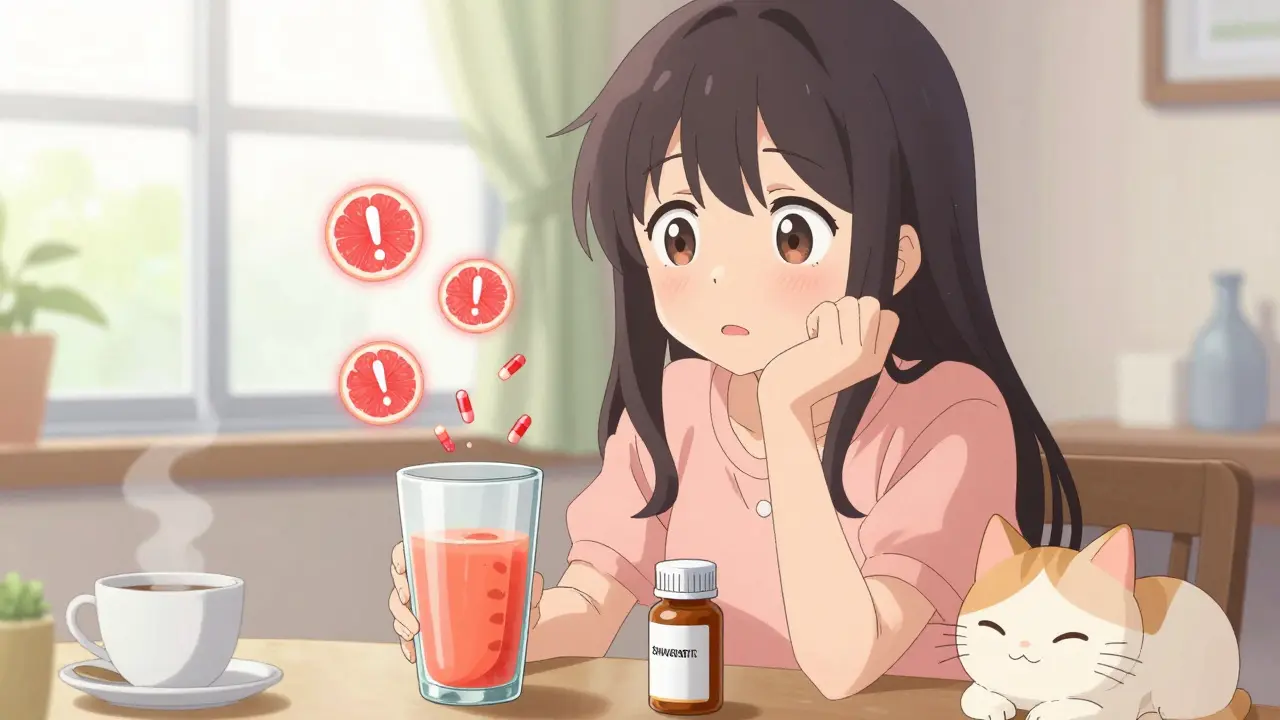
If you're taking a statin to lower your cholesterol, you might have heard to stay away from grapefruit. But why? It’s not just an old wives’ tale. This isn’t about sugar or calories - it’s about your body’s ability to process medicine. And the science behind it is both fascinating and potentially dangerous.
How Grapefruit Messes With Your Statins
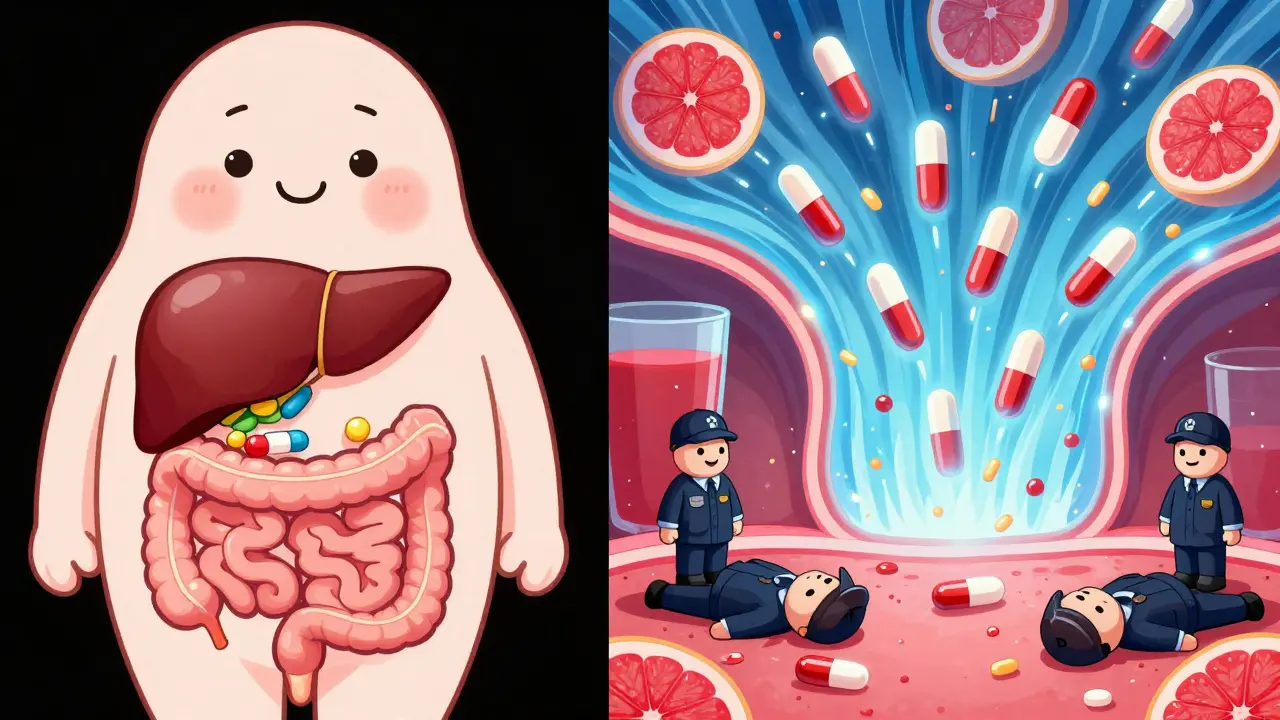
Grapefruit doesn’t make statins toxic. Instead, it tricks your body into letting way more of the drug into your bloodstream than it should. The culprit? Furanocoumarins - natural chemicals in grapefruit that shut down an enzyme called CYP3A4. This enzyme lives in your gut and liver, and it’s responsible for breaking down about half of all oral medications, including some statins.When CYP3A4 is working normally, it reduces how much of the statin enters your blood. Think of it like a bouncer at a club - it lets in just enough. But when grapefruit juice shows up, the bouncer gets knocked out. Suddenly, your body absorbs way more of the drug. One study showed that drinking grapefruit juice with simvastatin increased blood levels by more than 3.5 times. That’s not a small bump. That’s a full-on overload.
Not All Statins Are Created Equal
This isn’t a blanket warning for every statin. Some are fine. Others? You need to avoid grapefruit completely.Statins that interact badly with grapefruit:
- Simvastatin (Zocor) - worst offender. Even a small glass of juice can triple your drug levels.
- Lovastatin (Mevacor) - similar risk. Avoid grapefruit entirely.
- Atorvastatin (Lipitor) - moderate risk. One small glass (200 mL) per day is usually okay, but more than that? Not safe.
Statins that are mostly safe with grapefruit:
- Pravastatin (Pravachol)
- Rosuvastatin (Crestor)
- Fluvastatin (Lescol)
- Pitavastatin (Livalo)
Why the difference? The safe ones don’t rely on CYP3A4 to break down. Pravastatin and rosuvastatin are handled by other pathways, so grapefruit doesn’t touch them. That’s why doctors often switch patients to one of these if they love grapefruit.
The Real Danger: Muscle Damage
More statin in your blood doesn’t mean better cholesterol control. It just means more risk of side effects - especially muscle problems.Most people feel mild muscle aches. That’s common. But when grapefruit pushes statin levels too high, the risk spikes. You could develop myalgia - deep, persistent muscle pain. Or worse, rhabdomyolysis.
Rhabdomyolysis is rare, but terrifying. Your muscles start breaking down. Myoglobin - a protein from muscle tissue - floods your bloodstream. Your kidneys can’t handle it. That’s when kidney failure can happen. One documented case involved a 40-year-old woman on simvastatin who drank grapefruit juice daily for 10 days. She ended up in the hospital with severe muscle damage and kidney injury.
Symptoms to watch for:
- Unexplained muscle pain, tenderness, or weakness
- Dark, tea-colored urine
- Extreme fatigue
If you notice any of these, stop grapefruit and call your doctor - right away. Don’t wait. Kidney damage from rhabdomyolysis can be permanent.
Timing Doesn’t Matter
You might think, “I’ll just take my pill in the morning and drink grapefruit juice at night.” That won’t work. The damage grapefruit does isn’t temporary. Furanocoumarins bind to CYP3A4 and knock it out for good - until your body makes new enzyme. That takes up to 72 hours.So even if you eat grapefruit on Monday, your system is still vulnerable on Thursday. That’s why doctors say: if you’re on simvastatin or lovastatin, skip grapefruit completely. No exceptions. No “just one glass.”
What About Fresh Fruit, Juice, or Extracts?
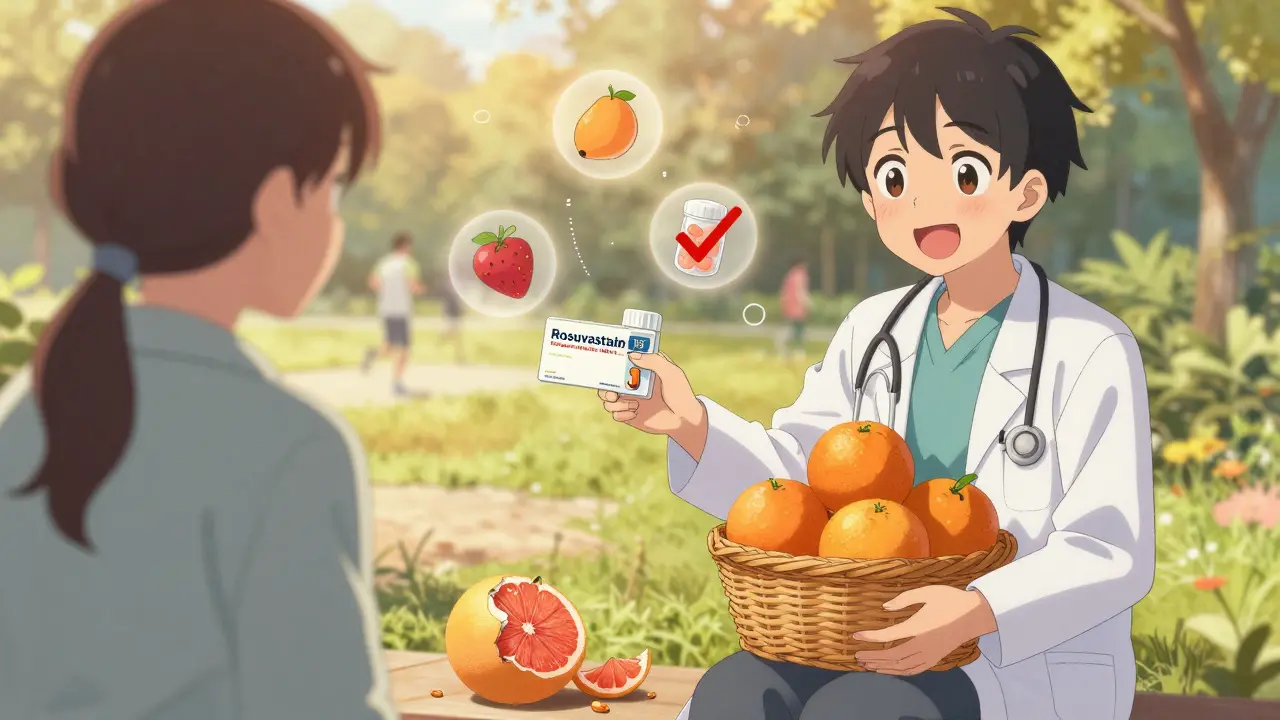
It doesn’t matter how you take it. Fresh grapefruit, juice, concentrate, or even grapefruit-flavored soda - they all contain furanocoumarins. A 2021 study found no difference in risk between juice and whole fruit. Even grapefruit-flavored supplements or teas can trigger the interaction.And it’s not just grapefruit. Seville oranges, pomelos, and some tangelos have the same chemicals. Regular oranges? Safe. Blood oranges? Fine. Stick to those if you’re unsure.
What Should You Do?
If you’re on a statin and love grapefruit, here’s what to do:- Check your prescription. Look up your statin name. If it’s simvastatin or lovastatin, stop grapefruit now.
- Talk to your doctor. Ask if you can switch to a safer statin like pravastatin or rosuvastatin. Many patients do - and never miss their grapefruit again.
- Don’t guess. A 2021 survey found only 38% of statin users knew about this interaction. Don’t be one of them. Ask your pharmacist. They’re trained to catch these things.
- Don’t stop your statin. The risk of heart attack or stroke from skipping your medicine is far higher than the risk from grapefruit. If you’re scared, talk to your doctor - don’t quit cold turkey.
Why This Matters More Than You Think
About 39 million Americans take statins. That’s one in five adults. Even if only a small percentage drink grapefruit regularly, the potential for harm adds up. In Australia, where statin use is rising fast, this isn’t just a U.S. issue.The good news? You can have both. You can manage your cholesterol and still enjoy your favorite fruit - if you choose the right statin. That’s the real takeaway. It’s not about fear. It’s about smart choices.
Doctors don’t tell you to avoid grapefruit because they want to take away your breakfast. They tell you because they know how powerful this interaction is. And they know you deserve to live well - without surprises.
Can I drink grapefruit juice if I take a low dose of simvastatin?
No. Even low doses of simvastatin can become dangerously high when combined with grapefruit. The interaction isn’t dose-dependent in a way that makes low doses safe. The FDA and European Medicines Agency both recommend complete avoidance for simvastatin users, regardless of dosage.
How long does the grapefruit interaction last?
The enzyme-blocking effect of grapefruit can last up to 72 hours. That means even if you drink grapefruit juice at night and take your statin in the morning, you’re still at risk. The inhibition is irreversible - your body has to make new CYP3A4 enzyme to recover.
Are there any safe citrus fruits I can eat instead?
Yes. Regular oranges, blood oranges, tangerines, and clementines don’t contain furanocoumarins and are safe. Stick to these if you want citrus with your statin. Avoid Seville oranges, pomelos, and tangelos - they can cause the same interaction.
Can I eat grapefruit if I take rosuvastatin or pravastatin?
Yes. These statins are not metabolized by CYP3A4, so grapefruit doesn’t interfere. You can safely enjoy grapefruit in moderation. Still, it’s smart to check with your doctor if you have kidney issues or take other medications that might interact.
Is grapefruit interaction only a problem for older adults?
No. While older adults and those with kidney problems are at higher risk for complications, anyone taking a CYP3A4-metabolized statin can be affected. Rhabdomyolysis cases have been reported in people as young as their 30s. Age isn’t the deciding factor - the statin type and grapefruit intake are.
So let me get this right-you’re telling me I can’t have my morning grapefruit, because some lab rat in a white coat decided it’s dangerous? I’ve been eating it for 20 years, and I’ve never felt better. This is just Big Pharma trying to control what we eat. Next they’ll ban coffee because it ‘interferes with absorption.’
Actually, the science here is solid. Furanocoumarins irreversibly inhibit CYP3A4, and simvastatin’s AUC increases by over 300% with grapefruit juice. This isn’t opinion-it’s pharmacokinetics. If you’re on simvastatin, stop. Now.
They don’t want you to know this-but grapefruit isn’t the real enemy. It’s the FDA. They push this warning so you’ll buy their expensive ‘safe’ statins. Rosuvastatin? Patent-protected. Pravastatin? Generic. Who profits? Big Pharma. Who gets hurt? You. You’re being manipulated.
I switched from simvastatin to rosuvastatin last year because of this exact issue. I love grapefruit, and now I can have it again without panic. Talk to your doctor-it’s not about giving things up, it’s about finding what works for you.
Listen. Statins save lives. Grapefruit is a minor risk if you’re informed. But ignorance kills. If you don’t know which statin you’re on, go to your pharmacy. Ask them. Don’t guess. Your heart will thank you.
My dad was on simvastatin and drank grapefruit juice every day. He got muscle pain so bad he couldn’t walk. We thought it was aging. Turns out it was the combo. He switched to pravastatin and now he’s back to gardening. Don’t wait for a crisis.
Interesting how the article cites a 2021 study but doesn’t mention that the FDA’s warning on simvastatin was issued in 2011. Is this new information-or just recycled fear-mongering dressed up as science?
This is why America is falling apart. We let corporations tell us what we can eat. Back in my day, we ate grapefruit with our statins and didn’t need a PhD to understand our bodies. Now we’re scared of fruit. Pathetic.
As a pharmacist, I see this every day. People think ‘natural’ means safe. Furanocoumarins are plant toxins. They’re not ‘health food’-they’re enzyme killers. If you’re on a CYP3A4 substrate, avoid citrus like it’s radioactive. No exceptions. Period.
In India, we’ve been drinking grapefruit juice with medicine for generations-no one ever talked about this. But here’s the thing: we also don’t have statins prescribed as freely. Maybe it’s not just the fruit-it’s the dosage, the culture, the access. I’ve seen my uncle take atorvastatin with juice, and he’s fine. But I’d still switch to rosuvastatin. Better safe than sorry.
Just switched to pravastatin last month. Can finally enjoy my grapefruit again without guilt. Seriously, talk to your doc. It’s not a big deal. They’ve got options. You don’t have to give up your breakfast.
They say ‘don’t mix grapefruit with statins’-but who made them the authority? The FDA? The AMA? The same institutions that told us trans fats were safe? This is control disguised as care.
I didn’t know any of this until my pharmacist flagged it. I was on simvastatin and drank grapefruit juice daily. I had no symptoms. But now I’m on rosuvastatin. Better safe than sorry. Thanks, pharmacist.