
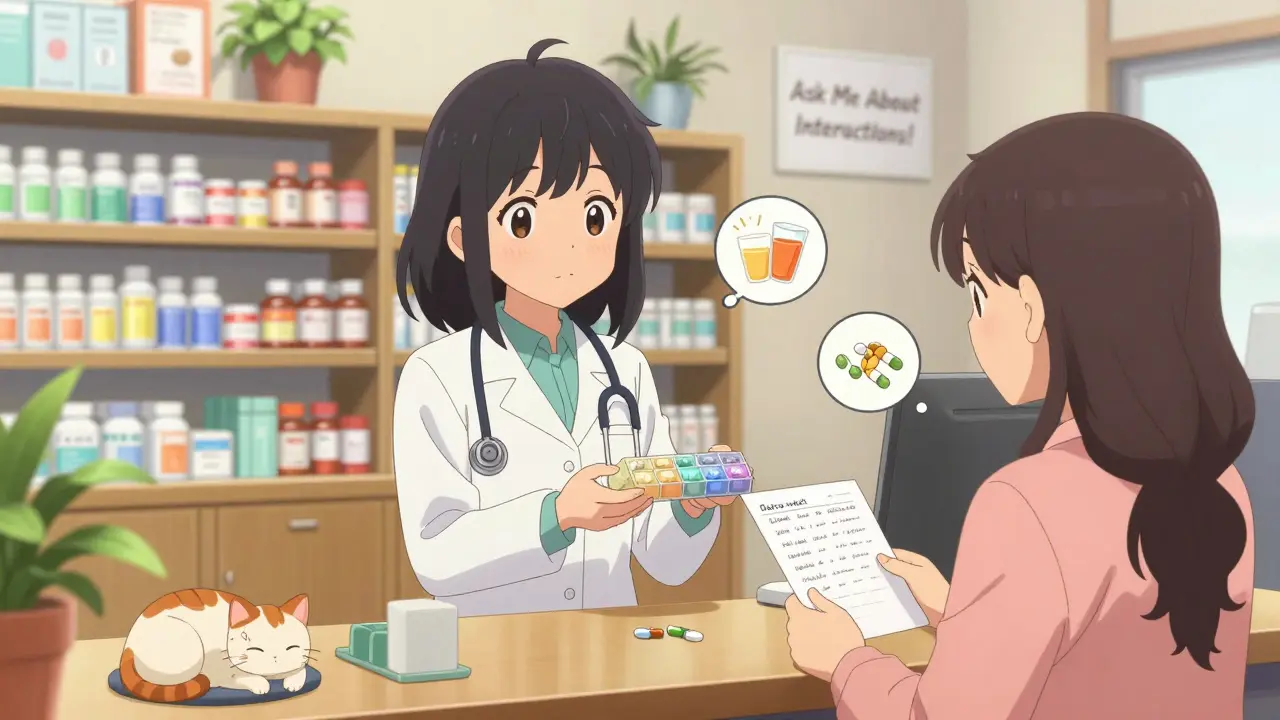
Every year, over a million people in the U.S. end up in the emergency room because of drug interactions. Many of these cases are preventable - and the person who can help you the most is often the pharmacist standing behind the counter, not your doctor. You don’t need to be on ten medications to be at risk. Even one new pill, a change in your diet, or a random herbal supplement can set off a chain reaction you never saw coming.
What exactly is a drug interaction?
A drug interaction happens when something changes how a medication works in your body. It could be another pill, a food, a drink, or even a health condition you have. The result? The medicine might not work as well, it might make you sicker, or it could cause a dangerous side effect you didn’t expect.There are three main types:
- Drug-drug interactions: When two or more medicines react with each other. For example, taking blood thinners like warfarin with certain painkillers can increase your risk of bleeding.
- Drug-food/beverage interactions: Grapefruit juice can stop your body from breaking down some cholesterol meds, causing toxic levels to build up. Alcohol can make sedatives or antidepressants way too strong.
- Drug-condition interactions: If you have high blood pressure, an over-the-counter decongestant might spike your pressure to dangerous levels. If you have kidney disease, some antibiotics can overload your system.
These aren’t rare edge cases. The FDA requires all prescription labels to list interaction warnings. But the label won’t tell you how it affects you. That’s where your pharmacist comes in.
What should you ask your pharmacist before taking a new medication?
You don’t need to be a medical expert to ask the right questions. Just be prepared. Bring your list - all of it.Start with these five essential questions:
- Can this interact with anything else I’m taking? Don’t just say ‘my prescriptions.’ List everything: antibiotics, blood pressure pills, insulin, even the daily aspirin you’ve been taking for years. Pharmacists see interactions most often between old meds and new ones.
- Should I avoid any foods, drinks, or supplements? Grapefruit juice is the classic example - it messes with over 85 medications, including statins, some blood pressure drugs, and even certain allergy pills. But it’s not just grapefruit. Aged cheeses, cured meats, and red wine can be dangerous if you’re on an MAO inhibitor for depression. And don’t forget St. John’s wort - it’s in so many ‘natural’ mood supplements, and it can knock out antidepressants, birth control, and heart meds.
- How will this affect my existing health conditions? If you have diabetes, heart disease, liver problems, or kidney issues, your pharmacist needs to know. Some cold medicines can raise blood sugar. Some painkillers can hurt your kidneys. Even something as simple as a calcium supplement can block absorption of thyroid meds if taken at the same time.
- When and how should I take this? Some pills need food to be absorbed. Others must be taken on an empty stomach. Some need to be spaced out by hours. Taking a blood pressure pill with breakfast instead of dinner might mean your pressure spikes at night. The ‘Directions’ on the label aren’t just suggestions - they’re safety instructions.
- What signs should I watch for if something’s wrong? Don’t wait for a hospital visit. Ask: ‘What’s the first red flag I should notice?’ For warfarin, it’s unusual bruising or bleeding gums. For statins, it’s unexplained muscle pain. For diabetes meds, it’s dizziness or sweating. Knowing what to look for lets you act fast.
Why bringing your full medication list matters
Most people think they know what they’re taking. They don’t. They forget the over-the-counter stuff. They don’t remember the dosage. They skip the vitamins.Pharmacists don’t just check for drug-drug clashes. They look at your whole picture: your age, your kidney function, your diet, your sleep habits, even how often you take your pills. A 2023 study showed that when pharmacists did full medication reviews, drug interaction problems dropped by nearly 24% in older adults.
Here’s what to bring to your appointment:
- All prescription medications (including bottles or a printed list with names, doses, and how often you take them)
- All over-the-counter drugs - pain relievers, antacids, sleep aids, allergy pills
- All supplements - vitamins, minerals, fish oil, probiotics, herbal blends
- All herbal teas or botanicals you drink regularly
- A note on your diet - do you drink grapefruit juice daily? Do you eat a lot of leafy greens? Do you drink alcohol?
Even if you think something is ‘harmless,’ tell them. St. John’s wort, garlic pills, ginkgo biloba - these aren’t just ‘natural.’ They’re active chemicals. And they interact.
What you might not realize about supplements
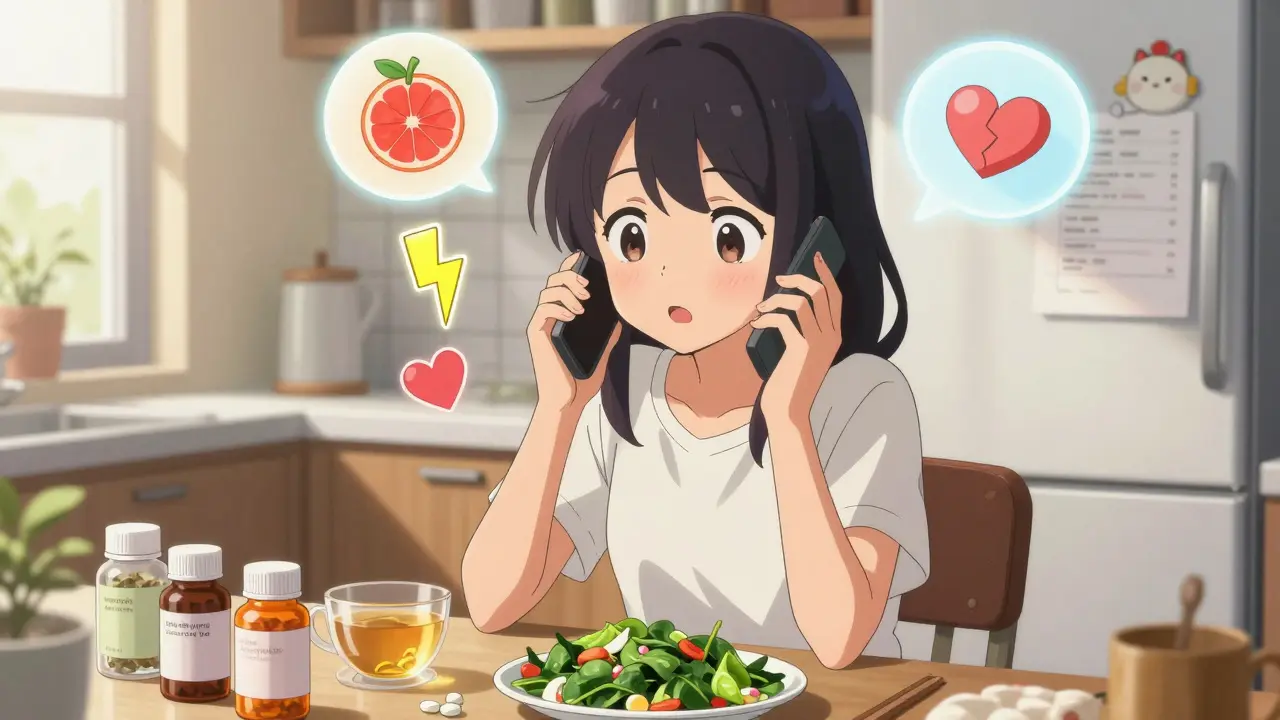
The supplement industry is booming. Nearly 8 out of 10 adults in the U.S. take at least one. But here’s the problem: supplements aren’t tested the way prescription drugs are. There’s no FDA review for safety or interactions before they hit the shelf.Take vitamin K. If you’re on warfarin, your dose is carefully balanced around how much vitamin K you eat. Spinach, kale, broccoli - they’re healthy, but they can make your blood thinner or thicker depending on how much you eat. Your pharmacist can help you keep it steady.
Or consider magnesium. It’s common in sleep or muscle supplements. But if you’re on certain antibiotics or osteoporosis drugs, magnesium can block absorption - making both the supplement and the medicine useless.
And don’t assume ‘natural’ means safe. Licorice root can raise blood pressure. Echinacea can interfere with immune drugs. Turmeric can thin your blood. These aren’t myths. They’re documented, repeatable interactions.
How often should you check in with your pharmacist?
Don’t wait for a problem to arise. Make this part of your routine.Every time you get a new prescription - even if it’s just for antibiotics - stop by the pharmacy and ask the pharmacist to review it with your current list. Many people think the doctor already checked. But doctors don’t always know what you’re taking on the side.
At minimum, do a full review every three months. That’s when most interactions happen - not when you start a new drug, but when you add one to an existing pile. The most recent medication is often the culprit.
And if your health changes - you gain weight, develop kidney trouble, start a new diet - go back. Your body’s ability to process drugs changes. What was safe last year might not be safe now.
Why digital tools aren’t enough
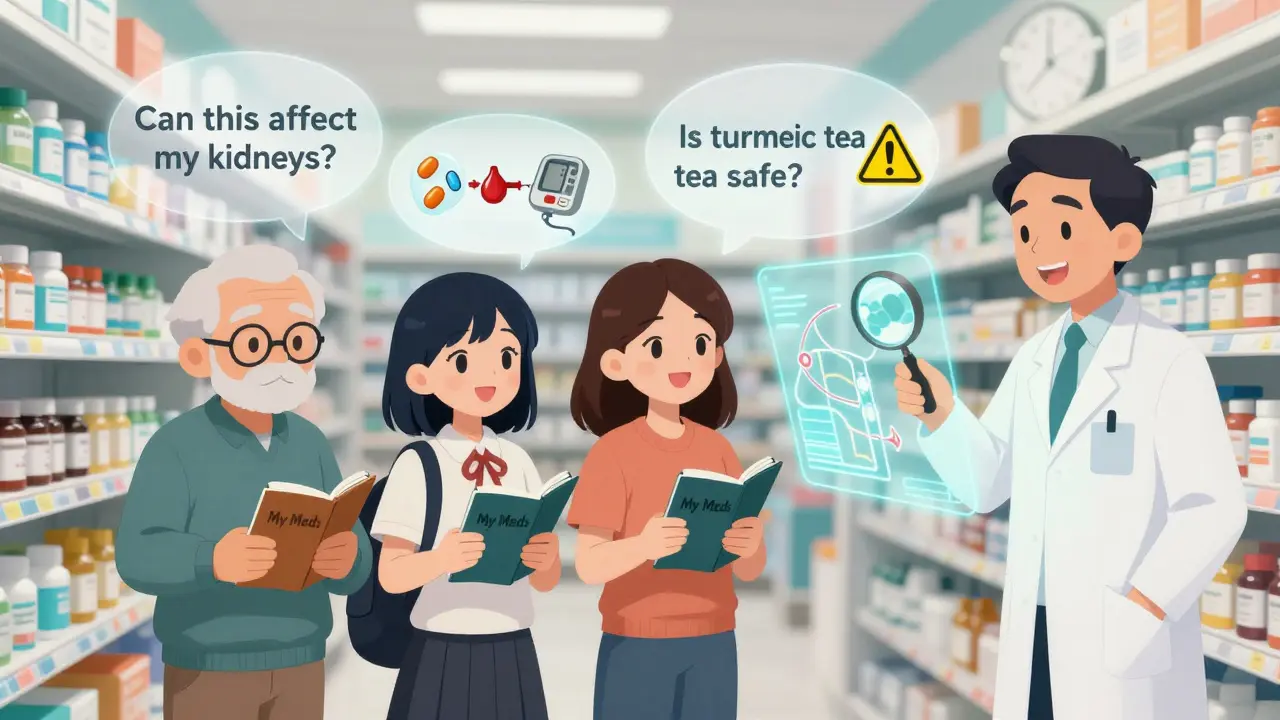
Most pharmacies use computer systems that flag obvious interactions. But here’s the truth: those systems miss about 18% of dangerous combinations, according to a 2022 study in JAMA Internal Medicine.Why? Because the system doesn’t know you take turmeric tea every morning. It doesn’t know you stopped your blood pressure pill last week because you felt dizzy. It doesn’t know you’re on a keto diet now. It only sees what’s entered.
Your pharmacist is the only person who can connect the dots between your life and your meds. That’s why your questions matter.
What happens if you don’t ask?
You might feel fine. For a while.But interactions don’t always hit like a siren. Sometimes they creep in. You feel more tired than usual. Your blood pressure won’t drop. Your pain isn’t getting better. Your stomach is upset. You think it’s aging, stress, or bad luck.
Then one day, you end up in the ER. And the doctor says, ‘You’re on too many things.’
It doesn’t have to be that way. You don’t need to be a scientist. You just need to be informed. And you need to speak up.
The system isn’t perfect. But your pharmacist is there to fill the gaps. Use them.
Final reminder: Your meds are not a mystery
You don’t need to memorize every chemical name. You don’t need to understand cytochrome P450 enzymes or drug metabolism pathways. You just need to know what you’re taking - and ask the right questions.Keep your list. Bring it every time. Ask about food. Ask about supplements. Ask about your conditions. Ask what to watch for.
Because when it comes to your health, the most powerful tool isn’t a pill - it’s asking the right question.


