
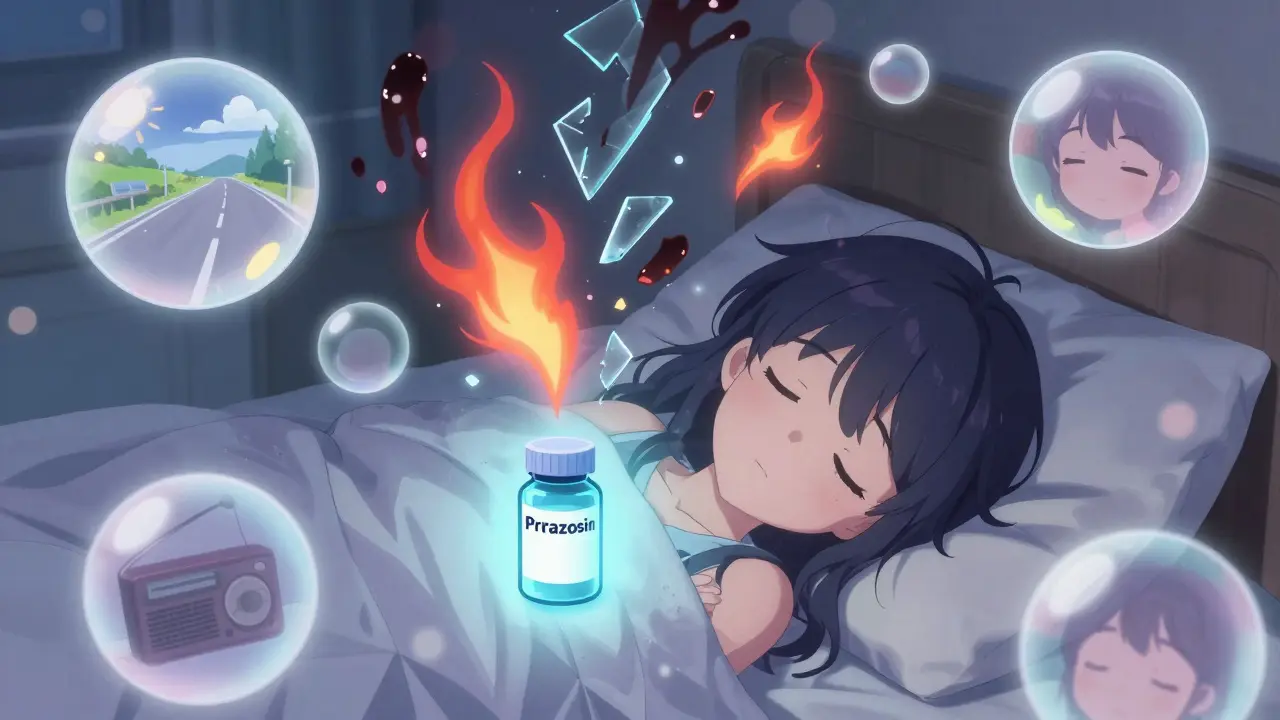
For many people living with PTSD, the worst part isn’t the memories-it’s what happens when they close their eyes. Nightmares don’t just disrupt sleep; they trap you in a loop of fear, exhaustion, and dread. If you’ve woken up drenched in sweat, heart racing, convinced you’re back in the trauma, you’re not alone. About 71-90% of military veterans with PTSD and over half of civilian survivors experience these nightmares regularly. And while trauma-focused therapy is the gold standard, sleep problems often stick around long after other symptoms fade. That’s where prazosin and sleep-focused therapies come in-but they’re not the same thing, and not everyone responds the same way.
What Prazosin Actually Does for PTSD Nightmares
Prazosin isn’t a new drug. It was developed in the 1970s to lower blood pressure. But in 2003, a VA doctor named Dr. Murray Raskind noticed something odd: veterans taking it for hypertension also stopped having violent nightmares. He started testing it specifically for PTSD-and the results were striking. Today, it’s used off-label for this purpose across the U.S. VA system and beyond.Prazosin works by blocking alpha-1 receptors in the brain, which reduces the surge of norepinephrine-the stress chemical that spikes during REM sleep. In PTSD, this system goes haywire. Your brain thinks it’s still under threat, even when you’re asleep. Prazosin quiets that signal. Most people start at 1 mg at bedtime, then slowly increase by 1 mg each week until they hit 3-15 mg. Some need up to 25 mg, but that’s rare.
Studies show prazosin reduces nightmare frequency by about 50% or more in about 60-70% of users. On Reddit’s r/PTSD forum, 62% of users reported fewer nightmares, and 38% said they stopped completely. But it’s not magic. Side effects like dizziness (29%), low blood pressure (15%), and nasal congestion (18%) are common. And if you stop taking it suddenly, rebound nightmares happen in nearly 30% of cases. That’s why tapering off slowly under medical supervision is critical.
Here’s the catch: prazosin doesn’t fix PTSD. It just masks the symptom. A 2022 meta-analysis found it had only a small effect on overall PTSD symptoms. It’s a band-aid for sleep, not a cure for trauma. That’s why experts don’t recommend it as a first-line treatment-but it’s often the only option for people who can’t access therapy.
Why Sleep Therapy Works Better Than Medication for Most
If you’ve ever tried to sleep after a nightmare, you know how broken the system feels. Your bed becomes a trigger. Your mind races. You start dreading bedtime. That’s where Cognitive Behavioral Therapy for Insomnia (CBT-I) steps in. Unlike pills, CBT-I rewires your brain’s relationship with sleep.CBT-I isn’t just about sleeping more. It’s about sleeping better. A typical program lasts 6-8 weeks, with weekly 60-minute sessions. It includes:
- Stimulus control: Get out of bed if you’re awake for more than 20 minutes. Don’t lie there stressing.
- Sleep restriction: Limit time in bed to match how much you actually sleep-even if it’s only 5 hours. This builds sleep pressure.
- Cognitive restructuring: Challenge thoughts like “If I don’t sleep 8 hours, I’ll collapse tomorrow.”
- Sleep hygiene: No screens after 10 p.m., cool dark room, no caffeine after 2 p.m.
- Relaxation training: Breathing, progressive muscle relaxation, mindfulness.
The results? A 2021 review showed CBT-I cuts insomnia severity by 1.35 standard deviations-that’s huge. It also reduces PTSD symptoms by nearly 60%. And unlike prazosin, these gains stick. In VA surveys, 63% of patients still had better sleep six months later. One veteran told me, “I didn’t realize I’d forgotten what it felt like to sleep without fear until I did.”
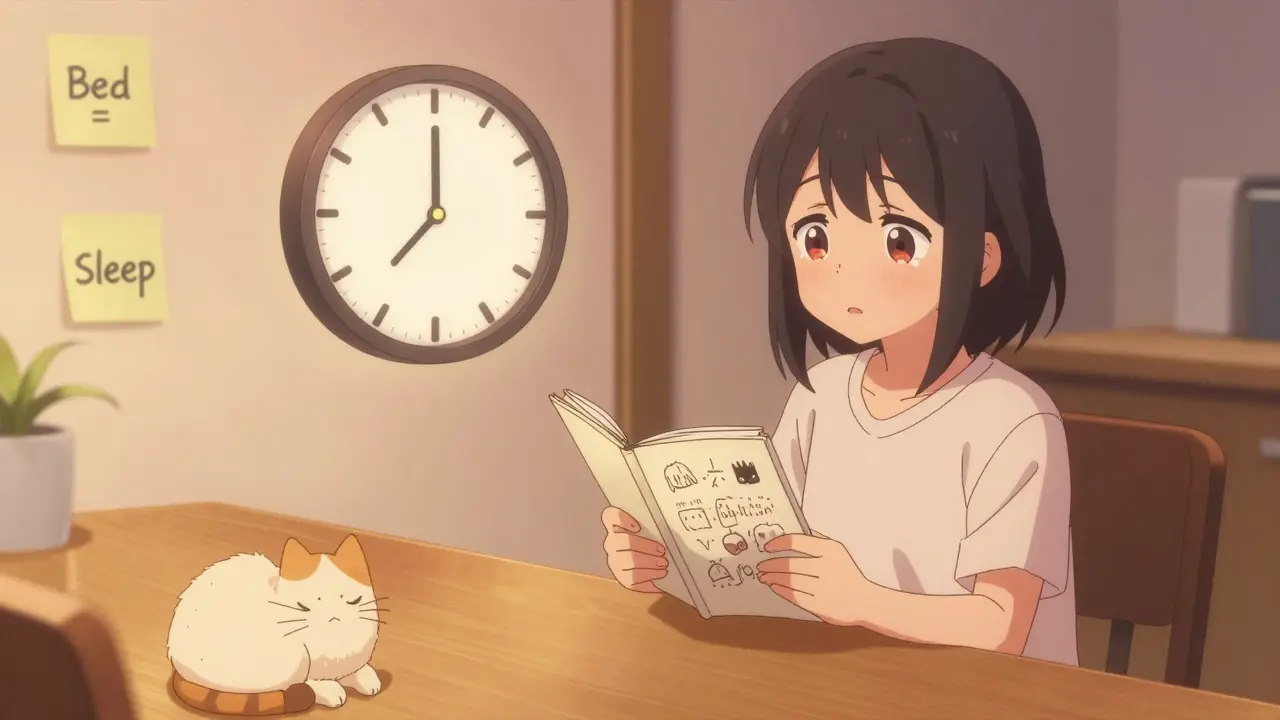
CBT-I isn’t easy. The first two weeks are brutal. Sleep restriction means you’re tired all day. You feel like you’re failing. But that’s part of the process. Your brain needs to relearn that bed = sleep, not panic.
Imagery Rehearsal Therapy: Rewriting Your Nightmares
If nightmares feel like a movie you can’t turn off, Imagery Rehearsal Therapy (IRT) is like changing the ending. You don’t just try to forget the dream-you rewrite it.Here’s how it works: You pick a recurring nightmare. Then, during the day, you write down the original version. After that, you rewrite it-changing the outcome to something neutral or positive. Maybe you’re being chased? In the new version, you turn around and walk away safely. Or you call for help and someone arrives. You read this new version out loud for 10-15 minutes every day.
It sounds simple. But it works. Studies show 67-90% of PTSD patients see a major drop in nightmare frequency after just 3-5 sessions. In a 2020 National Center for PTSD survey, 85% of users said their nightmare distress dropped significantly. One woman who kept dreaming about her car accident started rewriting it as her driving away on a sunny road, radio on, humming along. Within weeks, the dream vanished.
IRT doesn’t require trauma processing. That’s why it’s often used before or alongside other therapies. It’s especially helpful for people who aren’t ready to talk about the original trauma but still want relief from the nightmares.
The Real Winner: Combining Therapy with Trauma Treatment
The most powerful approach isn’t prazosin alone. It’s not even CBT-I alone. It’s combining sleep therapy with trauma-focused treatment.Take CBT-I + Prolonged Exposure (CBT-I-PE). In a 2022 VA study, people who got this combo saw:
- Insomnia severity drop by 12.4 points (vs. 4.2 with just exposure therapy)
- Sleep efficiency jump by 15.3% (vs. 3.1%)
- Total sleep time increase by 78 minutes (vs. 22 minutes)
Why? Because trauma and sleep are linked. When you process the memory in therapy, your brain stops seeing danger everywhere-even in sleep. When you fix your sleep habits, your brain recovers its ability to regulate emotion. Together, they create a feedback loop of healing.
The VA’s “Sleep SMART” initiative now offers this integrated model in 143 facilities. Completion rates? 74%-far higher than community clinics. That’s because they treat sleep as part of PTSD recovery, not a side issue.
Why Prazosin Still Has a Place
Let’s be real: not everyone can get therapy. Not everyone has access to a trained CBT-I provider. Not everyone is ready to face their trauma. That’s where prazosin fills a gap.In the VA system, 78% of veterans with PTSD get medication, but only 32% get evidence-based psychotherapy. For people in rural areas, those numbers are worse. A 2022 VA report found rural veterans have 47% less access to sleep therapists than urban ones.
Prazosin is cheap. It’s generic. It’s available in any pharmacy. For someone who’s been sleep-deprived for years, it can be life-changing-even if it’s not perfect. It buys time. It gives space to heal.
But here’s the warning: if you’re on prazosin and you’re not doing any trauma work, you’re treating the symptom, not the cause. And over time, that can leave you stuck.
What’s New in 2026: Digital Tools and the Future
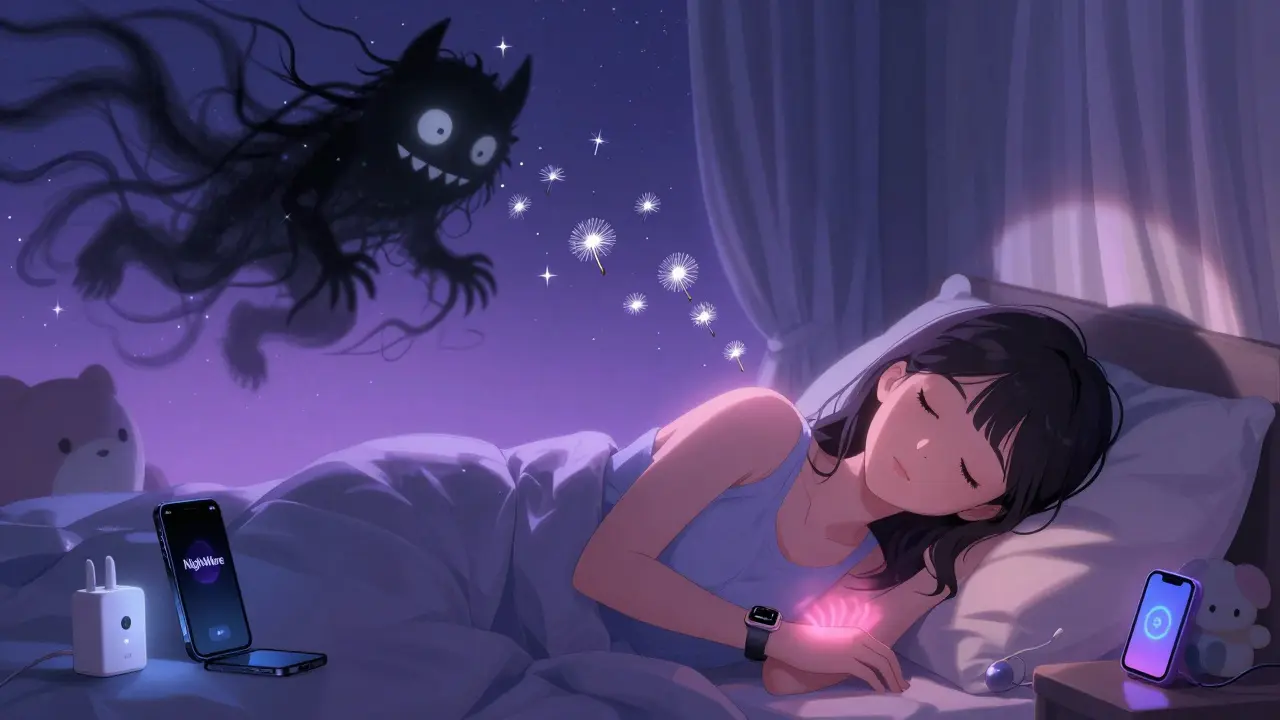
The landscape is changing. In 2020, the FDA approved NightWare-the first digital therapeutic for PTSD nightmares. It uses an Apple Watch to detect when your heart rate and movement spike during REM sleep. Then, it delivers a gentle vibration to nudge you out of the nightmare-without waking you up.In a 2022 study, users saw a 58% reduction in nightmares. No pills. No therapy sessions. Just a watch and a quiet nudge.
The Department of Defense just allocated $28 million in 2024 to study combining NightWare with virtual reality exposure therapy. That’s a sign of where things are headed: tech-assisted, personalized, sleep-focused care.
And the data is clear: by 2027, nearly all PTSD treatment guidelines will require routine sleep screening. Sleep isn’t a side effect anymore. It’s a core symptom.
What to Do If You’re Struggling with PTSD Nightmares
If you’re dealing with nightmares, here’s your roadmap:- Track your nightmares for two weeks. Write down what happens, how often, how you feel afterward.
- See a doctor to rule out sleep apnea or other medical causes. Ask about prazosin if you’re not getting therapy.
- Ask for CBT-I. It’s not just for insomniacs. It’s for anyone whose sleep is wrecked by trauma.
- Try IRT. You can do it on your own with a journal and 10 minutes a day.
- Consider NightWare if you have an Apple Watch. It’s FDA-cleared and works without a prescription.
- Don’t wait to start trauma therapy. Even if you’re on prazosin, healing the root cause is the only way to get lasting peace.
The goal isn’t just to stop the nightmares. It’s to reclaim your sleep. Your rest. Your life. And that’s possible-even if it doesn’t feel like it right now.
Been on prazosin for 8 months. Nightmares cut in half. Dizzy as hell in the morning but worth it. My wife says I finally sleep like a human again. No therapy, just this pill. Don't judge me.
Let’s be clear: prazosin is a Band-Aid on a gunshot wound. The VA’s reliance on pharmacological bandages over evidence-based psychotherapy is a systemic failure disguised as compassion. CBT-I isn’t just ‘better’-it’s the only intervention that addresses neurobiological reconsolidation. Yet we allow corporate pharmacy models to dictate veteran care because it’s cheaper. Pathetic.
Okay but hear me out-what if the real issue isn’t the nightmares themselves but the fact that we’ve turned sleep into a battlefield? We treat PTSD like it’s a glitch in the software, so we patch it with pills or scripts. But what if the whole operating system-our culture, our silence around trauma, our glorification of ‘toughing it out’-is corrupted? Prazosin doesn’t fix that. CBT-I doesn’t fix that. NightWare doesn’t fix that. We’re just rearranging deck chairs on the Titanic while the water rises. And nobody wants to talk about the fact that we’re medicating trauma because we refuse to pay for healing.
Interesting breakdown. I’ve seen both sides-my brother did CBT-I and it took him six months to even feel like sleeping was safe again. But he’s been nightmare-free for two years now. Prazosin helped him get through the first month so he could even show up to therapy. I think the real win is when people use meds as a bridge, not a destination. The fact that 63% still had better sleep six months later? That’s not coincidence. That’s rewiring.
Respected Sir/Madam, I have carefully reviewed your comprehensive exposition regarding the pharmacological and cognitive-behavioral interventions for PTSD-related nightmares. While the data presented is statistically compelling, I must respectfully submit that the absence of longitudinal neuroimaging correlates-specifically fMRI-based amygdala-hippocampal connectivity metrics-renders the clinical efficacy claims insufficiently validated under rigorous scientific epistemology. Furthermore, the casual invocation of ‘band-aid’ metaphors undermines the ontological complexity of trauma neurobiology. I urge a more granular, peer-reviewed framework before widespread adoption.
bro i was on prazosin and it made me feel like a zombie. like i couldnt even cry. i missed my dad’s funeral because i was too numb to get out of bed. i stopped it. started doing IRT on my own. wrote a new ending where he’s laughing in the kitchen. now i dream about pancakes. i cry sometimes. but i sleep.
Let me remind this nation: America doesn’t need sleep therapy. We need strength. We need grit. We need men and women who face their demons without pills, without apps, without rewiring their dreams. The VA has turned trauma into a commodity-sell a watch, sell a pill, sell a 6-week course. But the real American spirit? It doesn’t change the dream. It endures it. And if you can’t sleep? Then don’t sleep. Stand. Fight. Survive. That’s what our veterans did in combat. Why are we asking them to sleep like children now?
There’s something deeply spiritual about IRT-it’s not just cognitive restructuring, it’s reclaiming narrative sovereignty. When you rewrite the nightmare, you’re not just changing the plot, you’re reasserting agency over a memory that stole your autonomy. And the fact that 85% report reduced distress? That’s not just data-it’s embodied liberation. The brain doesn’t forget trauma, but it can learn to hold it differently. That’s the quiet revolution happening in sleep clinics across the country. And honestly? It’s the most hopeful thing I’ve seen in mental health in a decade.
I’ve trained 300+ veterans in CBT-I and IRT. Let me tell you-most people give up after week two. Sleep restriction feels like torture. You’re exhausted, irritable, convinced you’re failing. But here’s the secret: the worst nights are the ones that change you. That’s when your brain starts to unlearn the fear. I had a Marine who said, ‘I didn’t know I was afraid of my own bed until I stopped being afraid of it.’ That’s the moment you become your own healer. And no pill can give you that.
My nightmares stopped after I stopped watching war movies before bed.
So let me get this straight-you’re telling me a watch that vibrates is better than facing your trauma? That’s not healing. That’s distraction. You’re outsourcing your pain to a gadget. And now we’re calling it ‘FDA-approved’? Next they’ll sell us a meditation app that whispers ‘you’re safe’ while you’re having flashbacks. Welcome to the future of mental health: branded, monetized, and completely disconnected from truth.
Neurophenomenologically speaking, the ontological dissonance induced by pharmacological suppression of REM-mediated affective reactivation creates a paradoxical epistemic closure wherein the subject experiences symptom attenuation without affective integration. In layman’s terms: you feel better, but you’re still broken. The dream isn’t gone-it’s just been buried under a chemical fog. IRT, on the other hand, allows for symbolic resolution. That’s not therapy. That’s alchemy.
prazosin works but its a bummer you gotta take it every night like its a vitamin. i just wanna be done with it. i tried irt and it felt weird writing my dream but now i dream about riding a bike through a forest. no one chasing me. just wind. i miss that feeling
so you’re telling me the VA spends millions on a watch that vibrates… but won’t hire one more therapist? classic. i get it. pills are cheap. apps are scalable. but real human connection? That costs money. And we’d rather give veterans a gadget than a hug.