

More than half of adults will deal with hemorrhoids by the time they turn 50. They’re not rare, not dangerous in most cases, and often not even painful-but they can be incredibly uncomfortable. If you’re dealing with itching, burning, or swelling around your anus, you’ve probably already reached for an OTC cream, wipe, or suppository. And you’re not alone. About 78% of people try these products first before calling a doctor. The problem? Many of them stop using them too soon-or use them wrong-and wonder why nothing’s helping.
What OTC Hemorrhoid Treatments Actually Do
OTC hemorrhoid products don’t cure anything. They don’t shrink veins. They don’t fix the root cause-like straining during bowel movements, sitting too long, or pregnancy. What they do is buy you time. They temporarily numb the pain, reduce swelling, or calm the itch. Think of them like a bandage for a cut, not stitches.
There are four main types of active ingredients you’ll find:
- Local anesthetics like benzocaine or pramoxine: block nerve signals for 2-4 hours. Good for sudden pain.
- Witch hazel (usually 14%): acts as an astringent. Cools and tightens tissue. Works fast but doesn’t last long-30 to 60 minutes.
- Vasoconstrictors like phenylephrine (0.25% in Preparation H): shrink blood vessels. Reduces swelling within 15 minutes, but wears off in 2-4 hours.
- Corticosteroids like hydrocortisone (1%): fight inflammation. Takes 3-4 days to kick in. Best for long-term irritation, not instant relief.
Suppositories work better for internal hemorrhoids because they deliver the medicine directly where it’s needed. Creams and wipes are better for external swelling. Combination products-like Anusol HC with both pramoxine and hydrocortisone-tend to work better than single-ingredient ones. Studies show up to 40% more symptom relief.
How to Use OTC Treatments Right
Using these products incorrectly cuts their effectiveness by half or more. Here’s what actually works:
- Apply after a bowel movement. Clean the area gently with warm water and pat dry. Moisture makes things worse.
- Use clean fingers or an applicator. Don’t reuse old wipes or touch the tube with dirty hands. Contamination can cause infection.
- Stick to the schedule. Most creams need 3-4 applications daily for at least 7 days. Don’t stop after 2 days because “it feels better.” Inflammation doesn’t vanish overnight.
- Store properly. Some creams, especially those with phenylephrine, work better if refrigerated. Check the label.
- Don’t overuse. Applying more than recommended doesn’t speed things up. It can irritate the skin more.
Combine OTC treatments with sitz baths-15-20 minutes in warm water, 2-3 times a day. Research shows this alone reduces symptoms by 25%. It’s cheap, easy, and works better than you’d think.
What Works Best for External vs. Internal Hemorrhoids
Location matters. External hemorrhoids sit under the skin around the anus. They’re the ones that feel like a tender lump and hurt when you sit. For these:
- Witch hazel wipes (like Tucks) give quick cooling relief.
- Benzocaine creams work well for sharp pain.
- Keep the area dry. Moisture = irritation.
Internal hemorrhoids are inside the rectum. You might not feel them unless they prolapse (pop out). For these:
- Hydrocortisone suppositories (25mg) are the gold standard.
- Insert them right after a bowel movement, when the rectum is empty.
- Use them 2-4 times a day for up to a week.
- 87% of users report noticeable improvement within 48 hours when used correctly.
Don’t use suppositories for external symptoms. Don’t use creams for internal ones. Match the product to the problem.
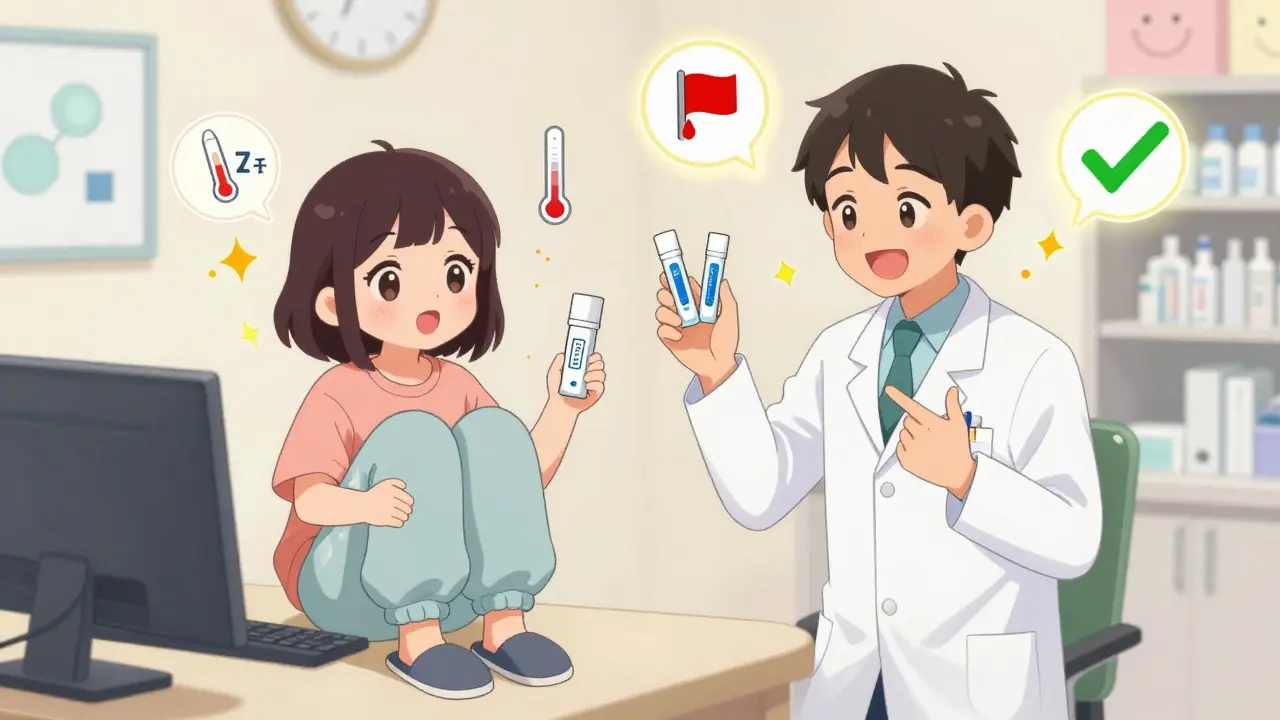
When OTC Treatments Don’t Work-And Why
Here’s the hard truth: if you’ve been using OTC treatments for more than 7 days and still feel pain, itching, or bleeding, they’re not working. That doesn’t mean you’re doing something wrong-it means your hemorrhoids are beyond what these products can handle.
OTC treatments are designed for grade I and II hemorrhoids-small swellings that don’t prolapse. Once you’re at grade III (they come out and need pushing back in) or grade IV (they’re stuck outside), OTC options are useless. Studies show only 15% of people with these advanced cases get relief from creams or suppositories. The rest need medical procedures.
And yes, some people just don’t respond. A 2023 review of Amazon and Drugstore.com reviews found that 41% of users on hydrocortisone creams saw no improvement after 7 days. That’s not a failure of the product-it’s a sign your body needs something stronger.
Red Flags: When to See a Doctor Right Away
Not every itch or ache needs a doctor. But some signs mean you shouldn’t wait.
- Bleeding during bowel movements. Hemorrhoids can cause bright red blood on toilet paper or in the bowl. But so can colon polyps or cancer. If it’s new, frequent, or you’re over 45, get it checked.
- Severe pain. If it’s so bad you can’t sit, walk, or sleep, you might have a thrombosed hemorrhoid-a blood clot inside the vein. It needs prompt treatment.
- Protruding tissue that won’t go back in. If you can’t gently push a prolapsed hemorrhoid back inside, you need medical help. Left untreated, it can strangulate.
- No improvement after 7 days. Even if you’ve been using everything right. That’s the official cutoff from the American Society of Colon and Rectal Surgeons.
- Fever or pus. That’s infection. Don’t delay.
Doctors have options OTC products don’t: stronger prescription creams (like 2.5% hydrocortisone), rubber band ligation (95% effective), infrared coagulation, or even minor surgery. These aren’t scary. Most are done in-office in under 30 minutes.
What People Are Really Saying
Online communities like Reddit’s r/hemorrhoids have over 125,000 members. In a recent survey of 1,243 posts, 68% said OTC treatments gave them “moderate, temporary relief.” That’s it. Not cured. Not fixed. Just less annoying for a few hours.
Amazon reviews for Tucks Witch Hazel Pads show a 4.4/5 average. The top 5-star comments say things like “instant coolness” and “saved me after a long flight.” But the 1-star reviews? “Used it for a week. Nothing changed.”
One user on Healthline’s survey said: “I thought I was being patient. I used the cream for 5 days, then gave up. Turned out I had a grade III hemorrhoid. The doctor did a quick banding. Gone in a week.”
The pattern is clear: people who wait too long end up with more pain, more cost, and more time lost. Those who act early-even if they start with OTC-do better.

Cost and Market Reality
OTC hemorrhoid products made $1.2 billion in the U.S. in 2022. Preparation H alone took 37% of that market. Tucks Witch Hazel was second. Generic hydrocortisone creams are the cheapest-around $8-$12 for a tube.
But here’s what no one tells you: buying the most expensive brand doesn’t mean better results. A $19 cream with pramoxine and hydrocortisone works no better than a $12 generic version with the same ingredients. Check the label. Match the active ingredients. Save your money.
And don’t fall for “miracle” products with herbal blends or essential oils. There’s no solid evidence they work. Stick to what’s been studied: witch hazel, hydrocortisone, phenylephrine, benzocaine.
What’s Next for Hemorrhoid Treatment?
Researchers are working on better options. New suppositories are in Phase 3 trials that release medicine over 12 hours-no need to reapply every few hours. Nanoemulsion creams are being tested to penetrate deeper into tissue, targeting the swollen veins themselves, not just the symptoms.
But for now? Stick to the basics. Use the right product. Use it the right way. And don’t be afraid to see a doctor if it’s not working. There’s no shame in it. Hemorrhoids are common. What’s not common is waiting too long and making it worse.
Can I use OTC hemorrhoid treatments every day?
Yes, but only for up to 7-14 days, depending on the product. Most creams and suppositories are designed for short-term use. Using them longer than recommended can irritate your skin or mask a bigger problem. Always check the label for maximum usage duration.
Is it normal to bleed with hemorrhoids?
Bright red blood on toilet paper or in the toilet bowl is common with hemorrhoids, especially after a bowel movement. But it’s not normal if it’s heavy, dark, or happens frequently. Bleeding can also signal other conditions like anal fissures, polyps, or colorectal cancer. If you’re over 45, or if bleeding continues after 3-4 days of OTC treatment, see a doctor.
Do witch hazel wipes really help?
Yes, for external hemorrhoids. Witch hazel has natural astringent properties that reduce swelling and soothe irritation. Many users report immediate cooling relief. But it doesn’t last long-only 30-60 minutes. It’s best used as a quick comfort measure, not a long-term solution. Combine it with sitz baths and proper hygiene for better results.
Why won’t my hemorrhoid go away even after using cream?
If your hemorrhoid hasn’t improved after 7 days of correct OTC use, it’s likely more advanced than you think. Creams can’t shrink large or prolapsed hemorrhoids. They only treat symptoms. If the tissue is stuck outside your anus, or if you’re having constant pain or bleeding, you need medical treatment like banding or infrared coagulation. Waiting longer only makes it harder to treat.
Can I use OTC hemorrhoid treatments if I’m pregnant?
Witch hazel and zinc oxide are generally safe during pregnancy. Hydrocortisone creams (1%) are usually okay for short-term use, but check with your doctor first. Avoid products with phenylephrine or strong anesthetics unless approved. Pregnancy increases pressure on pelvic veins, so hemorrhoids are common. Focus on fiber, water, and sitz baths first. Use creams only if needed, and for the shortest time possible.
Are suppositories better than creams for hemorrhoids?
For internal hemorrhoids, yes. Suppositories deliver medication directly to the source. Creams and wipes only work on the outside. If you feel pressure inside or notice tissue bulging out, suppositories with hydrocortisone are the most effective OTC option. For external swelling, creams and wipes are better. Match the product to the location of your symptoms.
What to Do Next
If you’re using OTC treatments now, ask yourself: Have I used them correctly for 7 days? Is the bleeding gone? Is the pain under control? If the answer is no, don’t keep trying the same thing. Call your doctor. Make an appointment. You’re not being dramatic-you’re being smart.
Most doctors can handle hemorrhoids in under 30 minutes. No hospital stay. No long recovery. Just relief. And if you’re still unsure? Start with your pharmacist. They know the products inside and out. They can tell you if what you’re using makes sense for your symptoms.
Hemorrhoids are not a life-or-death issue. But they’re also not something you should suffer through for weeks. Use the right tools. Use them right. And know when to ask for help.
Man, I used those Tucks wipes like they were magic. Thought I was being smart-cooling relief, boom, problem solved. Nope. Turned out I had a grade III, and I waited two weeks because I didn’t want to be "that guy" who sees a doctor for "something embarrassing." Ended up getting banding. Took 10 minutes. No big deal. Don’t be me.
Thank you for this!! 🙏 I was about to give up on everything and just live with the burning. I started using the suppositories after bowel movements like you said-2x a day-and honestly? Within 48 hours, it felt like a weight lifted. Also, sitz baths? Game changer. 🛁💖
Let me guess… the pharmaceutical industry paid you to write this, right? 🤔 They don’t want you to know that hemorrhoids are caused by EMF radiation from your phone and Wi-Fi routers. Also, hydrocortisone? That’s just a gateway drug to Big Pharma’s control. Witch hazel? Natural. Suppositories? Synthetic mind control. Check the FDA’s secret 1973 memo. They’ve been hiding the truth since Nixon.
And don’t even get me started on "sitz baths." That’s just government-sanctioned water torture to make you docile. 🌊👁️🗨️
YOU CAN DO THIS!! 💪 I was in the same boat-thought I’d just tough it out. But then I realized: your body’s trying to tell you something. So I switched to fiber, drank a gallon of water a day, started sitz baths, and used the generic hydrocortisone cream religiously. Seven days later? No more pain. No more shame. You got this. No one’s judging you-just your hemorrhoids. And they’re losing.
Wow. So much… effort. Why not just… sit on a donut pillow and call it a day? I mean, it’s not like hemorrhoids are going to kill you. You’re literally overcomplicating this. Also, why do we need a 2,000-word essay on butt cream? 🤷♀️
OMG I’m so glad I found this! 😭 I’ve been using Preparation H for a week and thought I was failing. Turns out I was just using it wrong. Now I’m applying it after showers with clean fingers and refrigerating it. It’s not perfect, but it’s 10x better. Also, the sitz bath tip? I’m doing it right now. 🛁✨
Thanks for the clear breakdown. I’ve been using witch hazel wipes for years, never realized they only last 30-60 minutes. I thought I was doing everything right, but I guess I was just lucky. Going to try the suppositories next time-my wife says I’m too embarrassed to admit I have them. But hey, I’m not embarrassed anymore.
It’s irresponsible to suggest people use OTC treatments without consulting a physician first. This isn’t a DIY beauty routine-it’s your rectum. You’re normalizing neglect. If you can’t afford a doctor, go to a community clinic. Don’t gamble with your health because you’re too lazy to make an appointment.
Thank you for this thoughtful, well-researched guide. 🙏 I’m from India, and in my community, this topic is still whispered about. I’ve shared this with my sister who’s pregnant and struggling. The advice on witch hazel and avoiding phenylephrine? Perfect. I noticed a typo in the second paragraph-"Moisture makes things worse"-should be "Moisture makes things worse." But the intent is crystal clear. This is exactly the kind of information we need to destigmatize.
Is it just me, or is this entire conversation a metaphor for how we treat chronic discomfort in life? We slap on a bandage-distraction, denial, numbing cream-and never address the root cause. Hemorrhoids are just the body’s way of saying: "You’re sitting too long on your excuses." 🤔
Also, the fact that we spend $1.2 billion on this every year… it’s a reflection of our capitalist avoidance culture. We’d rather buy a tube than change our lifestyle. Deep stuff.
While I appreciate the clinical detail, I must emphasize: this is not a medical recommendation. It is a commercial guide disguised as public service. The $1.2 billion figure is cited without source. The "studies show" claims are vague. The tone is reassuring-but dangerously incomplete. A responsible physician would never endorse OTC use beyond 48 hours without evaluation. This is not advice. It is marketing.
Bro. I used the 1% hydrocortisone cream for 10 days. Zero change. So I tried the "premium" $19 brand with "probiotic blend" and "organic aloe"-total scam. Still nothing. Then I went to the doc. They did banding. Took 8 minutes. No anesthesia. Felt like a tiny rubber band snapping. Now I’m back to lifting weights. Don’t be a chump. Just go. They’ve seen it all.
Correction: The 2023 review cited in the article analyzed 1,243 Amazon reviews-not a peer-reviewed study. The 41% non-response rate is anecdotal. Also, "grade I and II hemorrhoids" is a clinical term that should be defined for lay readers. And the phrase "match the product to the problem" is redundant-of course you do. This article is well-structured but lacks methodological rigor.
^^^ This. I did the same thing. Thought I was being smart using the expensive one. Turns out the $8 generic had the exact same ingredients. I felt like an idiot. Also, I didn’t know you’re supposed to refrigerate phenylephrine creams. My tube was sitting in my bathroom next to the toothpaste. No wonder it didn’t work.