
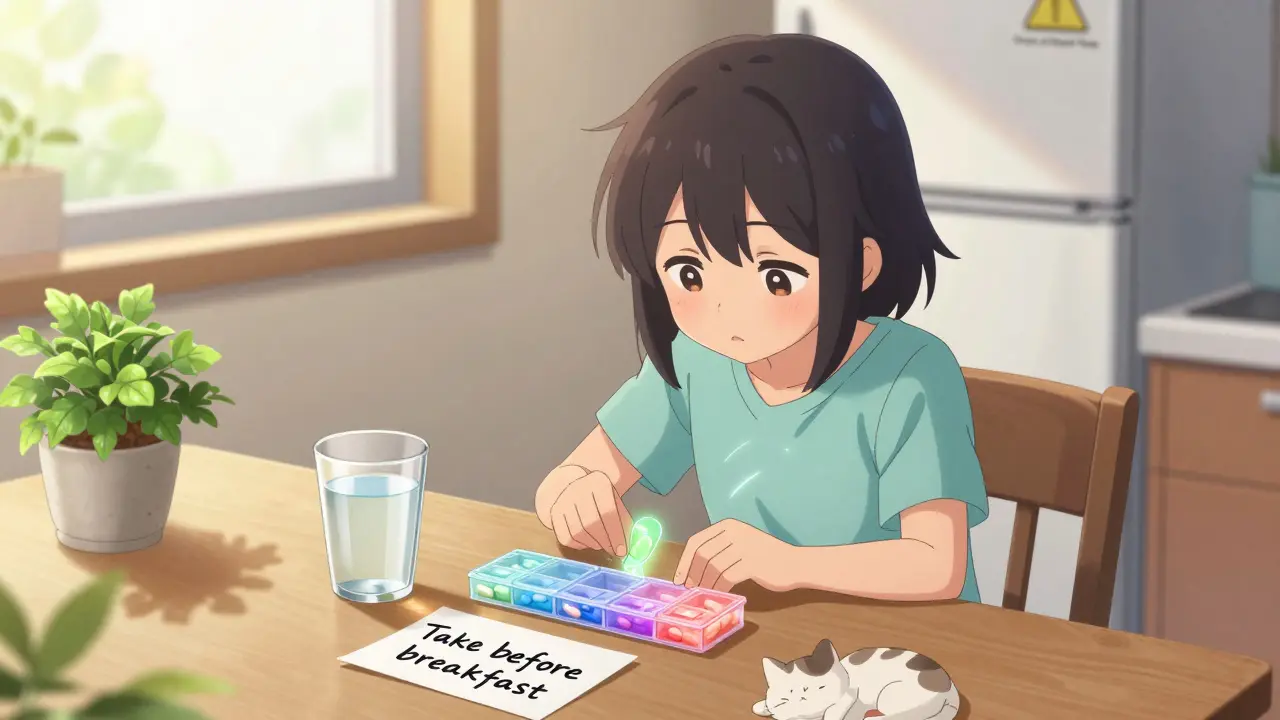
Oral chemotherapy is changing how cancer is treated. Instead of sitting in a clinic for hours while drugs drip into your veins, you now swallow pills at home. It sounds simpler, even better. But the truth is, taking chemotherapy by mouth comes with hidden risks that many patients don’t realize until it’s too late. If you or someone you love is on oral chemo, this isn’t just about taking a pill. It’s about knowing when to take it, what to avoid, how to store it, and what to do when side effects hit. Miss a dose? Take it with food? Mix it with antacids? These small choices can make the difference between treatment working-and treatment failing.
What Oral Chemotherapy Actually Does
Oral chemotherapy isn’t just IV chemo in pill form. It works in different ways depending on the drug. Some, like cyclophosphamide and mechlorethamine, are alkylating agents. They attack cancer cells by damaging their DNA no matter what phase they’re in. Others, like capecitabine, are antimetabolites. They trick cancer cells into using fake building blocks so they can’t copy DNA or divide. Then there are targeted drugs like imatinib (Gleevec) and dasatinib. These lock onto specific proteins inside cancer cells, blocking signals that tell them to grow.
Each type has its own chemical fingerprint. Alkylating agents are smaller, with molecular weights between 180-500 Da and half-lives of 3-15 hours. Antimetabolites are lighter, around 250-400 Da, and clear from the body faster-within 1-4 hours. Topoisomerase inhibitors like topotecan are heavier (400-600 Da), while mitotic inhibitors like vinca alkaloids can weigh up to 900 Da and last 15-40 hours. Bioavailability varies too. Capecitabine is absorbed 90% well, while etoposide only gets 10% into your bloodstream. That means two people taking the same drug might get completely different doses based on digestion, metabolism, or what they ate.
Why Adherence Is the Biggest Challenge
Only 55-75% of patients take oral chemotherapy exactly as prescribed. That’s a huge gap compared to IV chemo, where nurses hand you the drug and watch you take it. With pills, you’re on your own. A typical regimen might ask you to take capecitabine twice a day for 14 days, then skip it for 7. Miss one day? Skip two? Take it after a big meal? You’re not just reducing your chance of recovery-you might be making the cancer resistant.
Why do people miss doses? Complex schedules. Dietary rules. Side effects. Some drugs, like nilotinib, must be taken on an empty stomach-no food 2 hours before or after. If you eat a snack at 10 p.m. and forget, you’ve just lowered your drug level by 40%. Others, like lapatinib, can’t be taken with grapefruit juice or certain heart medications because they spike blood levels dangerously. And then there’s nausea. If you’re vomiting every morning, you might decide to skip the dose. That’s understandable. But it’s also dangerous.
Studies show patients who get structured support-written instructions, pill organizers, follow-up calls on days 3, 7, and 14, and pharmacy refill tracking-adhere at 82%. Those without it? Only 58%. That’s a 24-point difference in effectiveness. It’s not about willpower. It’s about systems.
Safety Risks You Can’t Ignore
Oral chemo isn’t like taking ibuprofen. A little spill on the counter? A pill left in the bathroom? That’s a hazard. Most oral chemo drugs are classified as hazardous materials. They can be absorbed through skin, inhaled as dust, or contaminate surfaces. The FDA requires special disposal bags for 98% of these drugs. Flushing them down the toilet? Throwing them in the trash? Those are serious mistakes.
Drug interactions are even riskier. Take dasatinib with rifampin (an antibiotic), and your drug levels drop by 80%. That’s like taking a quarter of your dose. Take lapatinib with ketoconazole (an antifungal), and levels spike 325%. That can cause liver failure or severe heart rhythm problems. Antacids and proton pump inhibitors (like omeprazole) are another trap. They reduce stomach acid, which many oral chemo drugs need to be absorbed. Capecitabine’s absorption can drop 30-50% if taken within two hours of an antacid. That’s not a minor issue-it’s treatment failure.
Storage matters too. Most oral chemo drugs need to be kept at room temperature (20-25°C). Keep them in the fridge? You might damage the formulation. Leave them in a hot car? Heat can break down the active ingredients. A 2023 Dana-Farber study found 42% of serious adverse events from oral chemo came from improper handling-not the drug itself.

Side Effects: More Than Just Nausea
Traditional chemo side effects-nausea, hair loss, low blood counts-are still common. Cyclophosphamide causes myelosuppression (low white blood cells) in 65% of patients. Alopecia hits 60-90%. But oral chemo adds new, unique problems.
Hand-foot syndrome (palmar-plantar erythrodysesthesia) is a hallmark of capecitabine. It causes redness, swelling, tingling, and peeling on the palms and soles. In 53% of patients, it’s mild to moderate. But if ignored, it can become painful, limit mobility, and force dose reductions.
Targeted drugs bring their own risks. Dasatinib and lenalidomide cause severe bone marrow suppression in 60-78% of patients during the first six weeks. That means weekly blood tests aren’t optional-they’re life-saving. Hepatotoxicity is another silent threat. Liver enzymes can rise in 15-25% of patients, with no symptoms until damage is advanced. That’s why baseline and monthly liver tests are required by FDA guidelines.
VEGF inhibitors like axitinib can raise blood pressure in 25-35% of patients. EGFR inhibitors like erlotinib cause severe acne-like rashes in 75-90%. These aren’t side effects you can ignore. Left untreated, they can lead to hospitalization or treatment delays.
How to Stay Safe and On Track
If you’re on oral chemo, here’s what you need to do:
- Get a pill organizer with labeled compartments for each dose. Don’t rely on memory.
- Store pills properly-in a cool, dry place, away from kids and pets. Never leave them in the bathroom or car.
- Know your interactions. Keep a list of all medications, supplements, and OTC drugs. Show it to your pharmacist every time you refill.
- Follow food rules. If your drug says “take on empty stomach,” wait 2 hours before and after eating. No exceptions.
- Use FDA-approved disposal bags. Don’t flush, don’t throw in trash. Your pharmacy can give you these.
- Report side effects immediately. Don’t wait until your next appointment. Call your nurse or pharmacist the day you notice swelling, rash, or unusual fatigue.
- Ask for teach-back. After your education session, repeat the instructions back to your provider. If you can’t explain it clearly, you don’t understand it yet.
Patients who follow these steps cut their risk of hospitalization by 60%. That’s not hype-it’s data from the National Comprehensive Cancer Network’s 2023 guidelines.

The Future Is Here
New tools are making oral chemo safer. The FDA approved the Proteus Discover system in 2021-a tiny sensor inside the pill that sends a signal to a patch on your skin when you take it. It tells your care team if you missed a dose. Bluetooth-enabled pill bottles are in phase 3 trials and are 92% accurate at tracking adherence. Pharmacogenomic testing is also becoming standard. Before taking fluoropyrimidines like capecitabine, many centers now test for DPYD gene mutations. Patients with this mutation have a 72% lower risk of life-threatening toxicity when dosed correctly.
Fixed-dose combinations are simplifying regimens. VerzenioPlus, approved in 2022, combines two drugs into one pill. Fewer pills mean fewer chances for error. Artificial intelligence is being trained to predict who’s likely to miss doses based on behavior patterns-like missed pharmacy refills, text message responses, or changes in daily routines.
But technology alone won’t fix this. The real solution is a team. Pharmacists. Nurses. Patient navigators. They’re the ones who catch the interaction before it happens. They’re the ones who call on day 3 to ask, “How are you feeling?” They’re the ones who make sure you don’t fall through the cracks.
Can I crush or split my oral chemotherapy pills?
No. Most oral chemotherapy drugs are designed to release slowly or have special coatings. Crushing or splitting them can change how your body absorbs the drug, leading to under- or overdosing. Always take pills whole unless your oncology pharmacist specifically says otherwise. Some liquid formulations exist for patients who can’t swallow pills-but never crush tablets yourself.
What should I do if I vomit after taking my chemo pill?
Don’t take another dose. Vomiting doesn’t mean the drug didn’t work-it may have already been absorbed. Taking another pill could lead to dangerous overdose. Call your care team immediately. They’ll assess whether you need to skip the dose, adjust timing, or get anti-nausea medication.
Is it safe to take oral chemo with other medications or supplements?
Not without checking. Many supplements-like St. John’s Wort, garlic, or vitamin E-can interfere with oral chemo. So can common drugs like antacids, antibiotics, and heart medications. Always give your oncology pharmacist a complete list of everything you’re taking, including OTC drugs and herbal products. Never assume something is safe just because it’s natural or sold over the counter.
How do I know if my oral chemo is working?
You won’t feel it. Unlike IV chemo, where side effects are obvious, oral chemo often works silently. Your care team monitors progress through blood tests, imaging scans, and tumor markers-not how you feel. Missing doses reduces effectiveness, so adherence is your best indicator of whether treatment will work. If you’re taking every dose as prescribed, your chances of success are much higher.
Can I drink alcohol while on oral chemotherapy?
It depends on the drug. Some, like capecitabine and temozolomide, can increase liver stress when combined with alcohol. Others may worsen side effects like nausea or dizziness. Most oncology teams recommend avoiding alcohol entirely during treatment. If you’re unsure, ask your pharmacist. A single glass might be okay for some, but for others, even small amounts can be risky.
Final Thoughts
Oral chemotherapy gives you control. But control comes with responsibility. It’s not a convenience-it’s a commitment. Every pill matters. Every interaction matters. Every side effect you ignore matters. The system is designed to help you, but only if you use it. Talk to your pharmacist. Ask questions. Report problems. Don’t try to power through side effects. Don’t guess when to take your pill. This isn’t just about fighting cancer. It’s about making sure every dose counts.


