
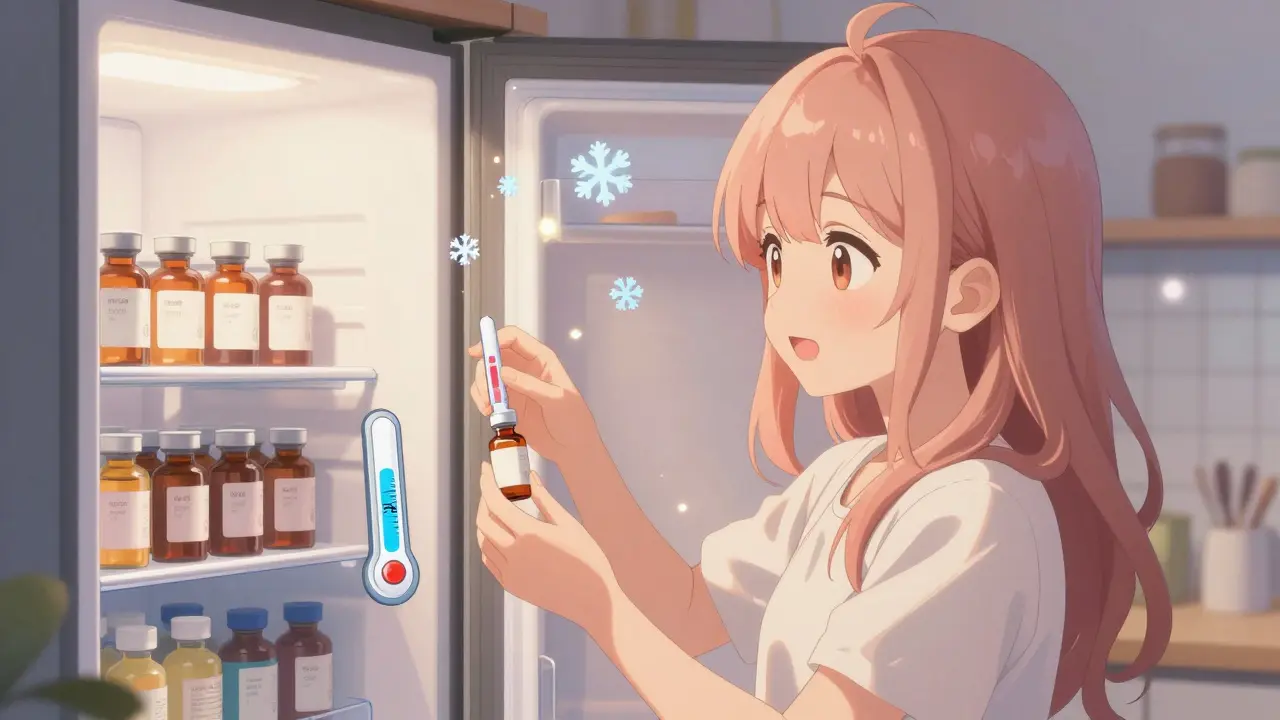
Not all medicines are created equal when it comes to storage. If you’re taking insulin, a biologic for rheumatoid arthritis, or a vaccine like Shingrix, you’re handling something that can lose its power - or even become dangerous - if it’s not kept cold enough. But keeping it cold doesn’t mean just tossing it in the fridge next to your milk. There’s a right way and a wrong way. And getting it wrong can mean your treatment stops working.
What Medications Actually Need Refrigeration?
It’s not just insulin. While insulin is the most common one people think of, dozens of other medications require strict refrigeration between 2°C and 8°C (36°F to 46°F). This includes:
- Insulin - All types, including Lantus, Humalog, and NovoRapid, must be refrigerated until opened. After that, most can stay at room temperature for 28-30 days.
- Biologics - Drugs like Humira, Enbrel, Remicade, and Orencia are made from living cells. They’re fragile. Heat or freezing breaks them down.
- Vaccines - Shingrix, MMR, and most COVID-19 boosters need to stay cold. Once out of range, they can become useless within hours.
- Some antibiotics - Like reconstituted amoxicillin clavulanate or certain IV antibiotics used at home.
- Injectable hormones - Growth hormone, certain fertility drugs, and some thyroid medications.
According to the U.S. Pharmacopeia and FDA, this 2°C-8°C range is the only safe zone. Too cold? Freezing ruins protein-based drugs. Too warm? They degrade fast. One study found some biologics lose half their strength after just 24 hours at 25°C.
Why Your Kitchen Fridge Isn’t Good Enough
Most people assume the fridge door or the top shelf is fine. It’s not. Household fridges are designed to keep food fresh, not medicine stable. The temperature swings are unpredictable.
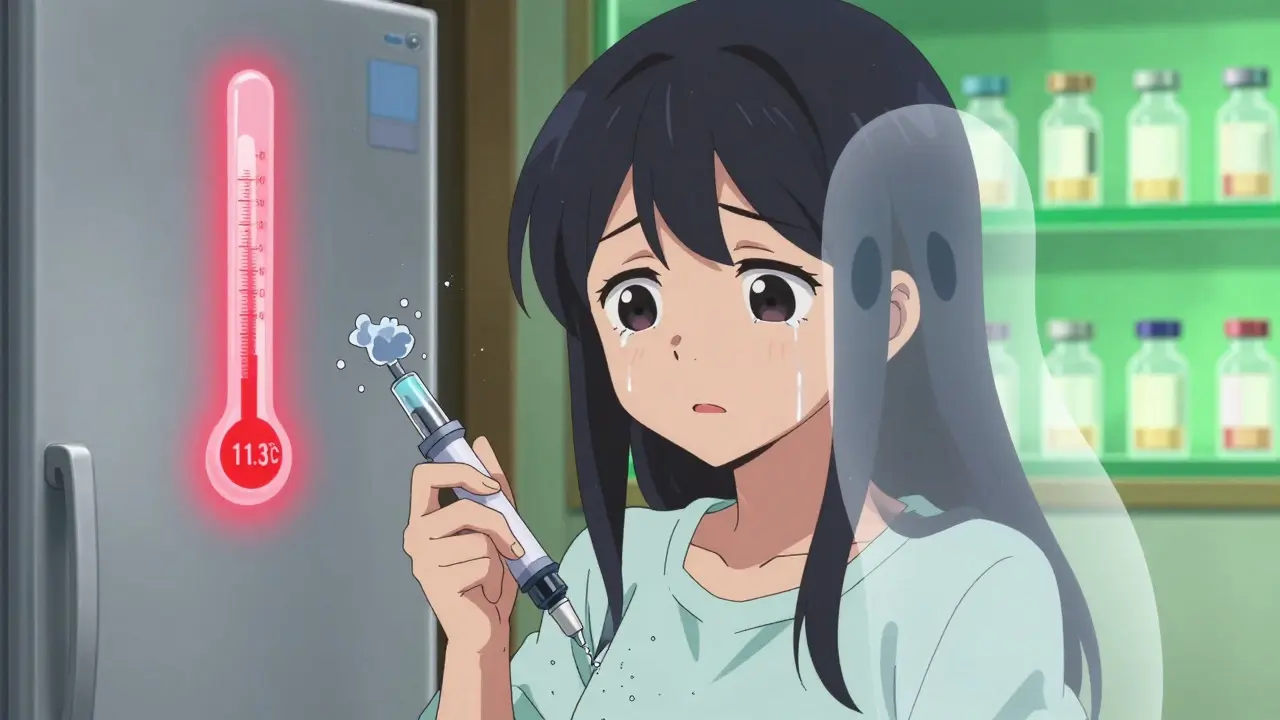
Studies show the back of the fridge - where it’s coldest - averages around 3.4°C. The door shelf? Up to 11.3°C. That’s way too warm for insulin or vaccines. Even the middle shelf can hit 10°C after the door opens a few times a day.
And freezing? That’s a silent killer. If your fridge’s thermostat runs low or the compressor kicks in hard, the back wall can dip below 0°C. Insulin that freezes doesn’t magically fix itself when it thaws. It’s ruined. Clumpy, cloudy, or discolored? Don’t use it. Even if it looks okay, the molecules are broken.
One Reddit user, u/GlucoseGuardian, shared how their insulin pump failed after being left in a car at 85°F. Blood sugar spiked to 450. Took 12 hours to fix. That’s not rare. A 2023 GoodRx survey found 68% of insulin users had at least one incident of suspected temperature-related failure.
How to Store Medications Right at Home
There’s no room for guesswork. Here’s exactly how to do it:
- Use the back of the fridge - Not the door. Not the top. The back wall, away from the freezer compartment. That’s where temperatures are most stable.
- Get a standalone thermometer - Not the one built into the fridge. Buy a digital data-logging thermometer (around $30). Place it next to your meds. Check it every few days. If it goes above 8°C or below 2°C, move the meds immediately.
- Don’t overcrowd - Air needs to circulate. Pile meds in a corner? You’re creating a hot zone.
- Label your meds - Use tape or a sticky note: “INSULIN - DO NOT FREEZE.” Simple, but it helps everyone in the house.
- Never store near the freezer - Even if it’s not touching, cold air sinks. The bottom of the fridge is the riskiest spot.
Some people buy a dedicated medication fridge. They cost $150-$500. Brands like Whynter or Helmer keep temps steady within ±1°C. They’re not luxury items - they’re safety tools. If you’re on daily injectables, it’s worth it.
What Happens If You Get It Wrong?
It’s not just about wasted money. It’s about health.
Insulin that’s too warm doesn’t lower blood sugar properly. That leads to spikes, fatigue, confusion, and sometimes diabetic ketoacidosis - a hospital emergency. A 2021 FDA report linked improper insulin storage to a hospitalization case where the patient’s blood sugar went out of control because their insulin had been sitting in a hot car for days.
Biologics like Humira? If they degrade, your immune system keeps attacking your joints. You won’t feel better. You might even flare up worse. And vaccines? If they’re not cold enough, they don’t trigger immunity. You think you’re protected - but you’re not.
And here’s the kicker: You won’t always know. There’s no warning label that says “This dose is weak.” The drug looks the same. The syringe fills normally. The only clue is that your condition isn’t improving - and by then, it’s too late.
Traveling With Refrigerated Medications
Going on a trip? You can’t just pack your insulin in a lunchbox.
Use a validated insulated cooler with phase-change gel packs. Brands like TempAid MediCool or MedActiv keep meds between 2°C and 8°C for up to 48 hours. Don’t use regular ice - it can freeze your meds. Use freezer packs designed for pharmaceuticals.
When flying, never check your meds. Carry them in your hand luggage. Airlines require you to declare them, but they won’t take them away. Keep the original prescription label on the box.
For road trips, keep your meds in the car’s center console - not the glove box or trunk. Even on a 30°C day, the cabin stays cooler than the trunk. If it’s hotter than 30°C, use your cooler.
What About Room Temperature Storage?
Some medications, once opened, can be kept at room temperature - but only for a limited time.
- Insulin - Most can be stored at up to 30°C for 28-30 days after opening. Check the package insert. Some newer types (like Novo Nordisk’s 2023 updates) can handle up to 37°C for 7 days.
- Remicade - Can be kept at room temperature for up to 6 months, but only if unopened and within the expiration date.
- Some vaccines - Once reconstituted, they must be used within hours. Never store them at room temp.
Here’s the rule: If it says “refrigerate,” don’t assume room temp is okay - even if it’s been open for a few days. Manufacturers list conservative limits for safety. But if you’re unsure, call your pharmacist. Don’t guess.
Power Outages and Emergencies
If the power goes out, your meds are at risk.
Keep your fridge closed. A full fridge stays cold for about 24 hours. If you have a backup plan, use it. A portable cooler with frozen gel packs is ideal.
Don’t rely on a regular ice chest. Use one with phase-change material designed for meds. They maintain 2°C-8°C longer than regular ice.
If you’re unsure whether your meds were compromised - throw them out. It’s cheaper than a hospital visit.

What Experts Say
Dr. Robert99, a pharmacist at Baystate Health, puts it bluntly: “A less-effective heart med or insulin isn’t just inconvenient - it can kill.”
The American Society of Health-System Pharmacists calls temperature excursions one of the top three preventable causes of treatment failure for biologics.
But there’s nuance. Dr. Emily Roberts from Johns Hopkins notes: “Many insulins last longer at room temp than the label says. But manufacturers play it safe to avoid lawsuits.”
Bottom line: Follow the label. Always.
What’s Changing in 2026?
Technology is catching up. Samsung’s 2023 Family Hub fridge now has a “medication mode” that locks in a 3°C-5°C zone with real-time alerts. It’s still new, but it’s a sign of where things are headed.
Also, the FDA is reviewing whether some biologics can be safely stored at higher temperatures for longer - especially in places with unreliable power. But until then, stick to the rules.
By 2030, the ASHP predicts 30% of all prescriptions will need refrigeration. That’s not a trend - it’s the new normal.
Final Checklist: Your Medication Storage Survival Guide
- ✅ Know which of your meds need refrigeration - check the label or ask your pharmacist.
- ✅ Store them in the back of the fridge, away from the freezer and door.
- ✅ Use a standalone digital thermometer - check it weekly.
- ✅ Never let meds freeze - even once.
- ✅ Use a validated cooler for travel - not a regular ice pack.
- ✅ When in doubt, throw it out.
- ✅ Talk to your pharmacist - they know your meds better than anyone.
Proper storage isn’t about being perfect. It’s about being consistent. One slip-up can undo weeks of treatment. Don’t risk it.
I’ve been storing my insulin in the fridge door for five years, and I’ve never had an issue-so maybe all this ‘science’ is just fearmongering? I mean, if it worked for my grandma in 1987, why does it suddenly need a lab-grade climate control system? I’ve seen people spend $500 on a ‘medication fridge’ while their kids eat ramen. Priorities, people.
Also, the FDA? Please. They approved a drug last year that turned people’s skin blue. I trust my own body’s feedback more than some bureaucratic guideline written by someone who’s never held a syringe.
And don’t get me started on the ‘use a standalone thermometer’ nonsense. I’ve got a $12 digital one from Amazon that says my fridge is 4.7°C. The built-in one says 3.9°C. Who’s lying? The fridge? The thermometer? Or the whole damn system?
And why are we treating insulin like it’s radioactive? It’s not. It’s a protein. Proteins are everywhere. We eat them. We digest them. We turn them into amino acids. Why can’t one little vial survive a 10-minute trip from the back of the fridge to the counter? I’ve done it for years. No spikes. No crashes. No drama.
Maybe the real problem isn’t temperature-it’s anxiety. People are terrified of their own bodies. They think if they don’t follow every comma in a pamphlet, they’ll die. But I’ve lived with Type 1 for 22 years. I’m still here. And I didn’t need a $30 thermometer to do it.
Also, ‘throw it out if you’re unsure’? That’s not safety. That’s corporate liability dressed up as care. Manufacturers know people will panic and toss perfectly good vials. They profit from waste. I’m not buying it.
Let’s stop turning medical care into a cult of perfection. It’s not about being perfect-it’s about being alive. And I’m alive. With my insulin in the door. And I’m not sorry.
Wow. So you’re telling me the entire pharmaceutical industry, the FDA, and every endocrinologist on the planet are wrong-because you’ve been doing it ‘wrong’ for five years and you’re still breathing? That’s not contrarianism. That’s just ignorance wrapped in a ‘I’m special’ blanket.
Insulin isn’t milk. It’s a recombinant protein with a half-life measured in minutes when denatured. You think your fridge door’s ‘fine’? Congrats. You’re just lucky your body hasn’t started rejecting your own pancreas yet.
And don’t get me started on the ‘I’ve lived 22 years’ thing. That’s like saying ‘I drove drunk for 15 years and never crashed-so seatbelts are fake.’
Stop romanticizing your incompetence. It’s not bravery. It’s a death sentence waiting for a bad week.
Hey, I just want to say-this post is SO important. I’m a nurse, and I’ve seen too many patients end up in the ER because they thought ‘it looked fine’ so they used it. One lady used her frozen Humira because the vial didn’t look cloudy-turns out, the protein had broken into little pieces. Her joints went from ‘manageable’ to ‘can’t walk’ in three days.
And yeah, the fridge door is a death trap. I’ve tested my own fridge. The door hits 12°C after two openings. That’s not ‘close enough.’ That’s a medical hazard.
But here’s the good news: you don’t need a $500 fridge. I got a $25 insulated lunchbox with a gel pack from a medical supply site. Keeps my insulin cool for 48 hours. I label it ‘DO NOT FREEZE’ in big letters. My partner even knows not to touch it.
And if you’re traveling? Use a cooler with phase-change packs. Not ice. Not a Ziploc. Real ones. I use MedActiv. They’re pricey but worth it. Your body will thank you.
Also-check your meds’ expiration dates. Some newer insulins can handle 37°C for a week. But only if they’re unopened. Once opened? Stick to the label. No guessing.
You got this. One small change can save your health. Don’t wait for a crisis to start caring.
I appreciate how thorough this is. I’ve been storing my Shingrix vaccine in the top shelf because I thought ‘it’s just one shot.’ Now I know better. I just bought a digital thermometer for $18 and moved everything to the back. No more guesswork.
I also realized my roommate was putting my growth hormone next to the frozen peas. I didn’t say anything-just quietly moved it. Now we have a little sticky note on the fridge: ‘Medications: Back Wall. No Touch.’ Simple. Effective.
Thanks for the reminder that safety isn’t about perfection-it’s about consistency. One mistake doesn’t ruin everything, but one habit can prevent disaster.
Okay so I just got my Humira delivered and the box said ‘refrigerate’ but the vial had been sitting in a delivery truck for 3 hours at 85°F. I panicked. Called my pharmacy. They said ‘it’s fine if it’s still clear and not clumpy.’ So I used it. No flare-up. Still working.
But then I read this post and now I’m confused. Are they lying? Or am I just lucky? I mean, if the manufacturer says ‘refrigerate’ but the clinical data says it’s stable for 72 hours at 30°C, why are we treating this like a nuclear protocol?
Also-‘throw it out if unsure’? Bro. That’s not safety. That’s profit. I’ve thrown out $2000 worth of meds because I was scared. I’m not doing it again.
Maybe the real issue is that we’re being scared into over-compliance. I’m not saying ignore the guidelines. I’m saying-question them. Talk to your pharmacist. Don’t let fear dictate your health.
Also-‘validated cooler’? That’s just a fancy word for ‘expensive icebox.’ I use a Yeti with frozen water bottles. Works fine. No one’s died.
Oh my god. You people are ridiculous. You’re treating insulin like it’s a baby. It’s a molecule. It doesn’t care about your feelings. You think a $30 thermometer is going to save your life? LOL.
My cousin used insulin that had been in a hot car for 12 hours. He went into DKA. Hospital. ICU. $80k bill. Guess what? The insulin was stored in the back of the fridge. He was just lazy. He didn’t check his blood sugar for three days. That’s the problem. Not the fridge.
You’re blaming the storage. The real issue is you’re not monitoring your own body. You’re outsourcing your responsibility to a temperature gauge.
And who the hell buys a $500 fridge for meds? Are you rich? Or just stupid? Buy a $20 cooler. Use it. Stop making this a lifestyle brand.
Also, ‘throw it out if unsure’? That’s not medical advice. That’s corporate CYA. You’re being manipulated. Wake up.
And why is everyone acting like this is new? My dad used insulin in the 70s. He stored it in the cupboard. He lived to 82. You’re overcomplicating the hell out of this.
Stop being dramatic. Check your sugars. Take your meds. Stop buying into fear marketing.
America is falling apart. We’ve turned medicine into a cult of paranoia. A vial of insulin is not a sacred relic. It’s a tool. You don’t need a NASA-grade climate system to use it.
Look at Europe. They don’t have ‘medication fridges.’ They don’t have $30 thermometers. They just… use it. And they’re healthier than we are.
This post is pure American overreach. We’re so afraid of risk that we’ve created a new kind of disease: medical anxiety disorder.
And why do we trust the FDA? They banned aspirin in 1982 because of Reye’s syndrome. Then they reversed it. They flip-flop. Why are you treating them like prophets?
My grandmother stored her insulin in a brown paper bag on the windowsill. She lived to 94. She didn’t have a ‘dedicated medication fridge.’ She had discipline. And faith.
You’re not saving lives. You’re selling fear. And I’m not buying it. 🇺🇸