
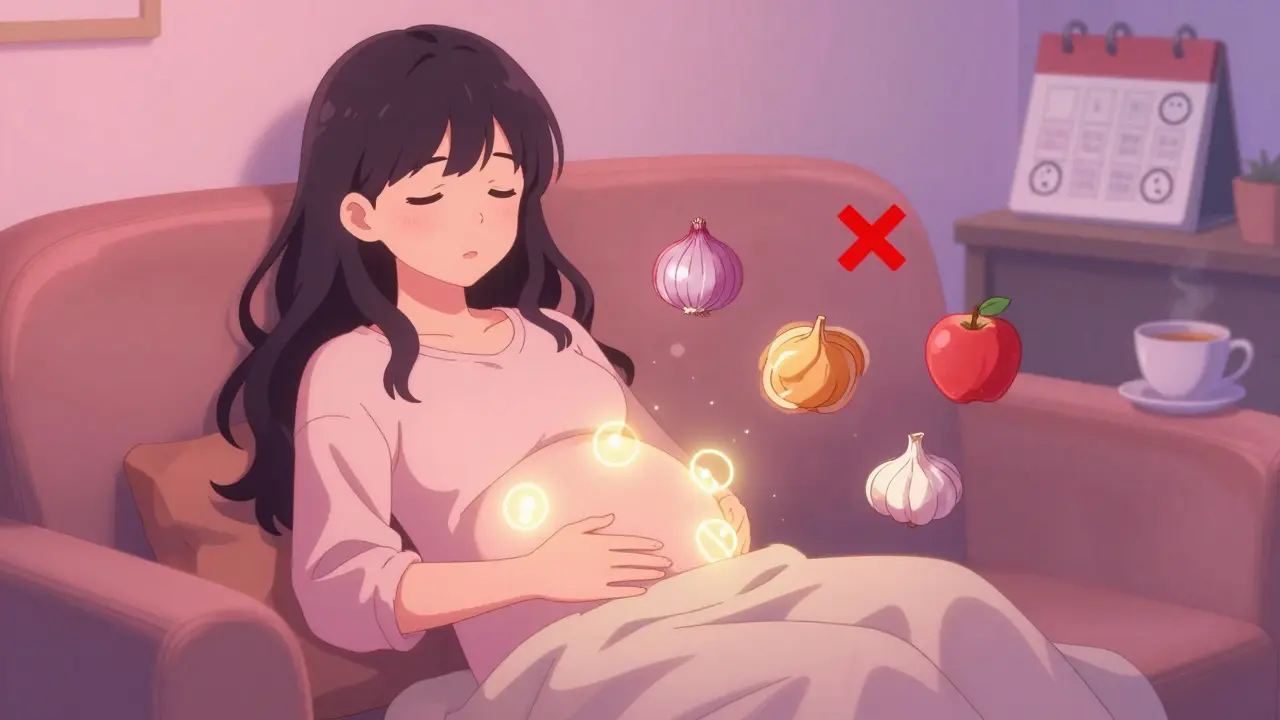
Living with Irritable Bowel Syndrome (IBS) means dealing with unpredictable pain, bloating, and bowel changes that can turn a simple day into a challenge. It’s not just an upset stomach-it’s a real, chronic condition affecting 10 to 15% of people worldwide. Women are diagnosed more often, and most people start noticing symptoms between their 20s and 30s. The good news? You don’t have to just live with it. Understanding your symptoms, what triggers them, and what treatments actually work can change everything.
What Does IBS Actually Feel Like?
IBS isn’t one thing. It shows up differently for everyone. The core signs are abdominal pain or cramping that gets worse after eating and improves after a bowel movement. That’s the key pattern doctors look for. Along with that, you’ll likely notice changes in your bowel habits-either more frequent loose stools (diarrhea), fewer and harder stools (constipation), or a mix of both.
Bloating is another big one. It’s not just feeling gassy-it’s your belly swelling up, feeling tight, and sometimes looking visibly distended. Many people also report a sense that they haven’t fully emptied their bowels, even after going. Mucus in the stool is common, too, though it’s not a sign of infection. You might also feel extra gassy, have nausea, or notice that your stomach feels sensitive even when you haven’t eaten anything unusual.
And it’s not just your gut. About 70% of people with IBS also deal with symptoms outside the digestive system. That includes feeling like there’s a lump in your throat, heartburn, early fullness after small meals, or even chest pain that feels like a heart issue but isn’t. These extra symptoms can make IBS harder to recognize and even more frustrating to live with.
How Is IBS Diagnosed?
There’s no single test for IBS. Doctors don’t find a tumor or an infection-they rule everything else out. That’s why diagnosis can take months or even years. The official standard is the Rome IV criteria: you need to have had abdominal pain at least once a week for the past three months, and it must be linked to bowel movements or changes in stool frequency or form.
Your doctor will start with your medical history and a physical exam. Then they’ll look for red flags that mean something else could be going on. These include sudden weight loss, rectal bleeding, anemia, symptoms starting after age 50, or a family history of colon cancer or inflammatory bowel disease. If any of these are present, you’ll likely need blood tests, stool tests, or even a colonoscopy.
For most people without red flags, doctors will test for celiac disease with a blood test for tissue transglutaminase antibodies. They might also check for bacterial overgrowth or lactose intolerance with a breath test. But if your symptoms match the pattern and no other cause is found, it’s IBS. No fancy scan needed.
What Makes IBS Symptoms Worse?
Triggers vary from person to person, but some are common across the board. About 70% of people with IBS find that certain foods set off their symptoms. The biggest culprits? High-FODMAP foods-those are short-chain carbs that ferment in the gut and cause gas and bloating. Think onions, garlic, wheat, dairy, apples, pears, beans, and artificial sweeteners like sorbitol.
Other common triggers include caffeine, alcohol, spicy food, and fatty meals. You might notice your symptoms flare after a big dinner, a night out drinking, or even just a cup of coffee. Stress is another major player. Up to 80% of people report worse symptoms during high-stress periods-whether it’s work pressure, family issues, or anxiety. The gut and brain are deeply connected, and emotional stress directly affects digestion.
For women, hormonal shifts matter. Around 60 to 70% report worse symptoms right before or during their period. Hormones like estrogen and progesterone influence gut motility, and when they drop, so does your gut’s rhythm.
Antibiotics can also trigger IBS in about 1 in 4 people. That’s because they wipe out good bacteria in your gut, throwing the balance off. Even after the infection is gone, the gut doesn’t always bounce back.
Medications for IBS-D (Diarrhea-Predominant)
If you’re one of the 40% with IBS-D, your main issues are frequent loose stools and urgency. Over-the-counter loperamide (Imodium) helps slow things down temporarily-it works for about 60% of people. But it doesn’t fix the root problem.
Prescription options are more targeted. Rifaximin (Xifaxan) is an antibiotic that works in the gut without being absorbed into the bloodstream. It’s taken for 14 days and can reduce bloating and diarrhea in about half of patients. Eluxadoline (Viberzi) is another option-it tightens the gut muscles and reduces nerve sensitivity. About 40 to 50% of people see improvement in both pain and diarrhea with this drug. But it’s not for everyone. People without a gallbladder or with certain liver conditions shouldn’t take it.
Medications for IBS-C (Constipation-Predominant)
For those with IBS-C, the goal is to get things moving again. Linaclotide (Linzess) and plecanatide (Trulance) are newer drugs that increase fluid in the intestines, softening stool and helping you go more easily. About 30 to 40% of users get at least three full bowel movements a week. But side effects like diarrhea are common-about 1 in 3 people have to stop because it’s too much.
Lubiprostone (Amitiza) works differently. It activates a channel in the gut lining that pulls water into the intestines. It’s been around longer and helps about 25 to 30% of people. It’s taken twice a day with food and can cause nausea, especially at first.
Pain Relief and Other Medications
Abdominal pain is often the most disruptive symptom. Antispasmodics like hyoscine (Levsin) or dicyclomine (Bentyl) relax the gut muscles and can reduce cramping. About 55% of people find relief with these, though they can cause dry mouth, dizziness, or blurred vision.
Low-dose antidepressants might sound surprising, but they’re a well-established option. Tricyclics like amitriptyline (10-30 mg at night) help calm the nerves in the gut and improve pain perception. About 40 to 50% of people report better overall symptoms. These aren’t for depression-they’re used at doses too low to affect mood. They take 4 to 8 weeks to work, so patience is key.
Diet, Stress, and Lifestyle: The Real Game-Changers
Medications help, but they’re not the whole story. The most effective long-term strategy is a combination of diet, stress management, and lifestyle.
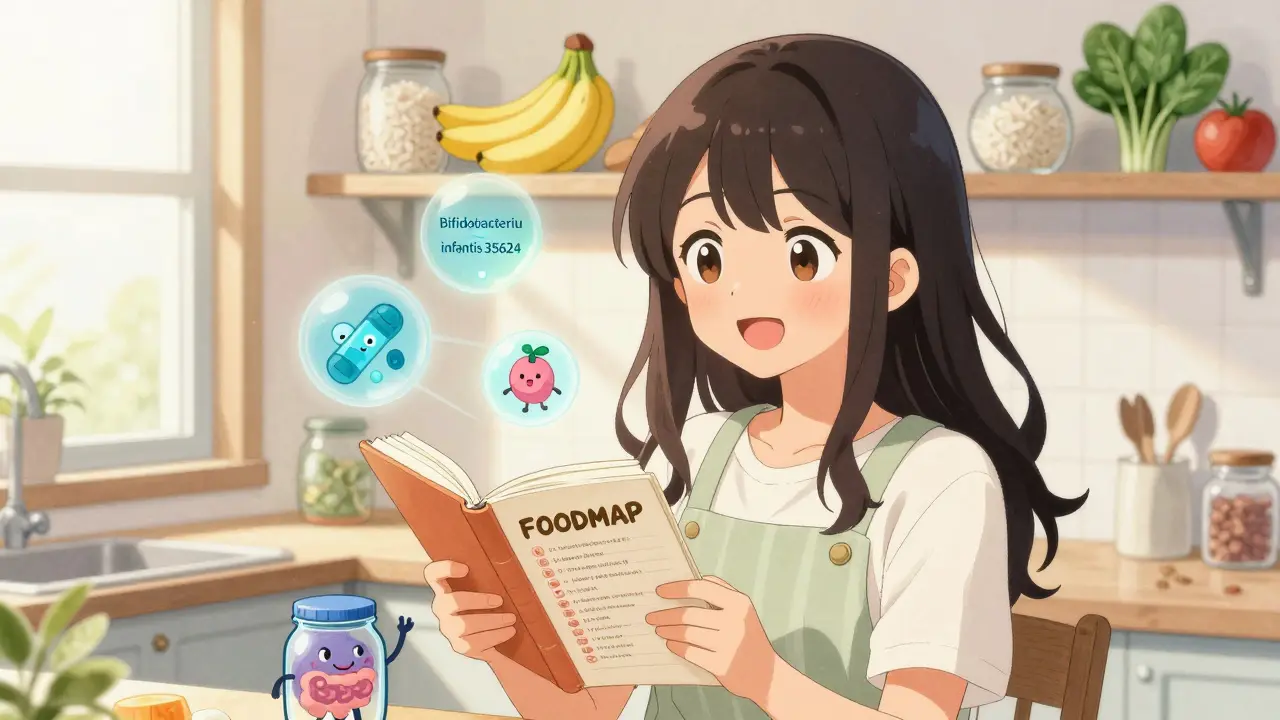
The low-FODMAP diet is backed by strong evidence. When done right-with guidance from a dietitian-it improves symptoms in 50 to 75% of people. It’s not a forever diet. You start by cutting out all high-FODMAP foods for 2 to 6 weeks. Then you slowly add them back in one at a time to find your personal triggers. Most people learn their triggers during this phase and can enjoy a wider variety of foods long-term.
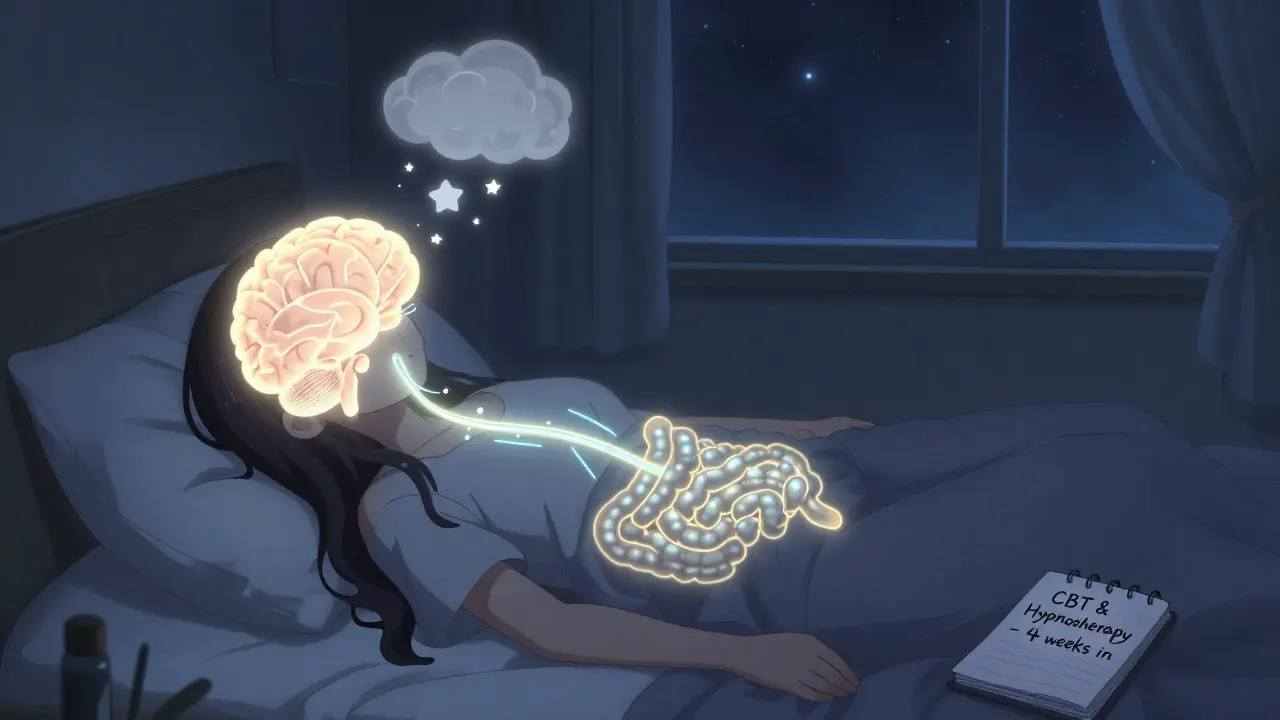
Stress management is just as important. Cognitive behavioral therapy (CBT) and gut-directed hypnotherapy have been shown to work as well as medication for many people. These therapies help retrain how your brain responds to gut signals, reducing pain and anxiety around symptoms. In clinical trials, 40 to 60% of people saw major improvements.
Probiotics can help-but only specific strains. Bifidobacterium infantis 35624 is the only one with consistent evidence. Other probiotics? Most don’t do much. Don’t waste your money on random bottles from the store.
What’s on the Horizon?
Research is moving fast. Scientists are studying the gut microbiome in detail and have found different bacterial patterns in IBS-D versus IBS-C. A new drug called ibodutant, which targets gut nerve receptors, showed promising results in early trials. Fecal microbiota transplants (FMT)-where healthy donor stool is given to restore gut balance-are being tested, with about 35% of patients seeing symptom relief in early studies.
But for now, the best approach is still personalized and practical. No magic pill. No one-size-fits-all diet. It’s about finding your triggers, managing stress, and using medications wisely when needed.
Living Better With IBS
IBS doesn’t go away, but it doesn’t have to control your life. Most people who stick with a tailored plan-diet, stress tools, and the right meds-see big improvements within six months. One survey found that 62% of people felt much better after adjusting their diet, and 55% said their quality of life improved with proper treatment.
The key is patience and persistence. It takes time to figure out what works for you. Don’t give up if the first diet or medication doesn’t click. Work with your doctor, consider seeing a dietitian, and give yourself grace. You’re not broken. You just have a sensitive gut that needs a smarter approach.
Can IBS turn into Crohn’s disease or colon cancer?
No, IBS does not cause structural damage to the intestines or increase your risk of colon cancer or inflammatory bowel diseases like Crohn’s or ulcerative colitis. It’s a functional disorder, meaning the gut doesn’t work right-but it’s not diseased. However, some symptoms overlap, so doctors always rule out those conditions first, especially if you have red flags like weight loss, bleeding, or family history.
How long does it take for IBS medication to work?
It depends on the drug. Loperamide works within hours. Rifaximin and eluxadoline usually show results in 1 to 2 weeks. Linaclotide and plecanatide may take 1 to 4 weeks. Low-dose antidepressants take the longest-up to 4 to 8 weeks at full dose. Don’t stop too soon. Give each treatment at least a month before deciding if it’s right for you.
Is the low-FODMAP diet hard to follow?
Yes, it’s challenging at first. Many foods you love-bread, onions, garlic, milk, apples-are off-limits. About 78% of people struggle with compliance. But it’s not meant to be permanent. The goal is to identify your triggers, not eliminate everything forever. Working with a registered dietitian makes it much easier and helps you avoid nutritional gaps.
Can stress really make IBS worse?
Absolutely. Stress doesn’t cause IBS, but it amplifies it. The gut and brain are linked by the vagus nerve. When you’re stressed, your gut slows down, speeds up, or becomes more sensitive. Studies show 60 to 80% of people report worse symptoms during stressful times. Managing stress with therapy, mindfulness, or hypnotherapy can be as effective as medication.
Are probiotics worth trying for IBS?
Only specific strains. Most probiotics on the shelf don’t help IBS. The only one with strong evidence is Bifidobacterium infantis 35624, sold under the brand name Align. It improved symptoms in about 35% of people in trials-slightly better than placebo. Other probiotics? Save your money unless your doctor recommends a specific one.
If you’ve been struggling with gut symptoms for a while, you’re not alone. Many people wait years for a diagnosis. But with the right approach-knowledge, patience, and the right support-you can take back control. Start with your doctor, consider a dietitian, and don’t underestimate the power of stress management. IBS is manageable. You just need the right plan.
I had no idea IBS could make your throat feel like there's a lump. That happened to me last year and I thought I was getting sick. Turns out it was just my gut being dramatic. 😅
Low-FODMAP changed my life. No more panic attacks before lunch. 🍎❌ 🥗✅
IBS doesn’t make you weak-it makes you a detective of your own body. Every cramp, every bloated morning, every weird reaction to food-it’s all data. And when you start listening? You reclaim your days. It’s not about curing it. It’s about learning its language.
Some days still suck. But now I know it’s not my fault. My gut’s just wired differently. And that’s okay.
My mom in India used turmeric with warm water every morning. Not magic, but it helped calm my belly. Try it before reaching for pills. Simple things work.
Let’s be real-the medical system treats IBS like a nuisance, not a neurological symphony. We’re told to ‘just reduce stress’ like it’s a Spotify playlist you can skip. But when your gut is screaming because your amygdala is stuck in fight-or-flight mode? That’s not ‘anxiety.’ That’s your nervous system screaming for recalibration.
And yes, low-dose antidepressants aren’t about being depressed-they’re about quieting the noise between your brain and your bowels. It’s neurology, not weakness. The fact that we still stigmatize this is absurd.
I’ve been living with IBS-C for 12 years. Linaclotide helped at first, but the diarrhea side effects were brutal. Switched to peppermint oil capsules-no prescription, no insurance hassle-and now I can travel without planning my route around bathrooms. Probiotics? Only Align. Everything else is marketing.
Just took a 3-hour nap after lunch and woke up feeling like a new person. My gut needed rest more than I did.
Oh wow, another ‘low-FODMAP is the answer’ post. How original. I tried it for six weeks, lost 15 pounds, and still had bloating. Turns out, my body doesn’t care what carbs are in my food-it just hates corporate processed everything.
Also, ‘gut-directed hypnotherapy’? Sounds like a cult. But hey, if you wanna spend $200/hour to be told to breathe, go ahead. I’ll stick with my yoga mat and avoiding dairy.
Thank you for writing this with such clarity and compassion. Too often, IBS is dismissed as ‘just stress’ or ‘you’re eating wrong.’ But the reality is far more complex-and far more human. The fact that you included the emotional toll, the diagnostic delays, and the nuanced medication options speaks volumes.
For anyone reading this: you are not broken. Your body is not failing you. It’s communicating. And with patience, support, and the right tools, you can learn to listen.
I find it fascinating how Western medicine still treats IBS as a ‘diagnosis of exclusion.’ We’ve mapped the human genome but can’t explain why onions make someone’s intestines revolt? The pharmaceutical industry would rather sell you a $700 pill than fund real research into gut-brain signaling. This is capitalism masquerading as science.
low-fodmap? pfft. i bet if you just ate like a real american-burgers, fries, soda-you’d be fine. stop being so sensitive. my grandpa ate beans every day and never had a problem. probably just weak stomachs these days.