
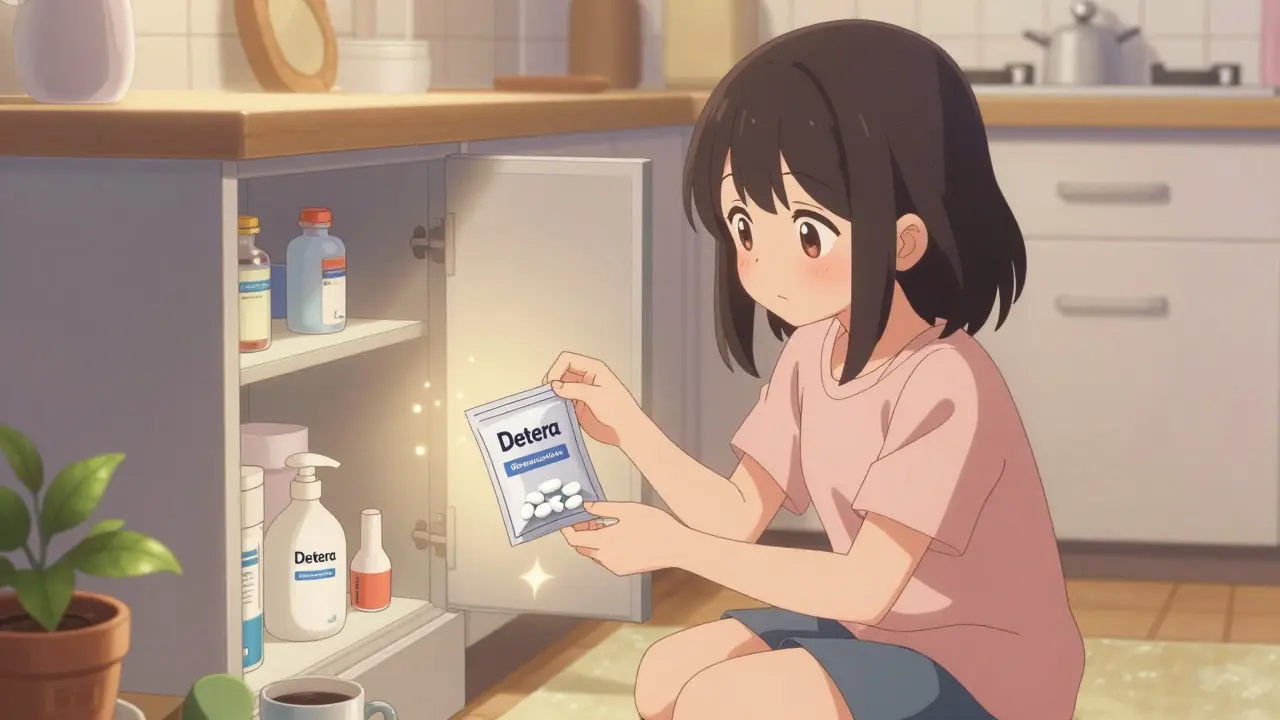
Every year, thousands of opioid overdoses happen because someone found leftover pills in a medicine cabinet-maybe a sibling, a friend, or even a child. It’s not just a tragedy; it’s predictable. About 70% of misused prescription opioids come from friends or family members’ homes, according to the 2019 National Survey on Drug Use and Health. If you’ve been prescribed opioids for pain after surgery or an injury, and you no longer need them, keeping them around isn’t just careless-it’s dangerous.
Why Safe Disposal Matters
Unused opioids don’t just sit quietly on a shelf. They’re a target. Teens looking for a high. Adults struggling with addiction. Even curious kids who find a bottle while playing. The CDC reports that in 2021, over 107,000 people in the U.S. died from drug overdoses, with opioids involved in the majority. Many of those deaths could have been prevented if those extra pills had been properly disposed of. The good news? You don’t need to be a doctor or a scientist to make a difference. Simple, proven methods exist to remove these drugs from your home for good. And the best part? You’re not alone-millions of people are doing the same thing right now.Four Safe Ways to Get Rid of Unused Opioids
There are four reliable ways to dispose of unused opioids. Not all are available everywhere, but one of them will work for you.1. Use a Drug Take-Back Program
This is the gold standard. The DEA runs over 16,900 official collection sites across the country, including pharmacies, police stations, and hospitals. These sites accept pills, patches, and liquids. You don’t need to show ID. You don’t need a receipt. Just drop them off. Walmart and Walgreens alone have more than 13,000 disposal kiosks. They’re usually inside the pharmacy, near the pickup counter. Look for a small, locked box labeled "Drug Disposal" or "Take Back.” Once collected, the medications are incinerated at temperatures above 1,800°F. That means every molecule of the drug is destroyed. No traces. No risk. No pollution. If you’re not sure where the nearest site is, go to deas takeback day website and enter your ZIP code. It’ll show you the closest locations, hours, and what they accept.2. Use a Deactivation Pouch (Like Deterra or SUDS)
If there’s no take-back site nearby-or you don’t want to wait for a collection day-deactivation pouches are a great alternative. These are small, biodegradable pouches you can buy at most major pharmacies for $2.50 to $5. Here’s how they work: Put your unused pills or patches into the pouch. Add warm water. Seal it. Shake it for 10 seconds. Wait 30 minutes. The pouch uses activated carbon and pH-balancing agents to neutralize the opioids completely. By the end, the drugs are no longer usable-no matter how hard someone tries to extract them. Studies show these pouches deactivate over 99% of opioids. They’re especially useful for fentanyl patches, which are deadly even in tiny amounts. Amazon has thousands of 5-star reviews for Deterra pouches. But here’s a tip: some people forget to add enough water. Make sure the liquid covers the pills. If it doesn’t, the deactivation won’t work fully.3. Household Disposal (When Nothing Else Is Available)
If you live in a rural area with no take-back site within 50 miles, and you can’t find a pouch, you can still dispose of opioids safely at home. The FDA has clear instructions:- Remove pills from their original bottle.
- Mix them with something unappetizing-used coffee grounds, cat litter, or dirt.
- Put the mixture into a sealable plastic bag or container-like an empty jar or yogurt tub.
- Cover or scratch out your name and prescription info on the bottle with a permanent marker.
- Throw the sealed container in the trash.
4. Flush Only If It’s on the FDA’s List
The FDA allows flushing for a very short list of high-risk opioids that are especially dangerous if accidentally ingested-especially by children. These include:- Fentanyl patches
- Oxycodone (OxyContin, Percocet)
- Morphine sulfate
- Hydromorphone (Dilaudid)
- Tapentadol (Nucynta)
What NOT to Do
Don’t pour pills down the sink. Don’t throw them in the trash without mixing them. Don’t try to dissolve them in vinegar or bleach-that doesn’t work and can be dangerous. Don’t give them to someone else. Don’t save them "just in case." A 2022 Texas study found that 73% of patients were confused about how to dispose of opioids. Many tried to deactivate pills in their original bottles. That’s a mistake. The childproof caps are designed to keep kids out-not to contain chemical reactions. If you use a pouch, always use the pouch.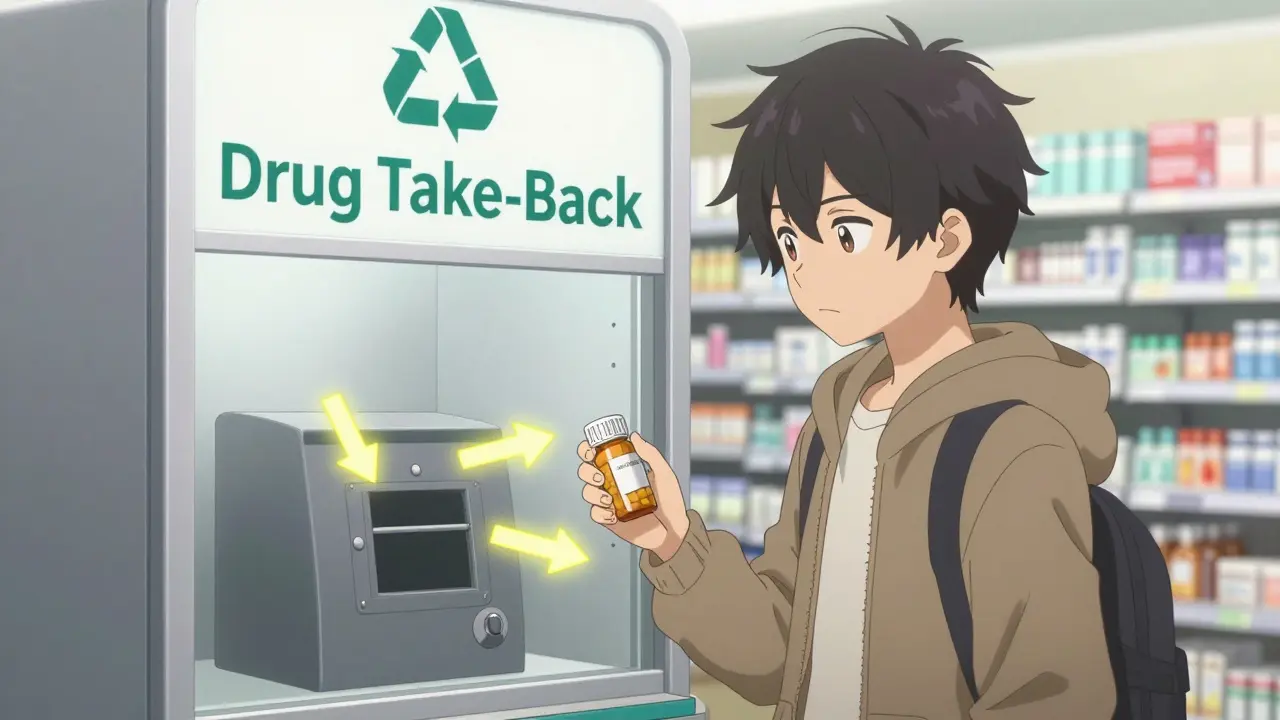
Why So Many People Don’t Dispose of Their Opioids
You’d think this would be easy. But only about 32% of people who get opioids actually dispose of them properly. Why?- They don’t know how.
- They think it’s not their responsibility.
- They’re worried about privacy-like someone seeing what they were prescribed.
- They don’t know where to go.
What’s Changing Right Now
Things are getting better. In 2023, the DEA added 1,200 new take-back sites, especially in Native American communities that had almost no access before. California spent $5 million on kiosks in pharmacies statewide. Wyoming used opioid settlement funds to mail free deactivation pouches to every household with a prescription. New tech is coming too. The FDA is testing QR-code-enabled pouches that track usage anonymously-helping health officials understand where disposal gaps exist. By 2025, hospitals may be required to report disposal compliance rates as part of patient satisfaction surveys. The message is clear: safe disposal isn’t optional anymore. It’s part of responsible prescribing-and responsible living.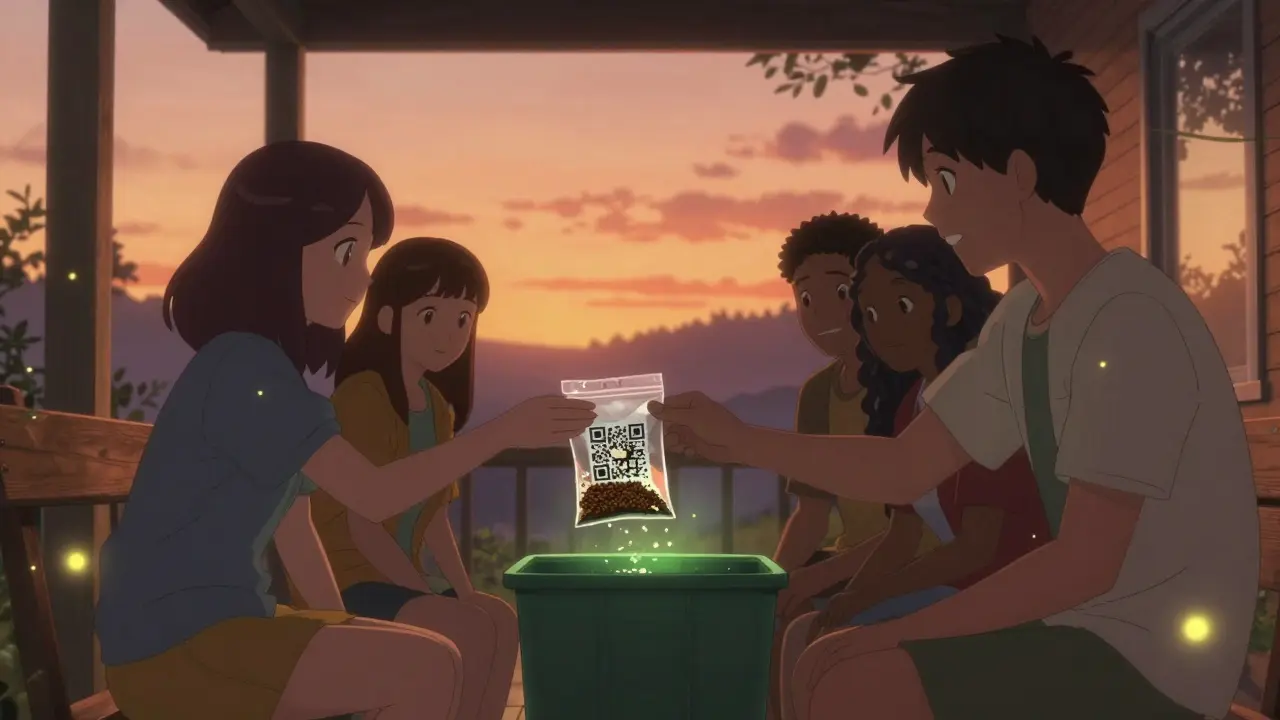
What You Can Do Today
1. Check your medicine cabinet. Look for any leftover opioid pills or patches. 2. Find your nearest take-back site. Use the DEA’s locator tool-it takes 30 seconds. 3. If no site is nearby, buy a deactivation pouch. They’re cheap and effective. 4. If you can’t get a pouch, use the household method. Mix with coffee grounds. Seal it. Trash it. 5. Ask your pharmacist. They know what’s available locally. 6. Tell someone. If a friend or family member has unused opioids, gently remind them. You might save a life.Frequently Asked Questions
Can I flush any opioid pills down the toilet?
No-only the 15 specific opioids on the FDA’s Flush List are safe to flush. This includes fentanyl patches, oxycodone, and morphine sulfate. Flushing other opioids can pollute water supplies. Always check the label or ask your pharmacist first.
What if I can’t find a take-back site near me?
If you live in a rural area, deactivation pouches are your best option. They’re sold at Walgreens, CVS, Walmart, and online. If you can’t get a pouch, mix your pills with used coffee grounds or cat litter, seal them in a container, and throw them in the trash. Scrub off your name from the bottle first.
Are deactivation pouches really effective?
Yes. Independent lab tests from the University of Pittsburgh show they deactivate 99.9% of opioids. The key is using enough warm water and shaking the pouch for 10 seconds. Most failures happen when people don’t follow the instructions exactly.
Is it safe to throw away opioids with regular trash if I mix them with something?
Yes, if you follow the FDA’s household disposal method: mix pills with an unappetizing substance like coffee grounds or cat litter, seal in a container, and obscure your personal info on the bottle. This reduces the risk of misuse by 82%. It’s not ideal-but it’s better than leaving them out in the open.
Why don’t doctors always tell me how to dispose of opioids?
Even though guidelines now require it, only about 38% of prescribers routinely give disposal instructions. That’s changing, but if you don’t hear anything, ask. You have the right to know how to safely get rid of your medication. Many pharmacies now include disposal cards with prescriptions-ask for one.
Can I reuse an empty pill bottle for something else?
Yes, but only after you’ve completely removed or obscured your name, prescription number, and dosage info with a permanent marker. Otherwise, someone could trace the bottle back to you. Some people repurpose them for storing small items like screws or pills for pets-but always clean the label first.
I’ve been using the Deterra pouches since last year after my knee surgery. Super easy, no mess, and I feel way better knowing my kid can’t accidentally find them. Bought a pack of five on Amazon for like $15-worth every penny. My pharmacist even gave me a free one last time I picked up a script. Just do it. No excuses.
Stop pretending this is some kind of moral victory. People don’t dispose of opioids because they’re lazy, scared, or don’t care-and you think a pouch is gonna fix that? The real problem is doctors handing out prescriptions like candy and then washing their hands of it. You want to save lives? Start by cutting the flow at the source, not making grandma feel guilty for keeping her Vicodin.
Take-back sites work. Use them.
Wow. Just… wow. 🤦♂️ You actually think mixing pills with coffee grounds is ‘safe disposal’? That’s like saying ‘I put my gun in a sock’ and calling it gun safety. The FDA’s flush list exists for a reason. If you’re not using a pouch or a take-back, you’re not trying-you’re just performing performative responsibility. 😒
I just threw out my leftover oxycodone last week using the coffee grounds trick. My cat was acting weird that day so I figured, why not make it gross enough for even her to avoid? 🤭 Also, I told my neighbor about it-she had a whole bottle of fentanyl patches sitting in her bathroom. She’s gonna order pouches now. Small wins, y’all.
Let’s deconstruct the epistemological framework of pharmaceutical disposal. The very notion of ‘safe disposal’ is a neoliberal illusion-it presupposes individual agency within a system designed to commodify pain and then criminalize its aftermath. The DEA’s kiosks? A performative gesture masking structural violence. Deactivation pouches? Capitalist solutions to capitalist problems. We must interrogate the pharmacological hegemony that renders the body a site of extraction… and then offers a $5 pouch as absolution.
Hey, if you’re reading this and you’ve got old pills gathering dust? I see you. It’s okay to feel overwhelmed. You don’t have to be perfect-just start. Even one pill out of the house is a win. Take a deep breath. Grab your phone. Open the DEA site. Five minutes. That’s all it takes. You’re not failing-you’re showing up. And that matters more than you know.
My mom’s in her 70s and she didn’t know you could just drop pills off at Walgreens. I took her last weekend. She cried because she felt guilty for keeping them ‘just in case.’ We got her a Deterra pouch too-she said she’ll use it next time. It’s not about blame. It’s about making it easy. Thank you for writing this.
Oh wow, you actually think people are just ‘forgetting’ to dispose of opioids? 😏 Let’s be real-most of them are hoarding them because they’re secretly addicted and don’t want to admit it. Or worse-they’re giving them to their ‘friends.’ You can’t fix a moral vacuum with a kiosk. People need accountability, not pamphlets.
While the logistical infrastructure for opioid disposal has improved significantly since 2018, empirical data suggests that behavioral adherence remains suboptimal, particularly among geriatric populations with limited digital literacy. A multi-modal education strategy-combining pharmacist counseling, printed signage, and intergenerational peer outreach-may yield higher compliance rates than reliance on technological interventions alone. Further research is warranted.
!!! YOU DON’T KNOW WHO’S WATCHING !!! THE DEA TRACKS EVERY DROP-OFF !!! THEY’RE BUILDING A DATABASE OF PRESCRIPTION USERS !!! THEY’LL USE THIS TO TARGET YOU LATER FOR “RISK ASSESSMENT” !!! THEY’RE LYING ABOUT “INCINERATION” - THEY’RE RECYCLING THE DRUGS FOR BLACK MARKET USE !!! DON’T TRUST THE PHARMACIES !!! THEY’RE ALL IN ON IT !!!
AMERICA IS GETTING SOFT!!! 🇺🇸🔥 WHY ARE WE GIVING PEOPLE POUCHES AND KIOSKS?!?!? THEY SHOULD JUST BE FORCED TO DROP THEM AT POLICE STATIONS WITH A FINE IF THEY DON’T!!! THIS ISN’T A SPARE TIRE-IT’S A LETHAL WEAPON!!! IF YOU KEEP OPIOIDS, YOU DESERVE WHAT COMES NEXT!!! 🚨💣