
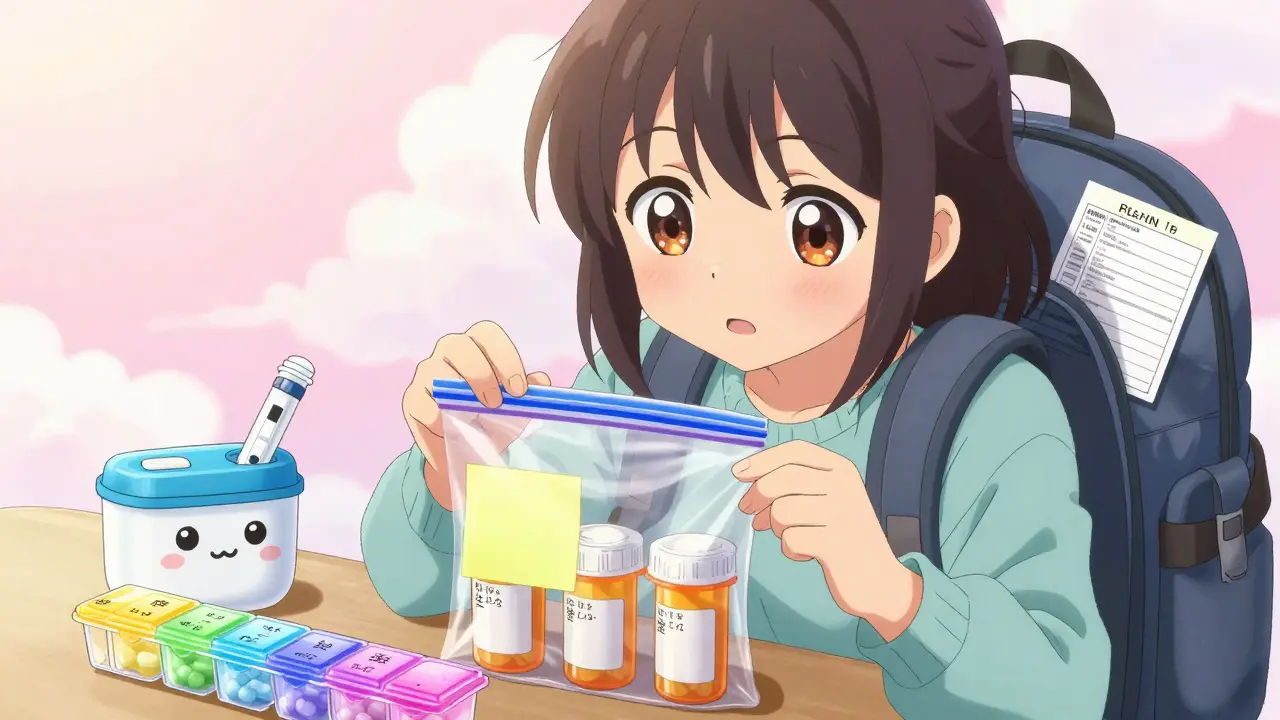
Don’t Risk Losing Your Meds on the Road or at Sea
If you’ve ever been stuck in a car with a headache and no painkillers-or worse, had your insulin confiscated at a port-you know how fast a trip can turn stressful. Packing medications for long road trips or cruises isn’t just about tossing bottles into a bag. It’s about planning ahead, following rules, and avoiding costly mistakes that can derail your entire trip.
Always Keep Meds in Your Carry-On
Checked luggage gets lost. About 0.02% of bags go missing each year, but that’s enough to ruin your vacation if it’s your heart medication or insulin. The FAA and TSA both say: keep all prescription meds in your carry-on. Royal Caribbean, Norwegian Cruise Line, and Carnival all require this. Even if you’re driving, don’t leave your pills in the glove compartment. If you get pulled over or have a breakdown, you need access.
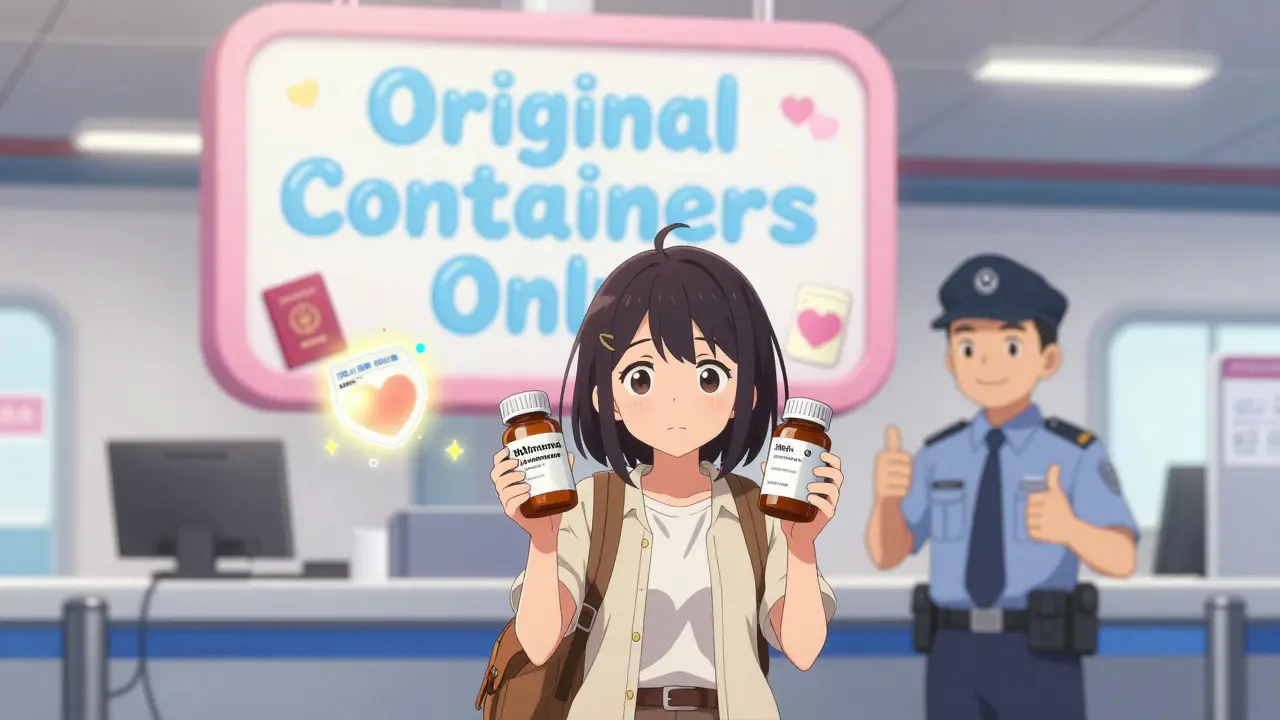
Original Containers Only-No Exceptions
Transferring pills into pill organizers or random containers is the #1 mistake travelers make. TSA and U.S. Customs require prescriptions to be in their original pharmacy bottles with the label showing your name, the drug name, and the prescribing doctor’s info. International ports are even stricter. In the Caribbean, 18% of common medications are restricted, and if your pill bottle doesn’t match your passport name, you could be denied entry. One Reddit user, u/TravelMedNurse, says 90% of the medication issues they’ve seen came from unlabeled containers.
Bring Extra-Way More Than You Think
Delays happen. OAG Aviation reports that 23% of international flights experience delays. Cruise itineraries change. Road trips get detoured. You need more than just enough for the trip. Experts recommend:
- 1 extra day for road trips
- 2-3 extra days for cruises
- At least 5 extra days for controlled substances like ADHD meds or opioids
Why? Because if your ship docks in a country that doesn’t recognize your prescription, or if your car breaks down in a state with strict drug laws, you’ll need backup. The CDC and Special Journeys both stress this. Don’t gamble on running out.
Controlled Substances? Plan 30 Days Ahead
If you take anything with codeine, oxycodone, Adderall, or other controlled substances, you’re dealing with extra layers of red tape. Carnival Cruise Line requires physician documentation for all Schedule II meds. Royal Caribbean asks you to declare them 30 days before sailing. Some Caribbean countries ban Adderall entirely. Even if it’s legal in the U.S., it might not be in Cozumel or St. Thomas. Check the International Association for Medical Assistance to Travellers (IAMAT) database for destination-specific rules. If you’re unsure, call your doctor’s office-they can send a letter on letterhead explaining why you need it.
Use the Right Packing System
Original bottles are required, but they’re bulky. Here’s how to organize without breaking the rules:
- Keep all meds in original containers.
- Put them in a clear, quart-sized Ziploc bag (TSA-friendly).
- Use a separate waterproof sleeve for copies of your prescriptions and a doctor’s note.
- For daily use, use a pill minder-but only if you tape it shut and label it clearly with your name, date, and time.
- Never use unlabeled containers. Even if they’re pretty, they’re risky.
One traveler on Cruise Critic used color-coded Ziplock bags for each medication type (e.g., blue for blood pressure, red for pain meds) and cut their administration errors to zero. Simple, smart, and compliant.
Carry a Digital and Paper List
The CDC now recommends a travel medication list with:
- Brand name
- Generic name
- Dosage
- Frequency
- Reason for use
Keep it on your phone and printed out. If you have an emergency abroad, medical staff might not understand your prescription label. A clear list helps them help you. In fact, 12% of travelers face language barriers with foreign clinics. Don’t be one of them.
Watch Out for State and Country Laws
On road trips, state laws can trip you up. Medical marijuana is legal in 38 states-but illegal in 13. If you cross into one of those, even with a prescription, your meds could be confiscated. The RV Industry Association reports a 15% confiscation rate for non-compliant packaging. For cruises, it’s worse. The U.S. doesn’t control what happens in foreign ports. A medication that’s fine in Miami might be banned in Nassau. Always check destination rules before you go.
Temperature-Sensitive Meds? Bring a Cooler
Insulin, certain biologics, and some antibiotics need to stay cool. The FDA says 41% of biologic meds require temperature control. A regular cooler won’t cut it. Look for travel cases that maintain 36-46°F for at least 72 hours. CVS and Walgreens now offer free UV-protective travel cases with your prescription-ask for one when you pick up your meds.
Insurance Isn’t Optional
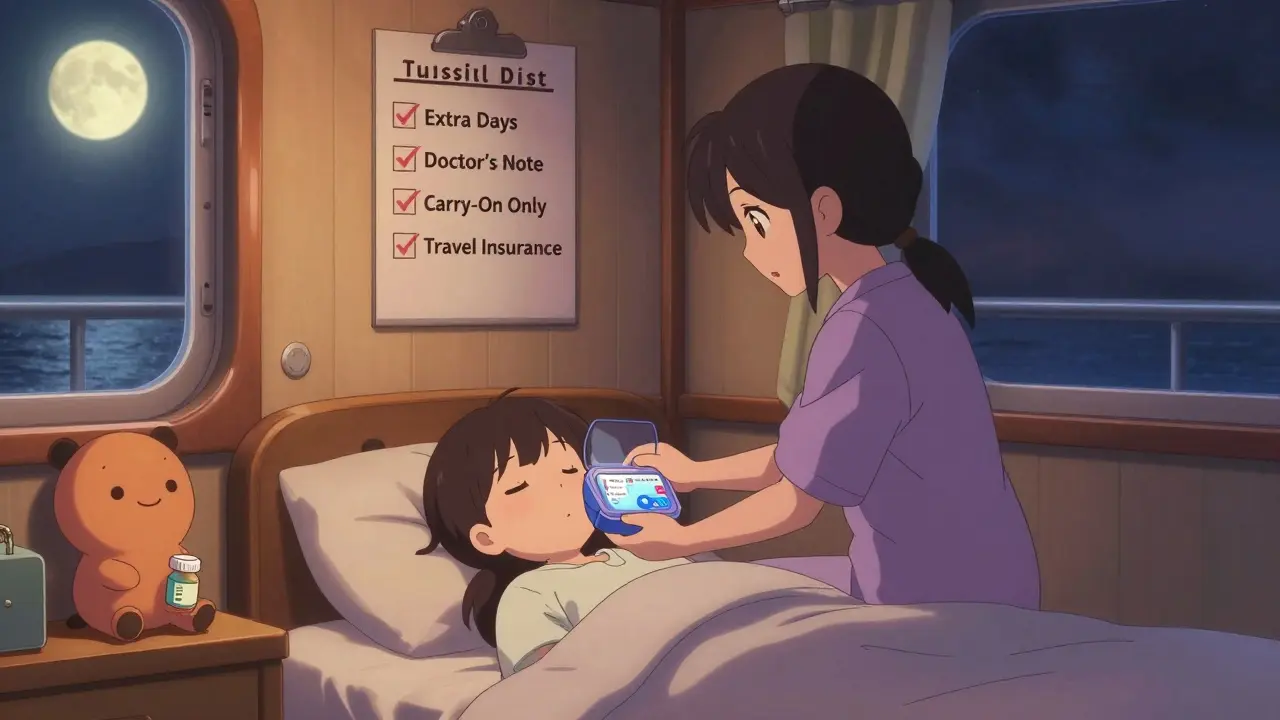
Travel medical insurance covers more than broken bones. If you have a reaction, lose your meds, or need an emergency transfer, costs can hit $48,000. Cruise Lines International Association reports that 28% of cruise medical emergencies require evacuation. Your regular health plan likely won’t cover this. Get a policy that includes emergency medical transport and prescription replacement. It’s cheap compared to the alternative.
What About Over-the-Counter Meds?
Don’t ignore them. Tylenol, ibuprofen, antihistamines, and anti-nausea pills are just as important. Pack them in original packaging too. Some countries restrict common OTC drugs. For example, pseudoephedrine (in Sudafed) is banned in several countries because it’s used to make meth. Bring enough for the trip plus extras, and list them on your travel medication sheet.
Final Checklist Before You Go
Thirty days before departure:
- Consult your doctor about destination restrictions
- Get extra refills if needed
- Request a doctor’s letter for controlled substances
- Print and digital copies of your medication list
- Label all pill organizers if used
- Buy a temperature-safe case if needed
- Buy travel insurance that covers meds
Two days before:
- Double-check all labels match your passport name
- Put meds in your carry-on
- Lock your meds in a secure spot in your bag
What If Something Goes Wrong?
If your meds are lost or confiscated:
- Go to the ship’s medical center (on cruises)
- Call your embassy (for international trips)
- Use your doctor’s letter to get emergency refills
- Never buy meds abroad unless you can verify the source
Many pharmacies in tourist areas sell counterfeit drugs. Don’t risk it. Your health isn’t worth a gamble.
Future-Proof Your Pack
Travel rules are getting tighter-but also more organized. Carnival is testing fingerprint-based medication verification. IATA’s Travel Pass app now lets you upload digital prescriptions. By 2027, experts predict a 65% drop in medication-related travel issues thanks to global standardization. But until then, the old rules still apply: original bottles, extra supply, carry-on only, and always know your destination’s laws.
Can I put my pills in a daily pill organizer?
Yes, but only if you keep the original prescription bottles with you. Pill organizers are fine for convenience, but security and customs agents require proof of prescription. Tape the organizer shut and label it clearly with your name, the medication name, and dosage times. Never travel with only unlabeled pills.
Do I need a doctor’s note for my medications?
It’s not always required, but it’s highly recommended-especially for controlled substances like opioids, ADHD meds, or psychotropic drugs. A letter on your doctor’s letterhead explaining why you need the medication can prevent delays or denial at customs. For cruises, some lines require it for Schedule II drugs. Better safe than turned away at the dock.
Can I bring my insulin on a cruise?
Yes, and you must bring it in your carry-on. Keep it in its original packaging with the pharmacy label. Bring extra vials or pens-plus a cooler case that keeps it cold for 72 hours. Cruise ships have medical staff who can help if you run out, but they can’t always refill prescriptions. Always have backup.
Are there any medications banned on cruises?
Yes. Some Caribbean and Asian ports ban medications containing pseudoephedrine, codeine, or certain stimulants-even if they’re legal in the U.S. For example, Adderall is restricted in several destinations. Always check the IAMAT database or your cruise line’s website for a list of restricted drugs before you sail.
What if I forget my meds before I leave?
If you’re on a cruise, go to the ship’s medical center immediately. They may be able to provide a temporary supply or contact a local pharmacy. For road trips, use a pharmacy locator app to find the nearest one. Bring your prescription info and ID. If you have a digital copy of your prescription on your phone, that helps. But don’t rely on this-always pack extras.
Can I mail my medications ahead to my cruise port?
No. Cruise lines don’t accept mailed medications. They can’t verify the contents, and shipping across borders raises legal risks. Always bring your meds with you in your carry-on. If you’re worried about space, ask your pharmacy if they offer travel-sized bottles or repackaging services-many do for free.
Do I need to declare my medications at customs?
You’re not required to declare them unless asked. But if you’re carrying controlled substances or large quantities, it’s wise to have your doctor’s letter ready. Customs officers may ask to see your meds if they suspect something. Being prepared avoids suspicion and delays.
Also, get that travel cooler from CVS - they give it free if you ask. No one tells you that.
Just sayin'.