
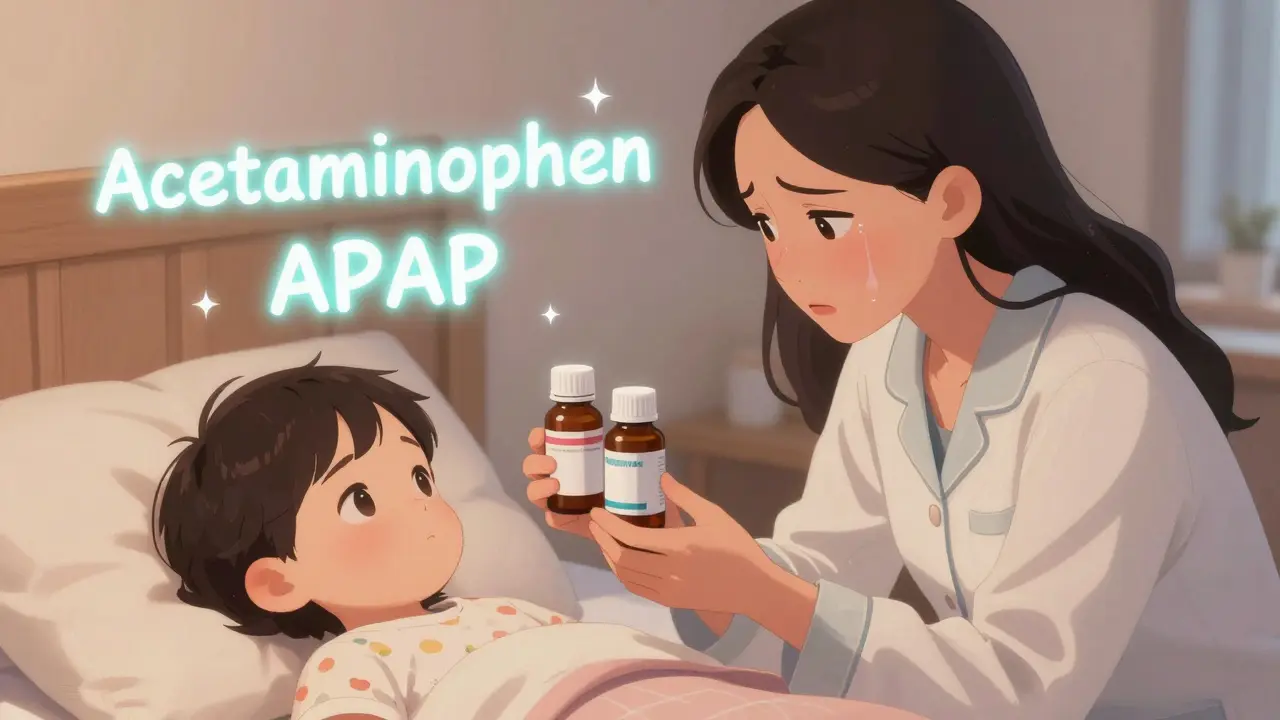
Every year, thousands of children end up in emergency rooms because their parents gave them the right medicine - but too much of it. Not because they were careless, but because they didn’t know two different bottles on the shelf contained the exact same active ingredient. This isn’t rare. It’s common. And it’s preventable.
Double dosing happens when a child gets two doses of the same medicine, or two different medicines with the same active ingredient, within a short time. It’s not about giving too much of one thing - it’s about giving the same thing twice, under different names. The most dangerous part? You won’t always know you’re doing it.
Why This Happens More Than You Think
Most parents think they’re being careful. They read the label. They use the dosing cup. They wait the right amount of time between doses. But here’s the catch: the label doesn’t tell you what’s in the medicine - it tells you what the medicine is called.
Take acetaminophen. You might know it as Tylenol. Or Panadol. Or Tempra. Or simply as "fever reducer" on a cold syrup bottle. But if you give your child Panadol for fever and then give them Children’s NyQuil for a stuffy nose, you’ve just given them two doses of acetaminophen. Same chemical. Same risk. Same danger.
According to the CDC, 73% of parents can’t tell when two different products contain the same active ingredient. And it’s not just acetaminophen. Ibuprofen, diphenhydramine (the sleepy ingredient in Benadryl), and pseudoephedrine are just as sneaky. A 2023 study in Pediatrics found that 89% of multi-symptom cold medicines contain acetaminophen - and most parents don’t realize it.
The Real Danger: Narrow Therapeutic Windows
Children aren’t small adults. Their bodies process medicine differently. A dose that’s safe for a 60-pound child could be toxic for a 20-pound toddler. And some medicines have almost no room for error.
- Acetaminophen: Just over 150 mg per kilogram of body weight can cause serious liver damage. In kids under 6, it’s the leading cause of acute liver failure from medication.
- Diphenhydramine: Double dosing can cause extreme drowsiness, trouble breathing, or even seizures. One parent on Reddit shared that their 4-year-old was rushed to the ER after getting Benadryl and a cough syrup with the same ingredient.
- Ibuprofen: Too much can damage kidneys, especially if the child is dehydrated or sick with a fever.
- ADHD meds like methylphenidate: Double dosing can spike heart rate and blood pressure dangerously fast - sometimes within 30 minutes.
The FDA says 60% of double dosing cases happen in kids under 5. Why? Because parents mix and match medicines for different symptoms - fever, cough, runny nose - and assume they’re safe together. They’re not.
How to Check Active Ingredients - Step by Step
You don’t need to be a pharmacist. You just need to know where to look and what to look for.
- Find the "Active Ingredients" section. It’s always on the back or side of the bottle. Not the brand name. Not the flavor. Not the "for colds and coughs" claim. Look for the words: Active Ingredients.
- Write down the exact name. Don’t rely on memory. Write it. Acetaminophen. Ibuprofen. Diphenhydramine hydrochloride. Pseudoephedrine hydrochloride.
- Compare every medicine you’re giving. If you’re giving a fever reducer, a cough syrup, and an allergy medicine - check all three. Even if they’re from different brands.
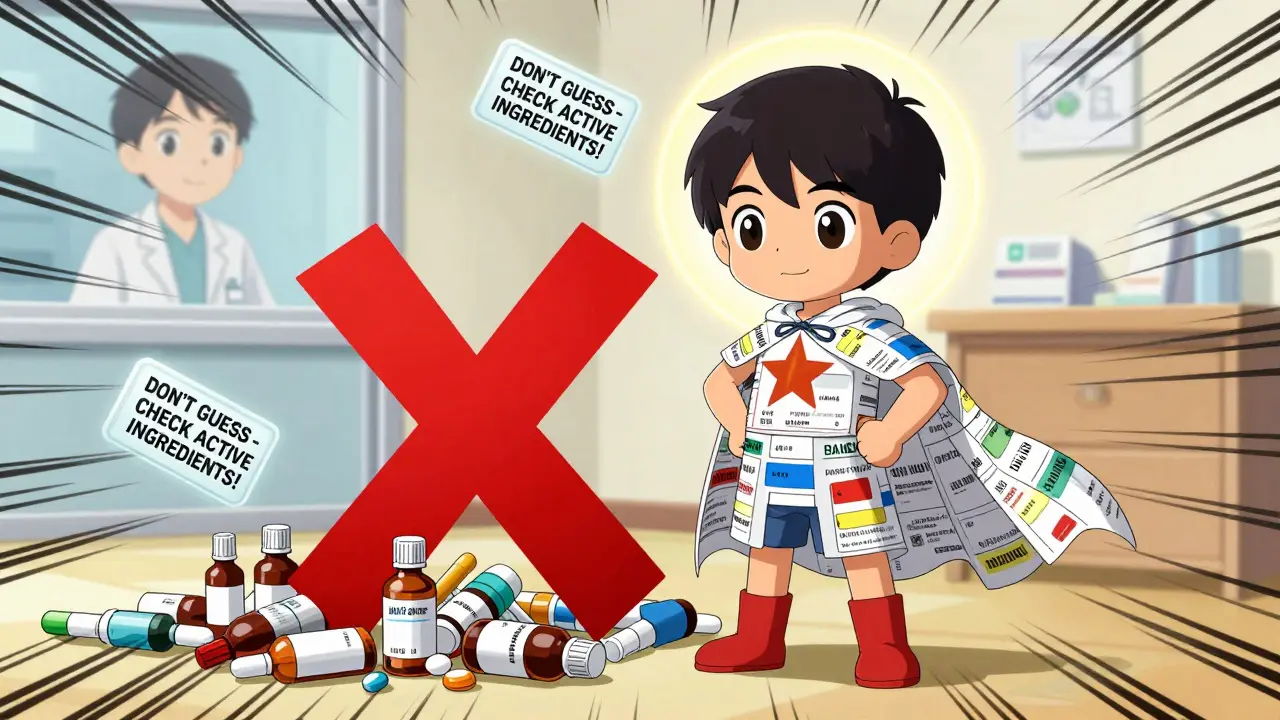
- Look for hidden names. Acetaminophen is also called APAP or paracetamol. Diphenhydramine might be listed as "antihistamine." Don’t guess - read.
- Check the strength. A children’s liquid might say 160 mg per 5 mL. An infant’s might be 80 mg per 5 mL. Giving the wrong strength is just as dangerous as giving two different medicines.
Pro tip: Keep a simple list on your phone or fridge. Write down every medicine you keep at home - brand, active ingredient, strength, and dose. Update it every time you buy a new bottle.
Why You Shouldn’t Alternate Fever Medicines
You’ve probably heard this advice: "Give acetaminophen, then four hours later, give ibuprofen." It sounds smart - but it’s risky.
The American Academy of Family Physicians says alternating acetaminophen and ibuprofen for fever in kids under 3 increases double dosing risk by 47%. Why? Because parents lose track. One parent gives acetaminophen. The other, thinking it’s been too long, gives ibuprofen - then forgets they already gave the first one. Or they give both at the same time, thinking "more is better."
Stick to one. If one isn’t working after an hour, call your pediatrician. Don’t add another.
Measurement Mistakes Are Deadly
Even if you get the right medicine, you can still overdose by using the wrong tool.
The FDA says household teaspoons vary from 2.5 mL to 7.5 mL. That’s a 200% difference. A tablespoon? It can hold 15 mL - three times what a child’s dose usually is.
Always use the measuring tool that came with the medicine. Not a spoon. Not a syringe from another bottle. Not a kitchen measuring cup. If the tool is missing? Ask the pharmacist for a new one - they’ll give you one for free.
What to Do If You Think You’ve Double Dosed
If you’re unsure - act fast.
- Call Poison Control at 1-800-222-1222 (U.S.) or your local poison center. They’re available 24/7 and free.
- Have the medicine bottle ready. Tell them the name, the active ingredient, how much was given, and when.
- Don’t wait for symptoms. Acetaminophen overdose doesn’t show signs for hours. By then, it’s too late.
Most calls to Poison Control about double dosing involve acetaminophen. And most parents say, "I didn’t know it was in both."
What’s Changing - And What You Should Know
Good news: things are getting better.
In January 2024, the American Academy of Pediatrics launched a campaign called "Know Your Ingredients" - with standardized icons on medicine packaging so you can spot acetaminophen or diphenhydramine at a glance. By December 2025, the FDA will require all children’s OTC medicines to list active ingredients in bold, standardized format.
Some apps like Medisafe and Round Health can scan your medicine bottles and warn you if you’re about to double dose. But they only work if you use them - and right now, only 28% of parents do.
The real solution? Simple: check the active ingredient every single time. No exceptions.
Final Rule: One Person, One Medicine
One of the biggest causes of double dosing? Two caregivers giving medicine without talking.
One parent gives medicine at bedtime. The other wakes up, sees the child is still feverish, and gives more - thinking it was never given. Or they’re both giving medicine at different times, assuming the other knows what’s been given.
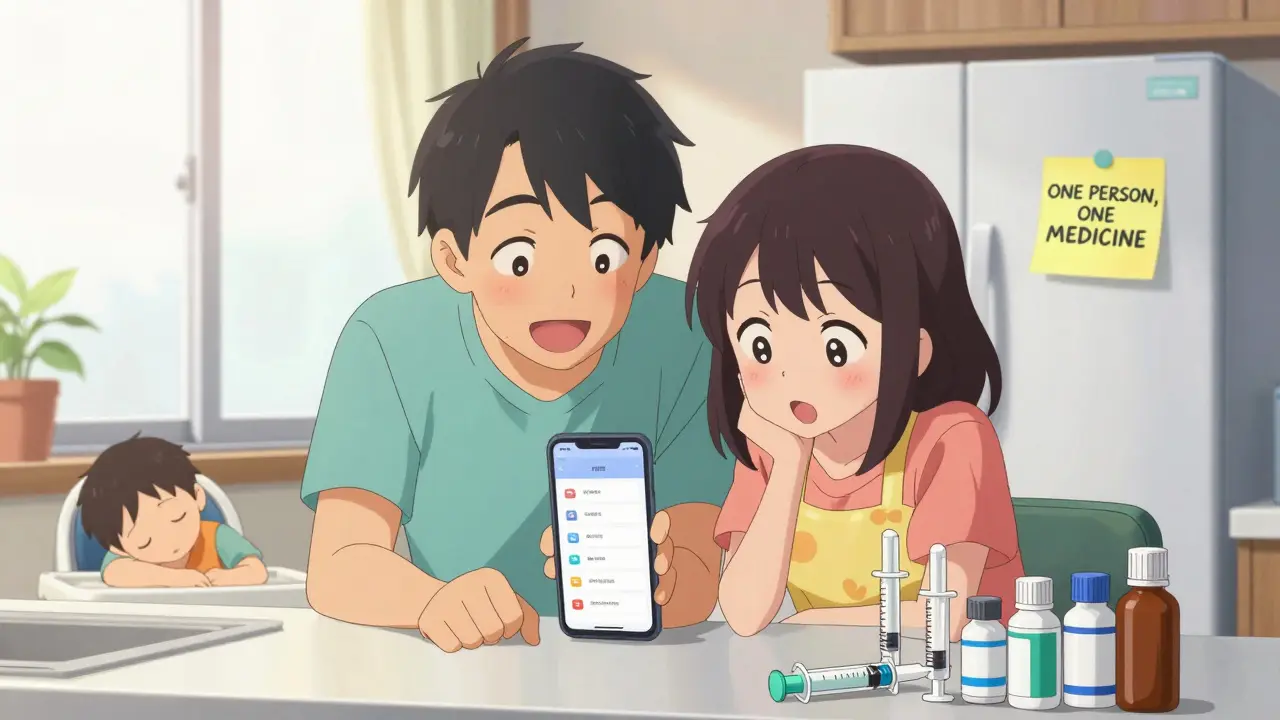
Fix it: Assign one person to handle all doses. Write it down. Or use a shared note on your phone. Even a sticky note on the fridge works.
It’s not about trusting each other. It’s about making sure no one has to guess.
What are the most common active ingredients in children’s medicine that cause double dosing?
The top three are acetaminophen (also called APAP or paracetamol), ibuprofen, and diphenhydramine (an antihistamine found in allergy and cold medicines). These are in over 70% of OTC pediatric products, often hidden in cough, cold, and fever remedies. Many parents don’t realize that NyQuil, Vicks, and Children’s Tylenol all contain acetaminophen.
Can I give my child two different brands of the same medicine?
No. Even if the brands are different - like Tylenol and Panadol - if they contain the same active ingredient (e.g., acetaminophen), you’re doubling the dose. Brand names mean nothing. Only the active ingredient matters.
Is it safe to give a child both a cold medicine and a fever medicine?
Only if you’ve checked both labels and confirmed they don’t share the same active ingredient. Most cold medicines already contain a fever reducer like acetaminophen. Adding a separate fever medicine means you’re giving two doses at once. It’s not safer - it’s riskier.
How do I know if I’m giving the right dose?
Dosing should be based on your child’s weight, not age. Always check the label for weight-based instructions. If it only lists age ranges, ask your pharmacist or pediatrician for the correct dose. Never guess. A 10% overdose in a child under 2 can double the risk of side effects.
What should I do if I think my child got too much medicine?
Call Poison Control immediately at 1-800-222-1222 (U.S.) or your local emergency number. Don’t wait for symptoms. Don’t try to make them vomit. Have the medicine bottle ready so you can tell them the active ingredient, how much was given, and when. Most poison centers can guide you over the phone - and many cases don’t require a hospital trip if caught early.
Are liquid medicines more dangerous than pills?
Yes, because measuring errors are common. A household spoon can hold anywhere from 2.5 mL to 7.5 mL - three times the difference. Always use the dosing syringe or cup that came with the medicine. Never use a kitchen spoon. Even if it looks like it’s the right size.
Do all medicine labels show active ingredients clearly?
Not yet. While the FDA is requiring clearer labeling by December 2025, many products still hide active ingredients in small print or use confusing names. Always double-check. Don’t rely on packaging design. Look for the words "Active Ingredients" - it’s your best defense.
If you’re reading this because you’re worried you might have double dosed - you’re not alone. And you’re already doing the right thing by learning how to prevent it. The next time you pick up a medicine bottle, pause. Read the active ingredient. Write it down. Compare it. It takes 10 seconds. But it could save your child’s life.
Used to think I was smart until my kid got sick and I gave him Tylenol and NyQuil thinking they were different. Turns out they both had acetaminophen. Panicked for hours. Never again. Always check the fine print now.
One sentence: Always read the active ingredients. No exceptions.
So let me get this straight - we’re telling parents to become pharmacists just to give a child a fever reducer? And we wonder why people just wing it? This isn’t prevention - it’s punishment.
India has been doing this right for decades. No one in my village ever mixed medicines - we used turmeric, neem, and faith. Why are Americans so dependent on chemicals? You overmedicate your children and then blame the labels.
It’s wild how we treat medicine like a buffet. One spoonful of this, a dash of that - like it’s soup and not a chemical reaction waiting to go wrong. The real tragedy? It’s preventable with 10 seconds of reading.
The human mind is a fragile instrument when confronted with the anxiety of a crying child. We reach for solutions, not understanding that the very tools meant to heal are layered with silent duplicates - chemical ghosts hiding behind brand logos. The label does not speak truth; it speaks marketing. We must learn to listen beyond the words, to the molecules beneath.
Acetaminophen is not Tylenol. It is not APAP. It is not "fever reducer." It is a molecule with a narrow margin. A single milligram too many, and the liver begins its silent surrender. We treat children like miniature adults, but their biochemistry is a cathedral of delicate balance - not a scaled-down version of ours.
Our tools are inadequate. The fridge list? The phone app? They are crutches. The real solution lies in collective awareness - not individual vigilance. We need standardized, universal symbols on every bottle. Not just in English. Not just in America. In every language, every culture, every village where a mother holds her child and wonders if she’s doing right.
And yet - we still call it "common sense." As if knowledge is innate. As if fear is enough. It is not. We must build systems. Not reminders. Systems. Because the next child won’t be lucky.
Reading this made me feel so much better about how I handle meds for my kids. I’ve been writing everything down on a sticky note since my oldest was a baby. It’s not glamorous, but it’s saved us from mistakes more than once. You’re not alone in this. Keep doing the hard work - it matters.
When I first read about APAP being hidden in cough syrups, I thought it was a joke. Then I checked my cabinet. Four bottles. All with the same molecule. I cried. Not because I was careless - because I trusted the packaging. The system failed us. Now I scan every label like it’s a bomb squad report. 🙏
My husband and I used to alternate meds like we were playing chess - Tylenol here, Motrin there. We thought we were being smart. Then we read the CDC stats and realized we were just playing Russian roulette with our 3-year-old. Now? One medicine. One person. One note on the fridge. No more guessing. Life’s too short for "I didn’t know."
The real problem isn’t the labels. It’s the assumption that medicine is simple. We treat it like a recipe: "add one spoon, stir, wait." But drugs aren’t ingredients - they’re forces. And children aren’t containers. They’re complex systems. We need education before products. Not after the ER visit.
You people are making this way too complicated. In my village, we never used medicine unless the fever was over 103. We used cold compresses, fasting, and prayers. The hospital is a money trap. You give them money, they give you chemicals. Then you give them more money because you overdosed. It’s a cycle. Stop buying into Big Pharma’s fear game. Trust nature. Trust your instincts. Your body knows better than any label.
And if your kid is still sick after 24 hours? Maybe he’s just being dramatic. Kids today are overmedicated and under-disciplined. I’ve raised three kids without a single OTC bottle. You should too.
Let’s be real - most parents don’t read labels because they’re written like legal documents designed to confuse. "Diphenhydramine Hydrochloride"? What even is that? It should say "SLEEPY DRUG" in bold letters. And why is the dosage for 6-11 months the same as 12-23? That’s not science - that’s laziness.
The FDA’s new rules are a joke. 2025? My kid won’t be a kid by then. We need this NOW. Not when the next tragedy makes headlines.
This post is a masterpiece of fearmongering wrapped in a false sense of security. You think checking labels solves the problem? It doesn’t. It just shifts blame. The real issue? The pharmaceutical industry’s monopolistic control over pediatric formulations. They design products to be confusing. They profit from parents’ ignorance. And now you’re telling us to read more carefully? That’s like telling a drowning man to swim better.
Why are there 87 different brands of acetaminophen for kids? Why isn’t there one standardized, government-regulated version with a single, unmistakable label? Because profit > safety. This isn’t about education. It’s about regulation. And you’re all being manipulated into believing you’re safe if you just read harder.
Stop being complicit. Demand systemic change. Not more sticky notes.
Thank you for this. I just realized I’ve been giving my daughter the wrong dose because I used a kitchen spoon. I didn’t know they varied so much. I’m going to the pharmacy right now to get a new syringe. I feel so stupid, but I’m so glad I read this before something worse happened.