
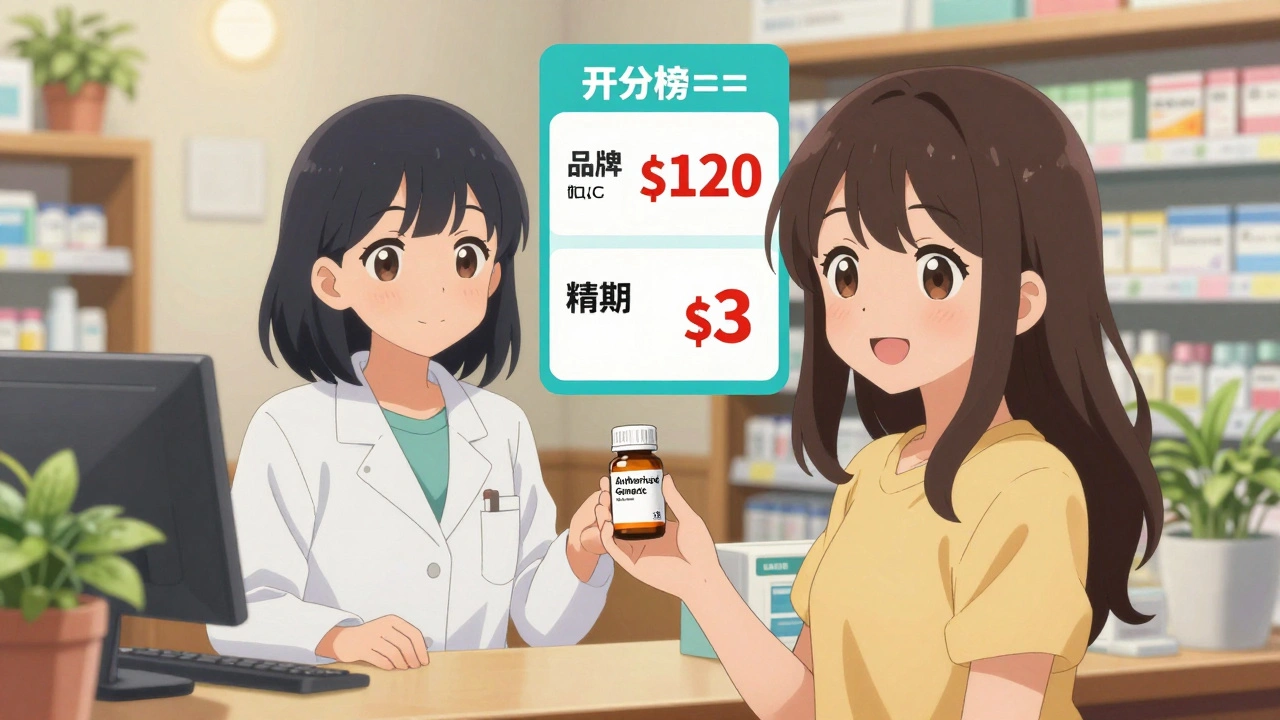
Why Your Prescription Costs More Than It Should
You fill a prescription for a brand-name drug and pay $100. A week later, you hear someone else got the same medicine for $15. What’s going on? It’s not magic. It’s generics and authorized generics - two ways to pay far less for the exact same medication. The FDA says generic drugs save the U.S. healthcare system over $400 billion a year. But if you don’t know how to ask for them, you’re probably overpaying.
What’s the Difference Between Generic and Authorized Generic Drugs?
Generic drugs are copies of brand-name medications made by other companies after the patent expires. They have the same active ingredients, same strength, same way of working in your body. The FDA requires them to be bioequivalent - meaning they work just as well. But here’s the twist: authorized generics are different.
An authorized generic is made by the same company that makes the brand-name drug. They just slap a generic label on it. No changes to the formula. Same factory. Same pills. The only difference? The name on the bottle. You’re getting the exact same product as the brand, but priced like a generic.
For example, if you take the brand-name drug Humira, the manufacturer might also sell an authorized generic version under a different name. It’s chemically identical. But because it’s labeled as a generic, the price drops - often by 60% or more.
How Much Can You Actually Save?
The numbers don’t lie. In 2022, the average copay for a brand-name drug was $56.12. For a generic? Just $6.16. That’s over 89% less. And it’s not just small pills - it’s insulin, cancer drugs, heart medications.
Take Truvada, the HIV prevention drug. Before generics, it cost $50 per pill. After generic entry, it dropped to $3. That’s a 94% price cut. One year after a generic launches, prices typically fall by more than 75%. Some drugs drop over 90%.
Authorized generics often start even lower than traditional generics because they come from the original manufacturer. In one JAMA study, authorized generics for Epclusa, Harvoni, and insulin were priced 50-67% lower than their brand-name versions. But here’s the catch: your insurance might not treat them the same way.
Why Your Insurance Might Not Save You Money - Even With a Generic
Just because a drug is labeled “generic” doesn’t mean your copay drops. Insurance plans and pharmacy benefit managers (PBMs) decide which drugs go on which tier. Some plans put authorized generics on a higher tier than traditional generics - meaning you pay more.
One Reddit user shared: “My insulin went from $350 brand to $90 authorized generic - but my copay stayed at $45.” Why? Because their plan treats authorized generics like brand-name drugs for reimbursement purposes. Meanwhile, another user switched from an authorized generic to a traditional generic for blood pressure medication and saved $20 a month - even though both contained the same drug.
It’s not about the medicine. It’s about the rebate system. PBMs negotiate discounts with manufacturers. Traditional generics often have deeper rebates built in. Authorized generics? Sometimes they don’t. That means the list price might be low, but your out-of-pocket cost doesn’t reflect it.
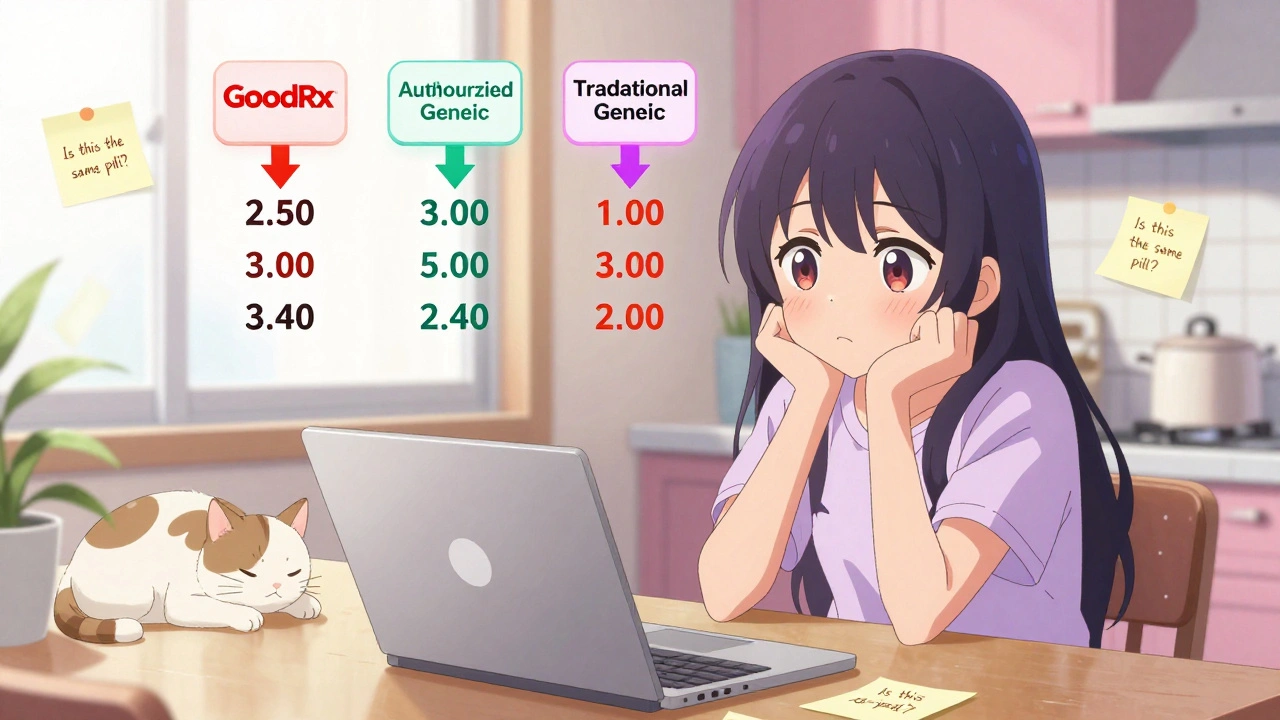
What to Say at the Pharmacy - Word-for-Word Scripts
You don’t need to be a pharmacist to get the best price. Just ask the right questions. Here’s exactly what to say:
- “Is there a generic version of this medication?” - Start here. If yes, ask:
- “Is this an authorized generic?” - If they say yes, ask:
- “How does my insurance treat authorized generics versus regular generics?” - This is the key. Many pharmacists don’t know the answer. But if they don’t, ask to speak to someone who does.
- “Can I switch to the traditional generic to lower my copay?” - Sometimes, even if the authorized generic is cheaper on the shelf, the traditional generic gives you a lower copay because of how rebates are structured.
- “Can I get the cash price for the generic?” - Use apps like GoodRx or SingleCare to compare. Sometimes paying cash for a generic is cheaper than using insurance.
A 2023 study in the Journal of the American Pharmacists Association found that patients who asked specifically about authorized generics saved 15-25% more than those who only asked about generics in general.
When Authorized Generics Might Not Be the Best Choice
Authorized generics sound perfect - same drug, lower price. But they’re not always the cheapest option. Here’s when to look elsewhere:
- If your insurance has a preferred generic tier - Sometimes the traditional generic is on Tier 1 (lowest cost), while the authorized generic is on Tier 2.
- If the authorized generic is the only version available - That’s a red flag. Brand companies sometimes delay traditional generics by launching their own version first. This tactic, called “product hopping,” reduces competition and keeps prices high longer.
- If you’re on a high-deductible plan - Even a $10 copay for a generic adds up if you’re paying $5,000 out-of-pocket before insurance kicks in. Always check the cash price.
According to the FDA, 110 drugs had less than a 10% price drop after generic entry - meaning competition was weak. If your drug is one of them, push harder. Ask your doctor if there’s another drug in the same class that has more generic options.
How to Check Your Insurance Plan’s Formulary
Your plan’s formulary is the list of drugs they cover and at what cost. But it’s not always easy to find. Here’s how to dig it up:
- Log into your insurance portal (Medicare, Blue Cross, Cigna, etc.).
- Look for “Drug Formulary” or “Prescription Benefits.”
- Search for your medication by name - both brand and generic.
- Check the “Tier” column. Tier 1 = lowest cost. Tier 3 or 4 = higher cost.
- Look for notes like “Authorized Generic” or “Brand Name Only.”
If you can’t find it online, call your plan’s pharmacy customer service. Ask: “Is the authorized generic version of [drug name] covered on the same tier as the traditional generic?” Write down their answer.
Tools to Help You Compare Prices
You don’t have to guess. Use these free tools:
- GoodRx - Shows cash prices for all versions of a drug across local pharmacies. Compare brand, traditional generic, and authorized generic side by side.
- SingleCare - Free discount cards that work even if you have insurance. Sometimes cheaper than your copay.
- NeedyMeds - Lists patient assistance programs for both brand and generic drugs if you qualify for financial help.
One patient used GoodRx to find that the cash price for the traditional generic of metformin was $4. Another found the authorized generic of lisinopril was $3 - but their insurance copay was $12. They paid cash and saved $9 per refill.
What to Do If Your Pharmacist Doesn’t Know the Difference
Only 43% of independent pharmacists can clearly explain how authorized generics affect your out-of-pocket cost, according to a 2022 survey. Don’t take “I don’t know” as an answer.
Politely say: “I’ve read that authorized generics can have different pricing than traditional generics. Could you check with your pharmacy benefit manager or look up my plan’s formulary?”
If they still can’t help, ask to speak to the pharmacist in charge. Or call your insurance provider directly. They have access to formulary details your local pharmacist might not.
Long-Term Strategy: Switching to Generics Saves Thousands
Let’s say you take three medications. One is a brand-name drug at $120/month. Two are generics at $10/month each. You’re paying $140/month - $1,680 a year.
If you switch the brand to a generic (or authorized generic) and get it down to $10/month, your total drops to $30/month. That’s $360 a year. Over five years? $8,400 saved.
That’s not theoretical. The FDA says 90% of U.S. prescriptions are filled with generics. But only if you ask for them. Most people never even think to ask.
Final Tip: Don’t Assume Your Doctor Knows
Your doctor knows your condition. But they don’t always know the latest pricing. When they write a prescription, they often just pick the first name they see. Ask: “Is there a generic version of this? Or an authorized generic?”
Doctors can write prescriptions for specific versions. If you want the traditional generic instead of the authorized one, say so. Most will honor it.
What’s Next? The Future of Generic Savings
The FDA is pushing to speed up approval of complex generics - like inhalers, skin creams, and injectables - where competition has been slow. New policies aim to stop companies from delaying generics through patent tricks.
Biosimilars - generic versions of biologic drugs like Humira and Enbrel - are now saving billions. The first biosimilar for Humira cut its price by nearly 50%. More are coming.
But none of this matters if you don’t know how to ask. The system is designed to save money - but only if you know how to use it.


