
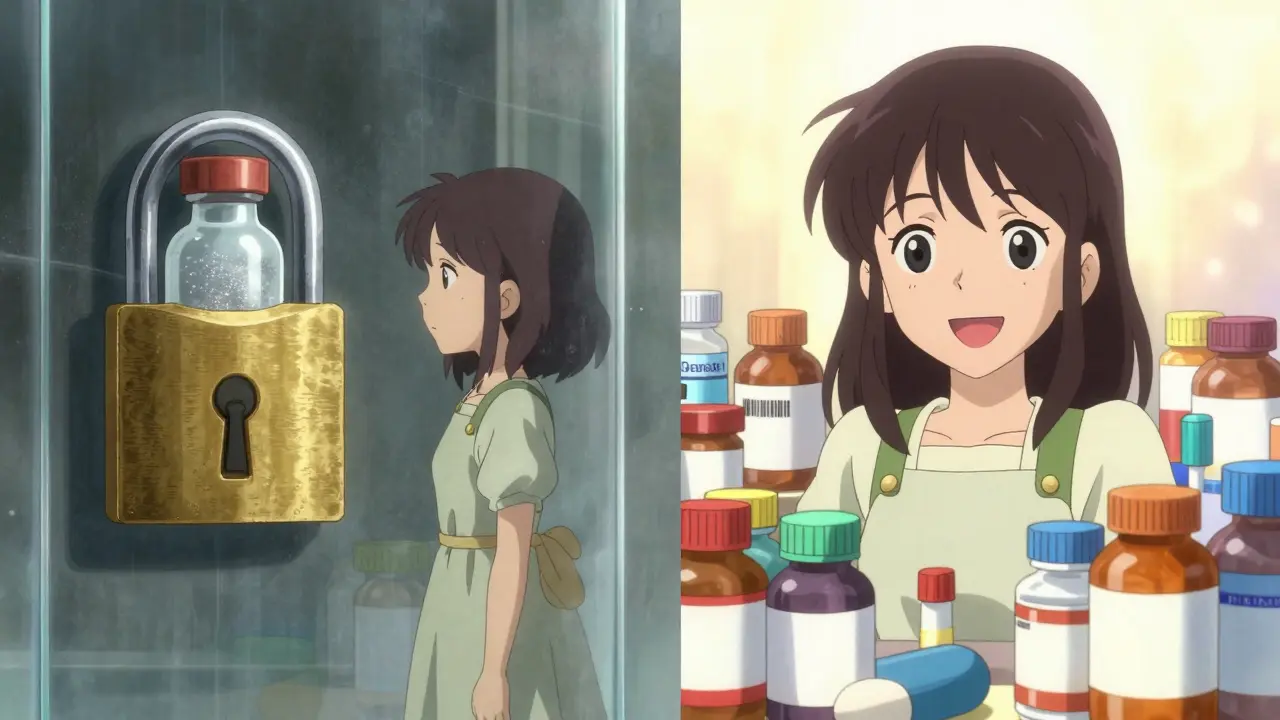
The Big Compromise: Innovation vs. Affordability
To understand this law, you have to realize it was a deal between two enemies: the big brand-name drug makers (innovators) and the generic companies. The innovators wanted more time to make their money back after spending billions on research. The generics wanted a way to enter the market the second a patent expired without spending a decade on new trials.The deal was simple: the government would give brand-name companies a way to extend their patents to make up for time lost during the FDA review process. In exchange, generic companies got a streamlined path to approval. This balance ensures that companies still have a financial reason to invent new cures, but patients aren't stuck paying monopoly prices forever.
The ANDA Pathway: The Generic Shortcut
Before this act, a generic company basically had to do everything a brand-name company did-including expensive and slow clinical trials. The Hatch-Waxman Act introduced the Abbreviated New Drug Application (or ANDA), a regulatory pathway that allows generic manufacturers to bypass full safety and efficacy trials by proving bioequivalence to a reference drug. Instead of proving the drug works from scratch, the generic company just has to prove it is "bioequivalent." This means it delivers the same amount of active ingredient into the bloodstream at the same rate as the original. This shift is massive; it cuts development costs by about 75%, which is why your generic pharmacy options are so much cheaper than the brand names.Decoding the Orange Book and Paragraph IV
If you want to know which patents protect a drug, you look at the Orange Book, the official FDA publication that lists all approved drug products and their associated patents. This is where the real legal battles happen. When a generic company files an ANDA, they have to make a statement about the patents listed in the Orange Book. The most controversial one is the "Paragraph IV certification." This is essentially a generic company saying, "The brand's patent is invalid, or we aren't infringing on it, so we're launching anyway." This triggers a high-stakes legal window. The brand-name company has 45 days to sue. If they do, the FDA automatically pauses the generic approval for 30 months while the court decides who is right. To reward the "brave" generics who challenge patents, the law gives the first successful challenger 180 days of market exclusivity-meaning they are the only generic on the market for six months. In the early days, this was so valuable that company reps literally camped outside FDA offices to be first in line.| Feature | Innovator (NDA) | Generic (ANDA) |
|---|---|---|
| Required Data | Full safety and efficacy trials | Bioequivalence data |
| Development Cost | Extremely high (billions) | Lower (approx. 75% less) |
| Approval Goal | Prove the drug is safe/effective | Prove it's the same as the original |
| Patent Status | Creates new patents | Challenges or waits for patent expiry |
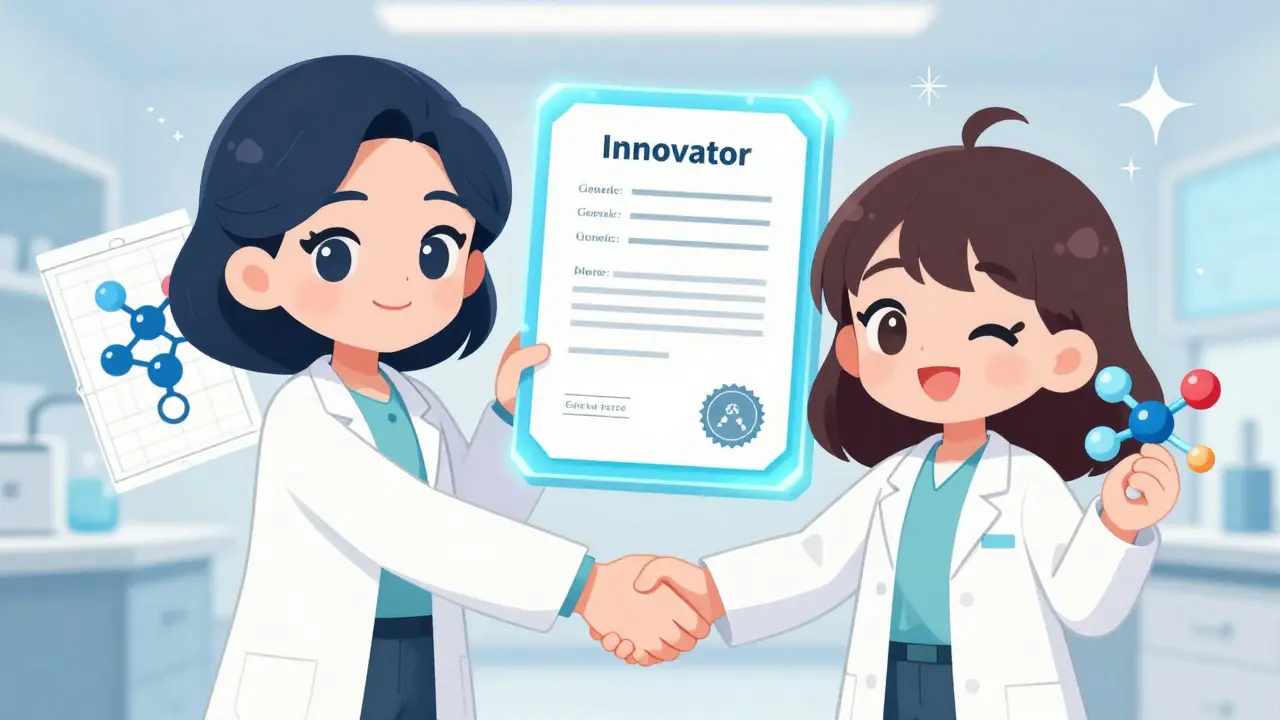
The Dark Side: Patent Thickets and Gaming the System
It sounds great on paper, but pharmaceutical companies are experts at finding loopholes. Over the years, we've seen the rise of "patent thickets." Instead of one main patent for a drug, a brand company might file 50 different patents covering everything from the pill's color to the way it's dissolved in water. This leads to a few frustrating tactics:- Product Hopping: A company releases a "new" version of a drug (like changing a tablet to a capsule) just as the old patent expires, forcing patients onto the new, patented version.
- Pay-for-Delay: A brand-name company pays a generic company millions of dollars to simply stay out of the market for a few more years.
- Evergreening: Filing secondary patents on minor modifications to extend the monopoly window.
The Real-World Impact: By the Numbers
Despite the gaming, the statistics are hard to argue with. Before 1984, the FDA approved fewer than 10 generics a year. By 2019, that number jumped to 771 in a single year. Today, generics make up about 90% of all prescriptions filled in the US. From a financial perspective, the Congressional Budget Office once estimated that the act saved the US healthcare system $1.18 trillion between 1991 and 2011. When a generic enters the market, prices typically plummet to about 15% of the brand-name price within six months. Without this framework, your monthly medication bill would likely be ten times higher.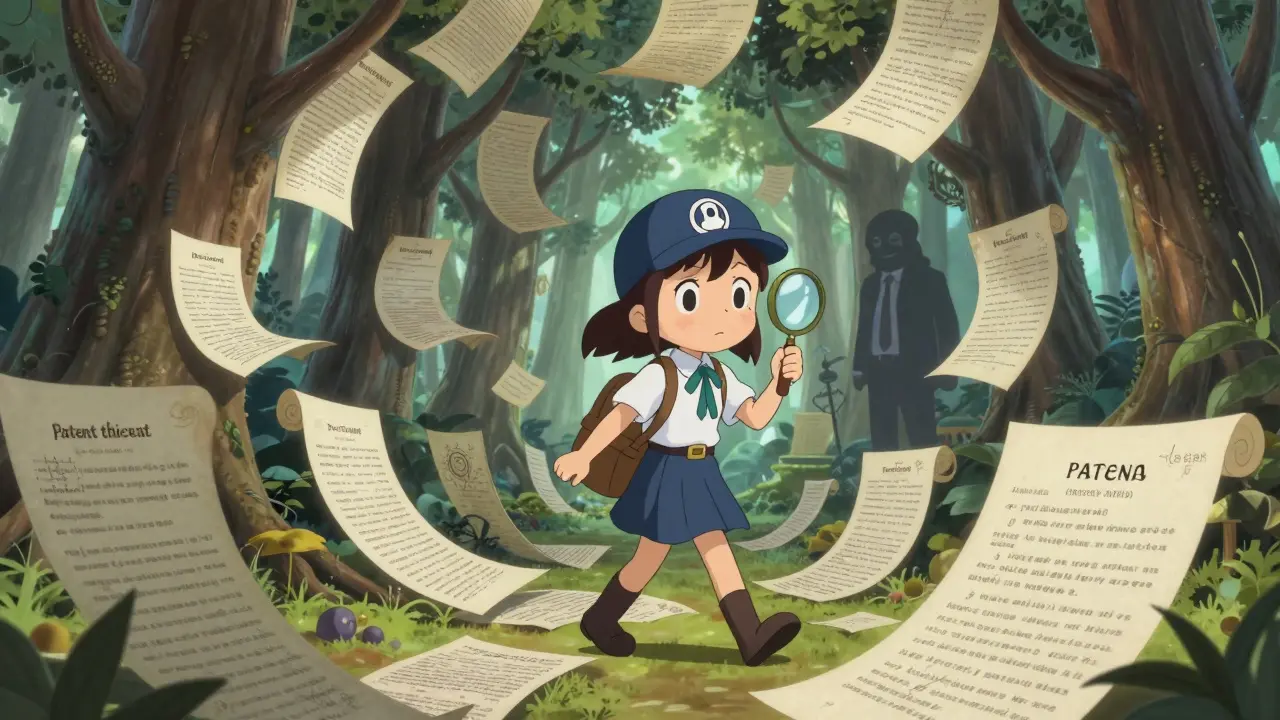
What's Changing in 2026?
We are currently seeing a push to close the loopholes mentioned above. The CREATES Act has already started making it harder for brand companies to refuse to give samples to generic testers. Newer legislation is targeting "reverse payment" settlements (pay-for-delay) to ensure that money doesn't buy a monopoly. Additionally, the FDA is cleaning up the Orange Book. They are cracking down on "improper listings"-basically telling companies they can't list every tiny, irrelevant patent just to scare off competition. The goal is to shorten the time from patent expiry to generic entry, potentially saving another $45 billion annually by 2030.What is the main difference between an NDA and an ANDA?
A New Drug Application (NDA) is for a brand-new drug and requires extensive clinical trials to prove safety and efficacy. An Abbreviated New Drug Application (ANDA) is for a generic version and only requires proof that the drug is bioequivalent to the original, skipping the expensive initial trials.
How does the 180-day exclusivity work?
The first generic company to successfully challenge a brand-name patent via a Paragraph IV certification is granted 180 days where they are the only generic allowed to sell that drug. This incentive encourages companies to take the legal risk of challenging patents.
What is a "patent thicket"?
A patent thicket occurs when a company files numerous overlapping patents on a single drug-covering minor variations in formulation or use-to make it legally difficult and expensive for generic competitors to enter the market.
Does the Hatch-Waxman Act apply to biologics?
The original Act focused on small-molecule drugs. Biologics (complex proteins) have a different pathway created by the Biologics Price Competition and Innovation Act (BPCIA), which allows for "biosimilars" rather than identical generics.
Why do some drugs still stay expensive after the patent expires?
This often happens due to "gaming" tactics like pay-for-delay settlements, where the brand company pays the generic to wait, or "product hopping," where the brand switches patients to a slightly modified version of the drug with a new patent.