
Generic drugs are the backbone of affordable healthcare. They make up 90% of all prescriptions filled in the U.S., yet cost only 10% of total drug spending. That sounds like a win-until you look at the manufacturers behind them. Many are losing money. Others are barely breaking even. And a growing number are walking away from entire product lines because they can’t make a profit. This isn’t just a corporate problem. It’s a public health crisis.
The Price Collapse of Commodity Generics
The simplest generic drugs-like metformin, lisinopril, or amoxicillin-are now commodities, traded like wheat or oil. When a brand-name drug loses its patent, dozens of manufacturers jump in. The result? A race to the bottom. In 2025, the average gross margin for these basic generics fell below 30%. A decade ago, it was closer to 50-60%.Take the case of generic doxycycline. In 2010, one pill cost $1. By 2024, it was selling for 12 cents. A single manufacturer might produce 100 million pills a year. But after accounting for raw materials, labor, FDA compliance, and distribution, the profit per pill is less than a penny. That’s not sustainable. That’s a business model on life support.
And it’s getting worse. The FDA approved over 1,600 new generic drugs in 2024 alone. More supply. Less demand per product. Prices keep dropping. Companies that built their entire business on these low-margin pills are now hemorrhaging cash. Teva, once the world’s largest generic maker, reported a -4.6% profit margin in 2025-losing $174 million despite $3.8 billion in revenue.
The Rise of Complex Generics
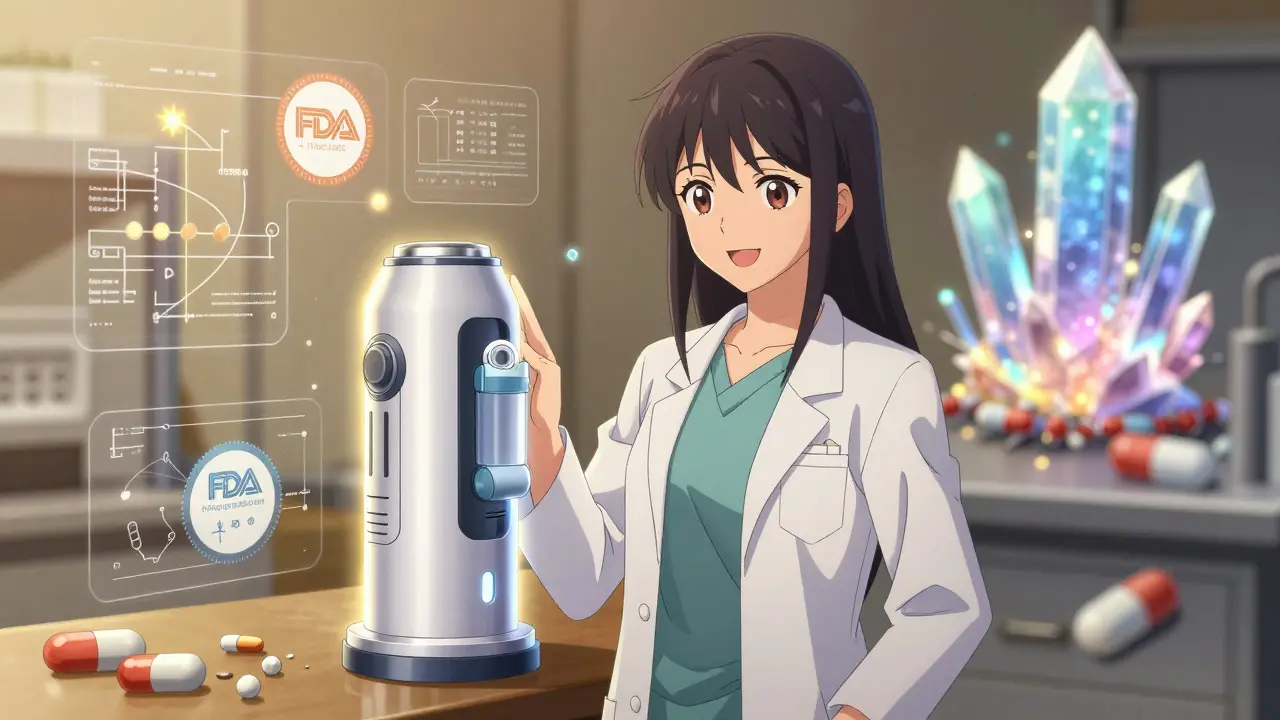
Not all generics are created equal. Some drugs are hard to copy. They need special formulations. Precise manufacturing. Advanced delivery systems. These are called complex generics. Examples include inhalers for asthma, injectable cancer drugs, or extended-release pain medications.Why does this matter? Because only a few companies can make them. The technical barriers are high. Regulatory hurdles are steep. And the FDA approval process for one complex generic can cost over $5 million-more than double the average for simple generics.
But once approved? Margins jump. Gross margins for complex generics often hit 40-60%. That’s why companies like Teva and Viatris are shifting away from commodity pills and toward these harder-to-replicate products. Teva’s 2024 growth came largely from drugs like Austedo XR (for movement disorders) and lenalidomide (for multiple myeloma). These aren’t just generics-they’re engineered versions with tighter control, better stability, and fewer side effects. And hospitals are willing to pay for reliability.
The Contract Manufacturing Shift
Another path out of the profit squeeze? Stop making your own brands. Start making other people’s.Contract manufacturing organizations (CMOs) are booming. The global market for generic drug contract manufacturing is projected to hit $90.95 billion by 2030, up from $56.53 billion in 2025. That’s nearly a 60% increase in just five years.
Companies like Egis Pharmaceuticals and Catalent are now offering end-to-end manufacturing services-everything from active ingredient synthesis to packaging. Branded drugmakers outsource production to avoid capital costs. Generic firms use CMOs to scale without building factories. Even small players can enter the market by partnering with a CMO, cutting their upfront investment from over $100 million to under $10 million.
This isn’t just a side hustle. It’s becoming the core business. Viatris sold off its entire active pharmaceutical ingredient (API) division to focus on licensing and distribution. Teva is expanding its CMO services to serve both branded and generic clients. The line between manufacturer and service provider is disappearing.
Why New Entrants Keep Failing
You might think, “If generics are so profitable, why don’t more companies jump in?” The answer is simple: the cost to enter is huge, and the risk is enormous.Here’s what it takes to start a generic drug company today:
- FDA approval: Each ANDA (Abbreviated New Drug Application) costs an average of $2.6 million to submit and get approved.
- Manufacturing facility: Building a cGMP-compliant plant costs $100 million+.
- Regulatory timeline: It takes 18-24 months just to get approved and get on formularies.
- Failure rate: Over 65% of startups focused on commodity generics fail within three years.
And that’s before you even start selling. PBMs (pharmacy benefit managers) hold all the power. They negotiate rebates, dictate which drugs go on formulary, and squeeze prices further. A new generic might get approved-but if the PBM won’t list it, no pharmacy will stock it.
That’s why the industry is consolidating. Mergers went from $1.86 billion in 2014 to $44 billion by 2016. The survivors aren’t the scrappy startups. They’re the ones with scale, diversified portfolios, and deep pockets.
The Hidden Cost of Cheap Drugs
The public sees cheap drugs as a win. And they are. In 2022 alone, generics saved the U.S. healthcare system over $408 billion. But that savings comes at a price.When manufacturers can’t profit, they stop making drugs. Shortages are rising. In 2024, the FDA recorded over 400 drug shortages-many of them for essential, low-margin generics like insulin, antibiotics, and IV fluids.
Dr. Aaron Kesselheim of Harvard put it bluntly: “The relentless price competition in generics has created a market failure where essential medicines face shortages because manufacturers cannot profitably produce them.”
It’s not that companies are greedy. It’s that the system doesn’t reward them for making what we need. If a drug costs $0.05 per pill to make and sells for $0.08, no one will make it. Even if thousands of patients rely on it.
What’s Next? The 0 Billion Opportunity
The good news? The tide may be turning. Over the next decade, over 50 blockbuster drugs will lose patent protection. That includes Humira, Enbrel, and key cancer therapies. The global generics market is projected to hit $600 billion by 2033.But this time, the winners won’t be the ones making cheap pills. They’ll be the ones who:
- Focus on complex generics with technical barriers
- Partner with CMOs to reduce capital risk
- Expand into emerging markets with rising demand
- Invest in biosimilars and novel delivery systems
Europe and Asia are already seeing higher margins due to better pricing structures. India and China are building next-gen manufacturing hubs. The U.S. market is shrinking-but the world isn’t.
Profitability isn’t dead. It’s just changing. The old model-mass produce, low price, high volume-is gone. The new model? Smart production, high-value products, and strategic partnerships. The companies that adapt survive. The ones that don’t? They disappear.
Why This Matters to You
You might think this is all about big pharma. But it’s not. It’s about whether your next prescription will be available. Whether your child’s asthma inhaler will be in stock. Whether your elderly parent can afford their daily heart medication.The system works when manufacturers make enough to stay in business. When they don’t, the supply chain breaks. And when it breaks, patients pay the price-not in dollars, but in health.
The future of generic drugs isn’t about making them cheaper. It’s about making them sustainable. And that requires rethinking how we value them-not just as commodities, but as lifelines.


