
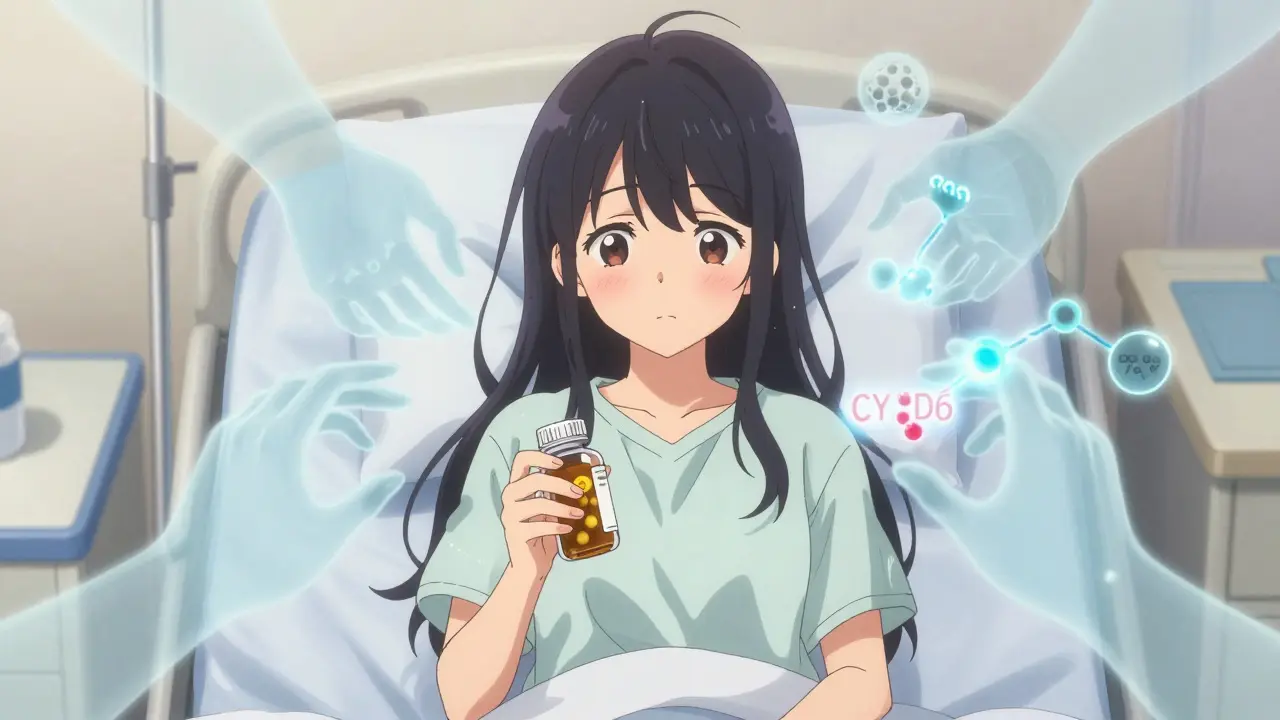
SSRI-Opioid Interaction Checker
This tool helps you determine if your antidepressant medication could block the effectiveness of certain pain relievers. Based on the article content, fluoxetine and paroxetine are particularly strong inhibitors of CYP2D6, which is needed to convert codeine and tramadol into active pain-relieving forms.
Results will appear here after checking.
Have you ever taken codeine for pain and felt like it did absolutely nothing? You followed the dose, waited the right amount of time, and still felt the same ache. If you’re also taking fluoxetine or paroxetine - common antidepressants sold as Prozac or Paxil - that’s not a coincidence. It’s a well-documented, clinically significant interaction that shuts down codeine’s pain-relieving power before it even starts.
Codeine Doesn’t Work Like You Think
Codeine isn’t the painkiller itself. It’s a prodrug, meaning your body has to turn it into something else to get relief. That something else is morphine. And the only enzyme in your body that can make that conversion is called CYP2D6. About 5 to 10% of every codeine pill you swallow gets changed into morphine by this enzyme. The rest just passes through unused.
That means if CYP2D6 isn’t working, codeine is basically useless. And that’s exactly what happens when you take fluoxetine or paroxetine with it.
Fluoxetine and Paroxetine: Silent Saboteurs
Fluoxetine and paroxetine are SSRIs - selective serotonin reuptake inhibitors - used to treat depression, anxiety, and OCD. They’re effective. But they’re also among the strongest inhibitors of CYP2D6 you can take. Paroxetine is especially potent. Its binding strength to the enzyme (Ki value of 0.14 µM) makes it one of the most powerful CYP2D6 blockers in clinical use. Fluoxetine isn’t far behind.
When these drugs are in your system, they cling to CYP2D6 like glue. They don’t just slow it down - they block it. That means even if your body is naturally good at converting codeine to morphine (what we call an ‘extensive metabolizer’), the SSRI turns you into a functional poor metabolizer. No conversion. No morphine. No pain relief.
The Science Behind the Failure
Back in 2004, researchers gave healthy volunteers paroxetine for a week, then gave them codeine. The result? Morphine levels dropped by 78%. Maximum concentration (Cmax) fell by 85%. That’s not a small effect - it’s near-total elimination of the active drug.
A 2008 study in Anesthesiology showed patients on paroxetine got 62% less pain relief from codeine than those not taking it. The difference wasn’t subtle. Patients reported pain levels unchanged, even after full doses. In contrast, those switched to oxycodone - which doesn’t rely on CYP2D6 - had immediate relief.
This isn’t theoretical. The FDA issued warnings in 2007 and again in 2012. The Clinical Pharmacogenetics Implementation Consortium (CPIC) says bluntly: “Avoid codeine if you’re taking strong CYP2D6 inhibitors like fluoxetine or paroxetine.” The European Medicines Agency agrees. And dozens of clinical case reports back it up.
Real Cases, Real Consequences
A 2020 survey of over 1,200 pain specialists found that nearly 8 out of 10 had seen at least one patient whose codeine completely failed because of an SSRI. Paroxetine was the top culprit - mentioned in 63% of those cases. Fluoxetine was next, at 42%.
One anesthesiologist shared a case on a medical forum: a woman after a hysterectomy got codeine as prescribed. Zero pain relief. Switched to oxycodone. Pain vanished within 30 minutes. She was on paroxetine. The interaction was the only explanation.
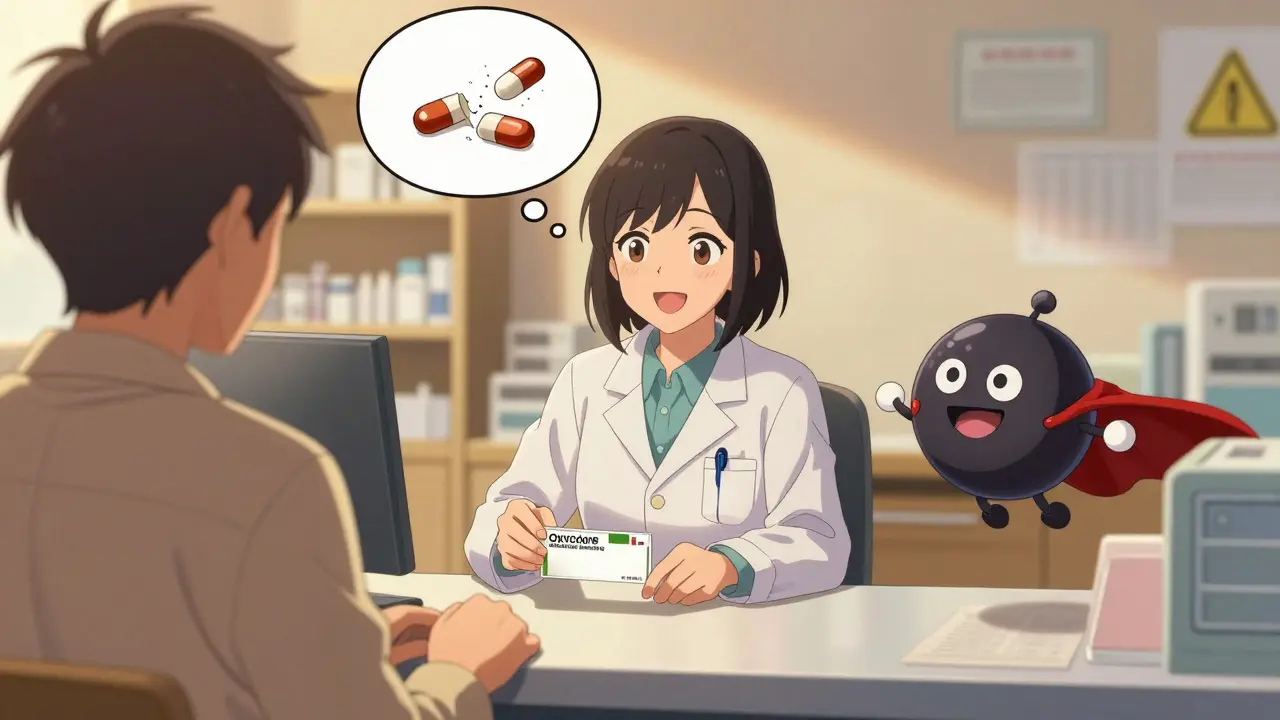
Pharmacists on Reddit report the same thing - 15+ patients in a year with the same story: “Paxil and codeine didn’t work.” The fix? Always switch to hydrocodone or oxycodone. Neither needs CYP2D6 to work.
Why This Isn’t Just About Depression
This interaction affects more than people with depression. It hits anyone on these medications - even if they’re taking them for anxiety, panic disorder, or PTSD. It’s not about the reason for the SSRI. It’s about the drug’s chemical behavior.
And it’s not just fluoxetine and paroxetine. Bupropion (Wellbutrin), quinidine, and even some antifungals and heart medications block CYP2D6. But among SSRIs, these two are the worst offenders. Sertraline? Moderate blocker. Citalopram and escitalopram? Almost no effect. That’s why many doctors now switch patients from fluoxetine or paroxetine to escitalopram when they need pain meds.
What to Do Instead
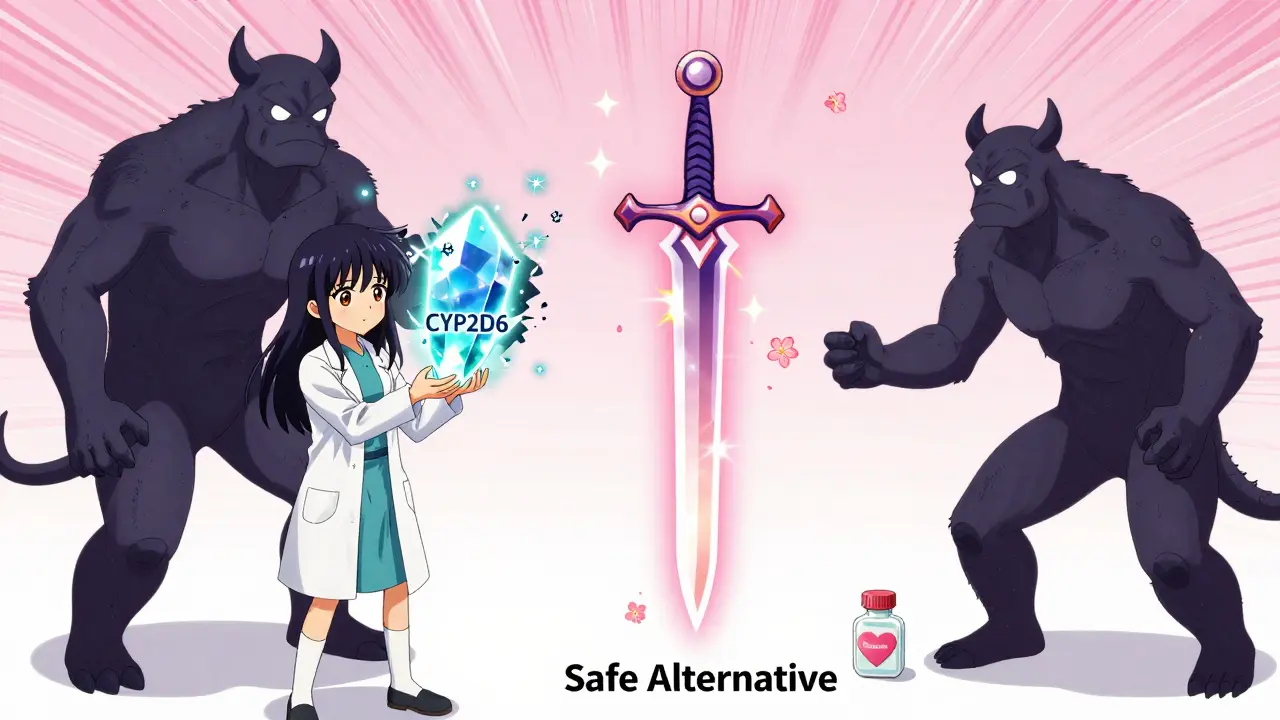
If you’re on fluoxetine or paroxetine and need pain relief, codeine is off the table. But you still have options.
- Oxycodone - metabolized by CYP3A4, not CYP2D6. Works fine with SSRIs.
- Hydrocodone - mostly broken down by CYP2D6, but less dependent than codeine. Still risky. Better to avoid.
- Morphine - already active. No conversion needed. Safe with any SSRI.
- Hydromorphone - also direct-acting. No CYP2D6 involvement.
- Non-opioid options - acetaminophen, ibuprofen, naproxen - often sufficient for mild to moderate pain.
Don’t assume your doctor knows this. Many still prescribe codeine out of habit. If you’re on fluoxetine or paroxetine and your pain isn’t improving, say something. Ask: “Could this be a CYP2D6 interaction?”
Testing and Prevention
Some hospitals now test patients for CYP2D6 gene variants before prescribing opioids. It’s not routine everywhere, but it’s growing. A 2019 study showed that screening cut codeine treatment failures by over 60% in just one year.
Even without genetic testing, pharmacists can flag the interaction. In a 6-month pilot across 15 U.S. hospitals, pharmacists who checked for CYP2D6 inhibitors when filling codeine prescriptions prevented 1,842 cases of ineffective pain control.
If you’re unsure, ask your pharmacist. They have tools to check for interactions in seconds. And if you’re on one of these SSRIs, make sure your pain meds are on the safe list.
Why This Matters Beyond Pain
This isn’t just about discomfort. When codeine fails, people sometimes take more - thinking it’s not strong enough. That increases the risk of side effects like dizziness, nausea, or respiratory depression - without any benefit. It’s dangerous and pointless.
And it’s not just codeine. The same issue affects tramadol, which also needs CYP2D6 to become active. If you’re on fluoxetine or paroxetine, tramadol is just as unreliable.
The bigger picture? We’re moving toward personalized medicine. Your genes and your meds matter together. One-size-fits-all prescribing is outdated. This interaction is a textbook example of why.
What to Ask Your Doctor
If you’re on fluoxetine or paroxetine and need pain relief, here’s what to say:
- “I’m on an SSRI. Is codeine going to work for me?”
- “Can we switch to morphine or oxycodone instead?”
- “Is there a non-opioid option I can try first?”
- “Could my antidepressant be blocking the painkiller?”
Don’t accept “it should work.” Ask for evidence. If your doctor doesn’t know about CYP2D6, ask them to check the CPIC guidelines. They’re free and public.
The Bigger Trend
Codeine prescriptions in the U.S. have dropped by over 40% since 2010. One of the biggest reasons? Doctors are learning this interaction. Insurance companies and hospitals are pushing for safer alternatives. The FDA, EMA, and major medical groups all agree: avoid codeine with strong CYP2D6 inhibitors.
And it’s not just about safety - it’s about effectiveness. Giving someone a drug that doesn’t work is a waste. It’s also expensive. And it delays real relief.
The future? Genetic testing integrated into electronic health records. Decision support tools that flag interactions before a prescription is written. Drugs designed to bypass these metabolic pathways. We’re already there in some places. It’s just not universal yet.
If you’re on fluoxetine or paroxetine and your codeine isn’t helping - you’re not imagining it. You’re not weak. You’re not broken. Your body is doing exactly what it should. The problem is the combination. And there’s a better way.
Why does codeine stop working when I take fluoxetine or paroxetine?
Codeine needs to be converted into morphine by the CYP2D6 enzyme to relieve pain. Fluoxetine and paroxetine block this enzyme so effectively that little to no morphine is produced. Without morphine, codeine has no pain-relieving effect - even if you take the full dose.
Is this interaction the same for all SSRIs?
No. Paroxetine and fluoxetine are the strongest CYP2D6 inhibitors among SSRIs. Sertraline has moderate inhibition, while citalopram and escitalopram have almost no effect. If you need an SSRI and pain medication, escitalopram is often the safest choice.
What painkillers are safe to take with fluoxetine or paroxetine?
Morphine, hydromorphone, and oxycodone are safe because they don’t rely on CYP2D6 to work. Non-opioid options like acetaminophen or ibuprofen are also good choices for mild to moderate pain. Avoid tramadol and codeine - both need CYP2D6.
Can I just take more codeine to make up for it?
No. Taking more codeine won’t help. The enzyme is blocked - extra codeine just increases side effects like drowsiness, nausea, or constipation without improving pain. It’s risky and ineffective.
Should I get tested for CYP2D6 gene variants?
It’s not required, but it can be helpful - especially if you take multiple medications. Knowing your metabolizer status (poor, normal, or ultrarapid) helps avoid ineffective or dangerous drug combinations. Many hospitals now offer testing, and it’s becoming more affordable.
Is this interaction only a problem in the U.S.?
No. The European Medicines Agency, Health Canada, and other global agencies have issued similar warnings. Twelve European countries have restricted codeine use specifically because of CYP2D6-related risks, including interactions with antidepressants.
This literally saved my life. I was on paroxetine and codeine for months thinking I was just weak-turns out my body was just screaming at me to switch meds. Now I’m on oxycodone and actually sleep at night.
It’s fascinating how deeply our biology is entangled with pharmacology. Codeine isn’t a painkiller-it’s a molecular key that only fits certain locks, and fluoxetine and paroxetine are like superglue jammed into the keyhole. We treat drugs as if they’re standalone actors, but they’re really ensemble players in a biochemical theater. The real tragedy isn’t that codeine fails-it’s that we’ve spent decades assuming it should work for everyone, ignoring the silent, genetic ballet happening inside every cell. This isn’t just a drug interaction-it’s a mirror to how little we truly personalize medicine.
Stop giving people codeine if they’re on SSRIs full stop. Why is this even still a thing. My cousin took paroxetine and codeine after surgery and cried because it did nothing. Then they switched to morphine and she was fine in 20 mins. Doctors need to wake up.
yo i just found out my doc gave me codeine while i was on prozac and i thought i was just a wimp 😅 turned out my body was just ignoring it. switched to oxycodone and now i can actually walk again. also ps i had no idea tramadol was the same deal-so that’s going on my list now. thanks for the heads up
The CYP2D6 polymorphism landscape is far more nuanced than most clinicians acknowledge. While fluoxetine and paroxetine are indeed potent inhibitors, their pharmacokinetic profiles differ significantly-fluoxetine and its active metabolite norfluoxetine have half-lives exceeding a week, leading to cumulative inhibition even after discontinuation. This means that even if a patient stops taking fluoxetine, the enzyme may remain suppressed for weeks. Meanwhile, sertraline’s lower affinity allows for functional CYP2D6 activity in most individuals. The clinical implication is that switching from fluoxetine to escitalopram isn’t just a preference-it’s a pharmacodynamic reset. Moreover, the FDA’s 2012 warning was largely ignored in primary care, where codeine remains a default for mild-to-moderate pain. This isn’t a gap in knowledge-it’s a systemic failure in translational pharmacology education.
OMG this is me 😭 I was on Paxil after my anxiety got bad and then got a tooth extraction and codeine did NOTHING. I thought I was broken. Then my pharmacist said "honey you’re blocking your own painkillers" and switched me to tylenol 3. Now I’m on escitalopram and it’s a whole new life. Thank you for explaining it so clearly 💛
As a clinical pharmacist with over 15 years of experience, I cannot stress enough how critical this interaction is. In our hospital system, we implemented a CYP2D6 inhibitor alert in our e-prescribing software two years ago. Since then, codeine prescriptions for patients on fluoxetine or paroxetine have decreased by 92%. The reduction in patient complaints, unnecessary opioid escalation, and adverse events has been profound. This is not theoretical-it is actionable, preventable, and ethically mandatory. Every prescriber should be educated on this. Every pharmacist should flag it. And every patient deserves to know their medication is not working because of a known, documented interaction-not because they are somehow deficient.
Thank you so much for writing this-I’ve been telling my patients this for years, but no one listens until they’re in pain and confused… I always say, "Codeine is like a key that’s been glued shut-and your SSRI is the glue." I’ve switched so many people to morphine or oxycodone, and their eyes light up when they say, "I can finally breathe again." Also, I’ve started asking every patient on SSRIs: "Have you ever tried codeine and it didn’t work?"-and 7 out of 10 say yes. This needs to be standard screening. Please share this everywhere.
How quaint. You’ve all been reduced to pharmacological determinism-reducing human suffering to a CYP2D6 SNP. The real pathology isn’t the enzyme-it’s the reductionist paradigm of biomedicine that reduces consciousness to metabolic pathways. Codeine’s failure is not a biochemical glitch-it’s a symptom of a system that commodifies relief and pathologizes resilience. The SSRI is not the saboteur; the system is. Why not question why we’re prescribing opioids at all? Why not interrogate the cultural fetishization of chemical sedation? Your ‘safe alternatives’ are just more molecules in the same machine. You’re all just rearranging deck chairs on the Titanic of pharmaceutical capitalism.