
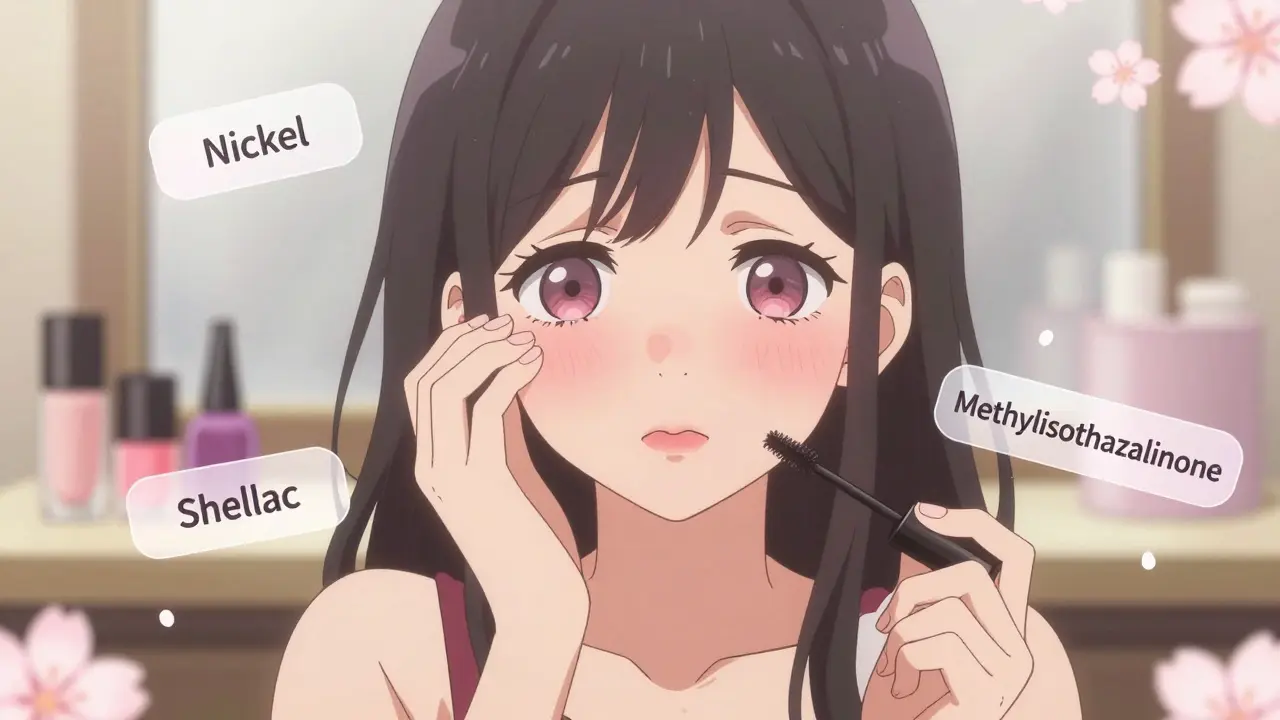
The skin around your eyes is the thinnest on your entire body-just 0.55 millimeters thick. That’s why even mild irritants can trigger a fierce reaction. If you’ve been dealing with red, itchy, flaky eyelids that won’t go away, you’re not alone. Eyelid dermatitis affects thousands of people every year, and most of the time, it’s not caused by poor hygiene or aging. It’s caused by something you’re using every day: your makeup, shampoo, nail polish, or even your hand cream.
Why Your Eyelids Are So Sensitive
Your eyelids aren’t just delicate-they’re exposed. Every time you touch your face, apply mascara, wash your hair, or pick up your phone, you’re transferring chemicals directly onto this thin skin. Unlike other parts of your face, your eyelids don’t have much natural protection. They’re not covered by hair, they’re not shielded by thick skin, and they’re often in direct contact with products designed to stay on your skin for hours. The result? A delayed allergic reaction called allergic contact dermatitis (ACD). This isn’t an immediate burn or sting. It’s a slow burn. You apply your eyeliner on Monday. By Wednesday, your lids are swollen, itchy, and peeling. That’s because your immune system is reacting to a specific chemical-something your body has learned to see as a threat. This type of reaction is responsible for about 74% of all eyelid dermatitis cases, according to a 2023 NIH study.The Top 7 Allergens Hiding in Your Beauty Routine
Not all allergens are obvious. Some are listed on labels. Others are buried under scientific names. Here are the most common culprits, based on patch testing data from over 200 patients:- Nickel (28.7% of cases): Found in cheap metal eyelash curlers, magnetic eyelash applicators, and even some eyeshadow palettes with metal components.
- Shellac (21.4%): The gel polish used in nail salons. Even if you don’t apply it to your eyes, touching your nails and then rubbing your eyes can transfer it.
- Preservatives (18.9%): Methylisothiazolinone, parabens, and formaldehyde releasers like DMDM hydantoin are in almost every cream, serum, and mascara. They prevent mold-but they also trigger reactions.
- Topical antibiotics (15.3%): Neomycin and bacitracin are common in over-the-counter eye ointments. People think they’re helping, but they’re often the cause.
- Fragrances (14.6%): Even "unscented" products can contain masking fragrances. Look for "parfum" or "fragrance" on the ingredient list.
- Acrylates (12.1%): Used in long-wear, waterproof mascaras and eyeliner. These are the same chemicals used in nail enhancements and dental fillings.
- Surfactants (9.8%): Sodium lauryl sulfate and similar detergents are in cleansers and makeup removers. They strip the skin’s barrier, making it easier for other allergens to penetrate.
Here’s the twist: 42% of people who develop eyelid dermatitis didn’t even realize they were exposed to these allergens through their hands. A woman starts wearing gel nails. She touches her face. Within days, her eyelids flare up. She stops using her eye cream. Nothing changes. She blames her makeup-when the real trigger is her nail polish.
Why Most People Get It Wrong
Many patients see their primary care doctor or even their ophthalmologist first. They’re told it’s “dry eyes,” “allergies,” or “a reaction to new mascara.” But here’s the problem: clinical history alone correctly identifies the trigger in only 37% of cases, according to Dr. Erin Warshaw of Wake Forest School of Medicine. Doctors who aren’t dermatologists often miss indirect exposure. They don’t ask about nail polish. They don’t check your hair dye. They don’t test for nickel in your eyelash curler. And they rarely recommend patch testing. Patch testing is the gold standard. It’s not a blood test. It’s not a skin prick. It’s a slow, precise process where tiny amounts of 60-100 common allergens are taped to your back for 48 hours. Then, a dermatologist checks for reactions. Done right, it’s 95% accurate. The American Academy of Dermatology now recommends expanded panels that include acrylates and shellac-ingredients that were left out of older tests.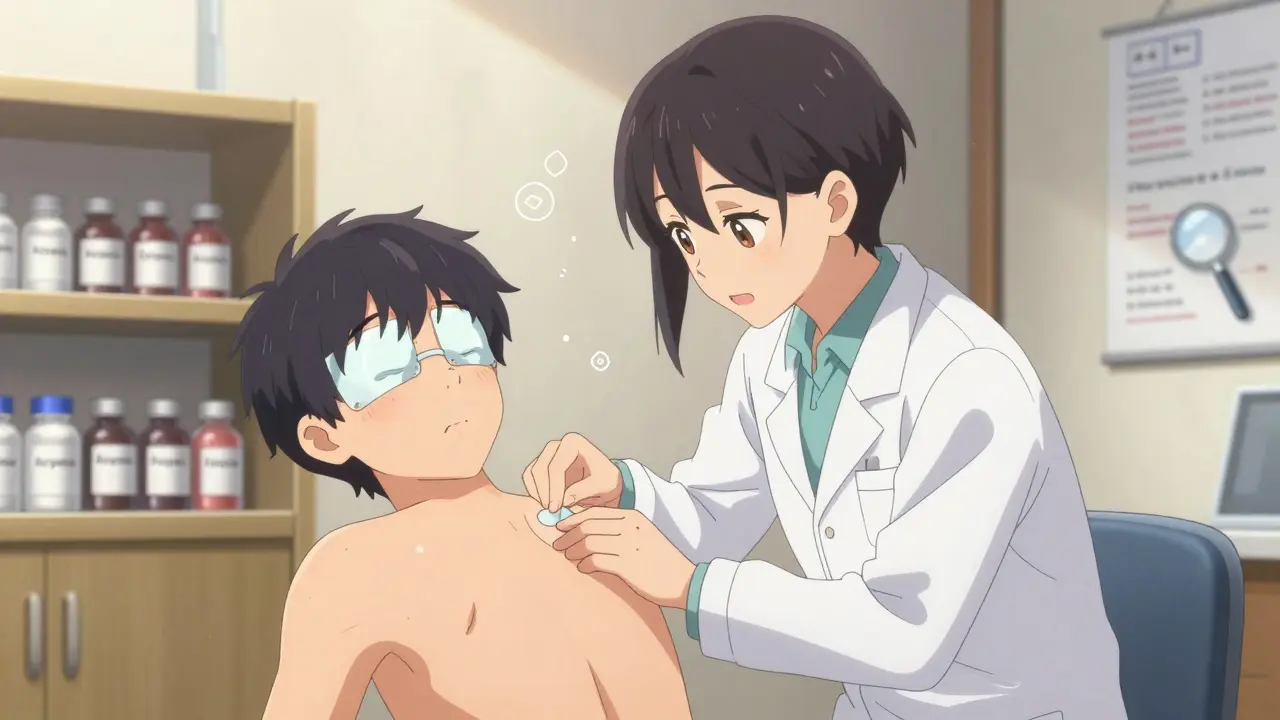
What Happens If You Ignore It
Left untreated, eyelid dermatitis doesn’t just linger-it gets worse. The constant scratching and rubbing leads to thickened, leathery skin (lichenification). Cracks form. The skin bleeds. In chronic cases, it can look like eczema, psoriasis, or even an infection. Worse, many people reach for steroid creams. Over-the-counter hydrocortisone might seem like a quick fix. But here’s the danger: the eyelid skin absorbs medication easily. High-potency steroids like clobetasol can cause permanent skin thinning after just 7-10 applications, according to Dr. Anthony Mancini of Northwestern University. And if the cream accidentally gets into your eye, it can raise eye pressure, leading to glaucoma or cataracts over time. That’s why the FDA approved Eysuvis 0.25% in December 2022-the first corticosteroid ointment specifically designed for eyelid use. It’s formulated to be effective without crossing into the eye. But even this should only be used short-term under supervision.The 3-Step Treatment Plan That Actually Works
There’s no magic cure. But there is a proven, step-by-step protocol that works for most people:- Stop everything (Days 1-3): No makeup, no eye cream, no face wash. Use only cool compresses and plain petroleum jelly (Vaseline) to soothe. This gives your skin a chance to reset.
- Get patch tested (Days 4-14): See a board-certified dermatologist. Don’t settle for a quick exam. Push for full patch testing with an expanded panel. Bring your entire beauty routine with you-every product, every brush, every tool.
- Avoid and replace (Day 15+): Once you know your triggers, remove them. Use the Contact Allergen Replacement Database (CARD)-a free, updated resource from the University of Louisville. It lists over 12,800 verified allergen-free products, from cleansers to mascara. Apps like "Preservative Finder" help you scan ingredient labels in real time.
Patients who follow this plan have a 68% success rate. Those who just try to “avoid cosmetics” without knowing the exact trigger? Only 32% get better.

The Hidden Risk: "Clean Beauty" Isn’t Always Safe
You might think switching to “natural” or “organic” products will help. But a 2023 JAMA Dermatology study found that 33% of “clean” eye products contain hidden botanical allergens-like chamomile, calendula, or tea tree oil. These are from the Compositae family, a group of plants that trigger reactions in people already sensitized to ragweed or daisies. Just because a product says “no parabens” or “no synthetic fragrance” doesn’t mean it’s safe. Natural doesn’t mean non-allergenic. In fact, plant-based ingredients are among the most common causes of delayed reactions.What to Do Next
If your eyelids have been red or itchy for more than a week:- Stop using all eye-area products immediately.
- Write down every product you’ve used in the last 30 days-including shampoo, hand soap, and nail polish.
- Find a dermatologist who does patch testing. Ask: "Do you use the expanded panel that includes acrylates and shellac?"
- Don’t use steroid creams without a prescription. If you’ve been using them, stop.
- Download the "Preservative Finder" app or visit CARD’s website to find safe alternatives.
It’s frustrating to spend years chasing answers. But eyelid dermatitis is one of the most treatable skin conditions-if you know the cause. Once you identify the trigger, most people see improvement within 1-2 weeks. Some take longer. But the key isn’t more creams. It’s less guesswork.
Can eyelid dermatitis cause permanent damage?
Yes, but only if left untreated or mismanaged. Chronic scratching can lead to thickened, leathery skin that doesn’t fully return to normal. Using strong steroid creams on the eyelids for more than 10 days can cause permanent skin thinning. If steroids get into the eye, they can increase pressure and lead to glaucoma or cataracts over time. The good news? With proper patch testing and allergen avoidance, these complications are preventable.
Is eyelid dermatitis contagious?
No. Eyelid dermatitis is not contagious. It’s an allergic reaction, not an infection. You can’t catch it from someone else. However, if you touch your own affected eyelid and then touch someone else’s skin, you won’t transfer the condition-but you might transfer the allergen (like nickel or shellac) if it’s still on your fingers. That’s why hand hygiene matters.
Can I still wear makeup after I recover?
Yes-but only if you know exactly what caused the reaction. Once patch testing identifies your trigger, you can safely use products that don’t contain it. Many people return to wearing mascara, eyeliner, and eyeshadow after identifying their allergens. The key is reading labels carefully and using the CARD database to find verified safe products. Never go back to the product that caused the flare-up.
Why does my eyelid dermatitis keep coming back?
Most people get temporary relief but don’t fully avoid their trigger. You might stop using mascara-but still use nail polish that contains shellac. Or you switch to a new cleanser that has the same preservative. Cross-contamination is common. One study found that 63% of patients relapsed because they didn’t realize their allergen came from their hands, not their eye products. Patch testing helps you catch these hidden sources.
Should I see a dermatologist or an ophthalmologist?
Start with a dermatologist who specializes in contact dermatitis. Ophthalmologists focus on eye health, not skin allergies. While they can rule out infections or dry eye, they rarely test for allergens. Dermatologists are trained in patch testing and ingredient analysis. If your symptoms are severe or involve your cornea, they may refer you to an ophthalmologist-but diagnosis and treatment should begin with dermatology.
Okay but can we talk about how shellac in nail polish is the silent assassin of eyelid health? I had this weird flare-up for months, thought it was my new mascara, then realized I’d been getting gel nails every two weeks. Touch my nails, rub my eyes-boom. Dermatologist confirmed it. Now I use regular polish and wash my hands like a paranoid robot before touching my face. Life changed.
Also, the CARD database is a GODSEND. Found a mascara that doesn’t have acrylates AND smells like vanilla. I’m crying.
Also also-why is no one talking about how ‘clean beauty’ brands use tea tree oil? I’m allergic to ragweed and it’s like they’re trying to kill me with lavender and chamomile. 🤦♀️
I used to think my eyelid dermatitis was just ‘dry skin’ until I started tracking everything I touched. Turns out my hand soap had methylisothiazolinone. My eye cream had parabens. My eyelash curler was nickel. And my ‘natural’ face oil? Calendula. All of it. I was blaming the wrong stuff for years.
Patch testing felt like a waste of time but it saved me. Now I use Vaseline on my lids and only products from CARD. No more itching. No more panic. Just peace. And honestly? I feel like a genius now.
So the real issue here isn’t the makeup it’s the fact that no one checks what’s on your hands
I didn’t even know shellac could transfer like that
Now I wash my hands before I even blink
And yeah I’m not touching my face with nail polish on anymore
It’s dumb but it works
Wow. So you’re telling me the entire ‘clean beauty’ industry is just a marketing scam designed to make you spend more money while poisoning you with botanicals? 🤡
Of course. Of course the people who sell you ‘organic’ stuff are the same ones who don’t know the difference between an allergen and a plant. I’ve been using the same mascara for 3 years because it says ‘no parabens’ and ‘no sulfates’-turns out it’s loaded with chamomile and tea tree oil. My eyelids looked like a war zone.
And don’t get me started on the ‘hypoallergenic’ labels. That’s not a regulated term. It’s a lie. A beautiful, expensive lie.
Go patch test. Or keep crying into your ‘natural’ eye cream. I’m not judging. I’m just saying you’re being played.
Also-DMDM hydantoin is a nightmare. Avoid it like the plague. 💀
I used to think I was allergic to everything until I realized I was allergic to my own habits.
Washed my hands after every time I touched my phone.
Stopped using the same brush for mascara and blush.
Got rid of every product with ‘fragrance’ on the label-even if it said ‘unscented’.
Now my eyelids are smooth. No steroids. No drama.
Also, the Preservative Finder app is my new best friend. I scan everything. Even my laundry detergent. 😅
THEY KNOW. THEY ALL KNOW. The beauty industry doesn’t want you to know this because if you did, you’d stop buying everything. Shellac? Nickel? Preservatives? It’s all a conspiracy to keep you dependent on their products. They even hide the allergens in the fine print because they know you won’t read it.
And the ‘clean beauty’ brands? They’re owned by the same corporations that make the toxic stuff. Same CEOs. Same labs. Same lies.
They’re selling you fear and then selling you the ‘solution’-for $45 a tube.
They’re watching. They’re always watching.
And now you know.
💔
So let me get this straight: I spent $200 on a ‘clean’ eyeliner that’s basically just botanical poison, and the real culprit was my gel nails? 😭
Also, I just Googled ‘DMDM hydantoin’ and now I’m crying into my Vaseline jar.
But hey-at least I’m not using hydrocortisone on my lids anymore. That was a bad idea. Like, ‘I’m trying to fix my face and accidentally gave myself a ghost eye’ bad.
Thanks for the CARD link. I’m deleting half my makeup right now. 🙌
People in the US need to stop acting like this is some new discovery. In Germany they’ve had patch testing standard since the 80s. We’re still playing catch-up because we think ‘natural’ means safe and ‘expensive’ means better.
Also, nickel is banned in EU cosmetics. Here? You can buy a $5 eyelash curler that’s basically a metal allergy grenade.
Stop blaming your skin. Blame the system.
And stop using steroid creams like they’re ChapStick. That’s not skincare-that’s self-sabotage.
Listen you got this
Step one stop everything
Step two get tested
Step three find safe stuff
It’s not magic it’s just smart
And yeah the CARD database is your new bible
You got this
One day you’ll look in the mirror and not see red flaky lids
And you’ll be so proud
Trust me I’ve been there
YESSSSS I DID THIS AND IT WORKED 😭
I was so done with my itchy lids
Went full detox mode
Washed my hands 10x a day
Got patch tested
Turns out my ‘gentle’ shampoo had sodium lauryl sulfate
And my ‘natural’ face oil had tea tree oil
Now I use Vaseline and one mascara from CARD
My eyelids are SOFT
And I’m not scared to blink anymore
YOU CAN DO THIS TOO 💪💖
skin is a barrier
but we treat it like a sponge
and then we’re surprised it leaks
allergens aren’t the enemy
ignorance is
patch test
or keep crying
There’s a deeper truth here: our skin doesn’t care about marketing. It doesn’t care if your product is ‘luxury’ or ‘organic’ or ‘vegan’. It only cares about molecules.
And we’ve built a culture that worships labels instead of chemistry.
We’re allergic to information.
Not to nickel.
Not to shellac.
To the idea that we might have to think.
And that’s the real dermatitis.
🧠
Oh wow. So the reason you’ve been suffering for years is because you didn’t hire a $500 dermatologist who reads ingredient labels like sacred texts? How tragic.
Let me guess-you thought ‘paraben-free’ meant ‘safe’? Cute.
And you didn’t know that ‘fragrance’ is a legal loophole for 3000+ hidden chemicals? How quaint.
Also, ‘clean beauty’? Honey, that’s just capitalism with a yoga mat.
But hey, at least you’re not using steroids. That’s… something.
Still. You’re lucky you didn’t go blind.
Now go buy the CARD database. And don’t come back until you’ve read every entry.
Love you. 💋
Wait so if I touch my phone and then my eye and I have nickel on my phone case-could that be it?
Also my sister has the same thing and she uses the same mascara I do-so why does it only happen to me?
And what if I’m allergic to my own tears?
Also I think my cat licked my eyeliner and now I’m allergic to cats?
Can I just get a blood test?
Is this why my eyebrows are falling out?
And what if I’m allergic to the air?
Can I move to Antarctica?
Do you think the government is hiding the truth about shellac?
Is this why my dog won’t look at me?
Are my eyelids haunted?
Can I get a refund on my entire beauty routine?
Is this why I can’t sleep?
Is this why I’m single?
Help.
Just want to say-this is one of the most useful threads I’ve seen in years.
I’ve had this for 5 years. Thought it was stress. Thought it was aging. Thought it was my pillow.
Turns out it was my eyelash curler.
And my hand cream.
And my nail polish.
One patch test changed everything.
Thank you for writing this.
And if you’re reading this and still using hydrocortisone on your lids-stop.
Just stop.
You’re not helping.
You’re hurting.
Go get tested.
It’s worth it.