
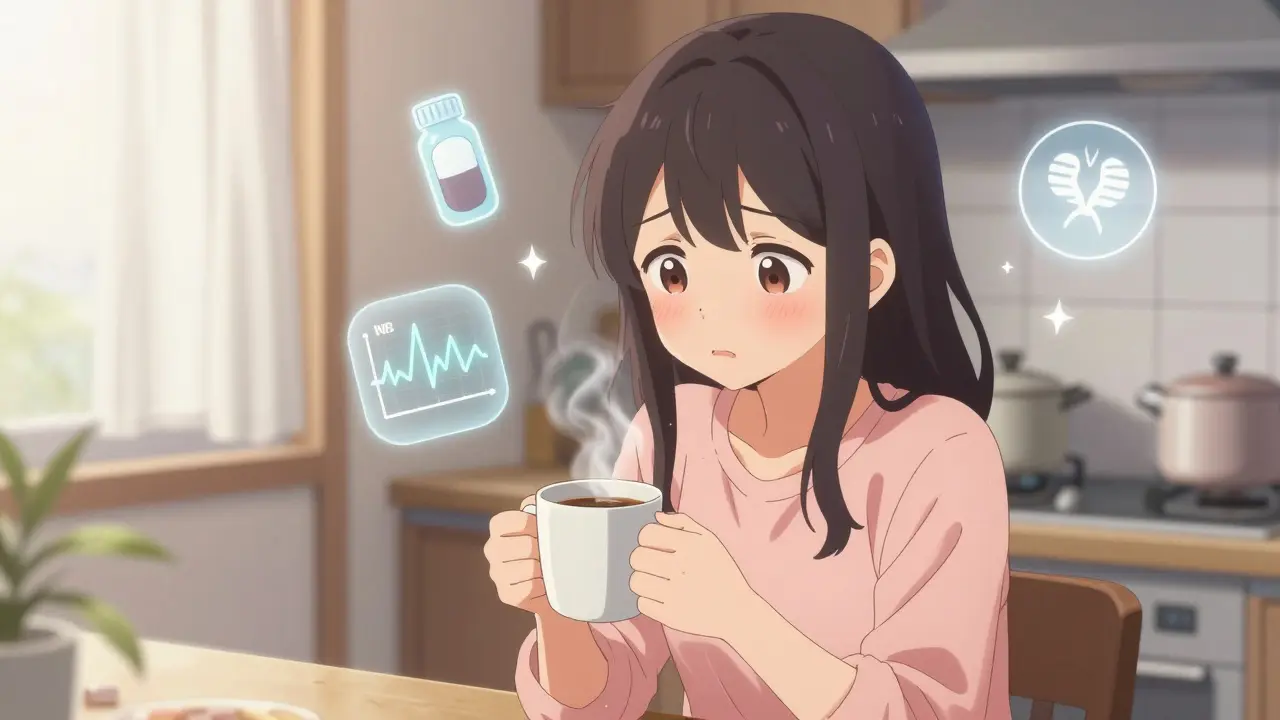
Most people drink coffee without thinking twice. But if you're on medication, that morning cup could be quietly messing with your treatment-sometimes in dangerous ways. Caffeine isn't just a pick-me-up. It's a powerful chemical that interacts with how your body processes many common drugs. These aren't rare edge cases. They're well-documented, clinically significant, and happening every day to people who have no idea what's going on.
How Caffeine Interferes With Your Medications
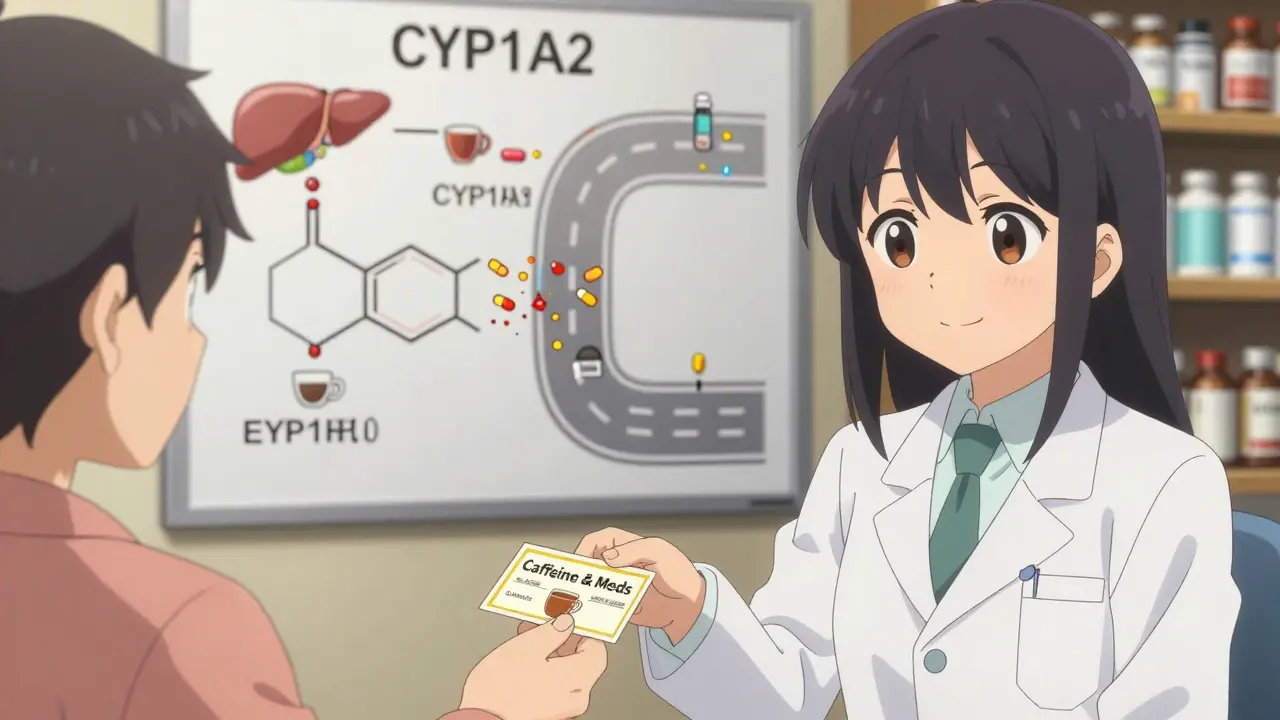
Caffeine doesn't just wake you up. It changes how your liver breaks down drugs. The enzyme CYP1A2 handles about 10% of all prescription medications, and caffeine blocks it. That means if you're taking something metabolized by this enzyme, caffeine can make it build up in your system-potentially to toxic levels-or prevent it from working at all.
Think of it like traffic. Your body uses CYP1A2 as a highway to clear drugs out. Caffeine slams on the brakes. Some drugs get stuck. Others never even get on the road. The result? Unpredictable effects. A medication that should lower your blood pressure might suddenly stop working. A blood thinner could turn into a bleeding risk.
High-Risk Medications: What to Watch Out For
Not all drugs react the same way. Some have clear, dangerous interactions with caffeine. Here are the big ones:
- Warfarin (Coumadin): Caffeine slows down how fast your body clears warfarin. That can raise your INR by 15-25% within 24 hours. An INR above 4.0 means your blood takes too long to clot. One study found 41% of warfarin users who drank more than 200 mg of caffeine daily had unexplained spikes in INR-and 17% ended up in the ER because of bleeding.
- Levothyroxine (Synthroid): Coffee reduces absorption by up to 55%. A patient on Reddit shared that after taking levothyroxine with coffee for three weeks, their TSH jumped from 1.8 to 8.7-clear evidence their thyroid meds weren't working. The American Thyroid Association says you must wait at least 60 minutes after taking the pill before drinking coffee.
- Theophylline (for asthma): Both caffeine and theophylline are broken down by the same enzyme. When you drink coffee while taking theophylline, levels can rise 15-20%. That can trigger nausea, rapid heartbeat, or even seizures at normal doses.
- Adenosine and Dipyridamole (used in cardiac stress tests): If you've had coffee, energy drinks, or even tea in the last 24 hours, these drugs can lose 70-90% of their effectiveness. That means your stress test could give false results, and your doctor might miss a heart problem.
- Ephedrine and Pseudoephedrine (in cold and allergy meds): Caffeine + these stimulants can spike your heart rate by 20-30 beats per minute. In one study, 68% of people taking ephedrine with caffeine saw systolic blood pressure rise over 30 mmHg. That’s a hypertensive crisis risk.
- Verapamil (a blood pressure drug): Coffee can reduce its effect by 25-30%. The reason? Caffeine competes with verapamil for absorption in the gut. Harvard Health recommends waiting at least two hours between coffee and this medication.
Antidepressants and Caffeine: A Hidden Trap
Many people take SSRIs like fluoxetine or sertraline for depression or anxiety. Caffeine doesn't make them stronger-it makes them weaker. Harvard Health found caffeine reduces absorption of fluvoxamine by about 33%. That means you might feel like your meds aren’t working, when in reality, you're just drinking too much coffee.
On Drugs.com, over 1,200 users reported caffeine-SSRI interactions. Sixty-three percent said they felt more anxious. Twenty-eight percent noticed their mood didn’t improve, even with consistent dosing. It’s not in your head. It’s in your liver.
Not all antidepressants react the same, though. Bupropion (Wellbutrin) doesn’t show significant interaction with caffeine. But if you're on an SSRI, cutting back on coffee might be the missing piece to feeling better.
Energy Drinks Are Worse Than Coffee
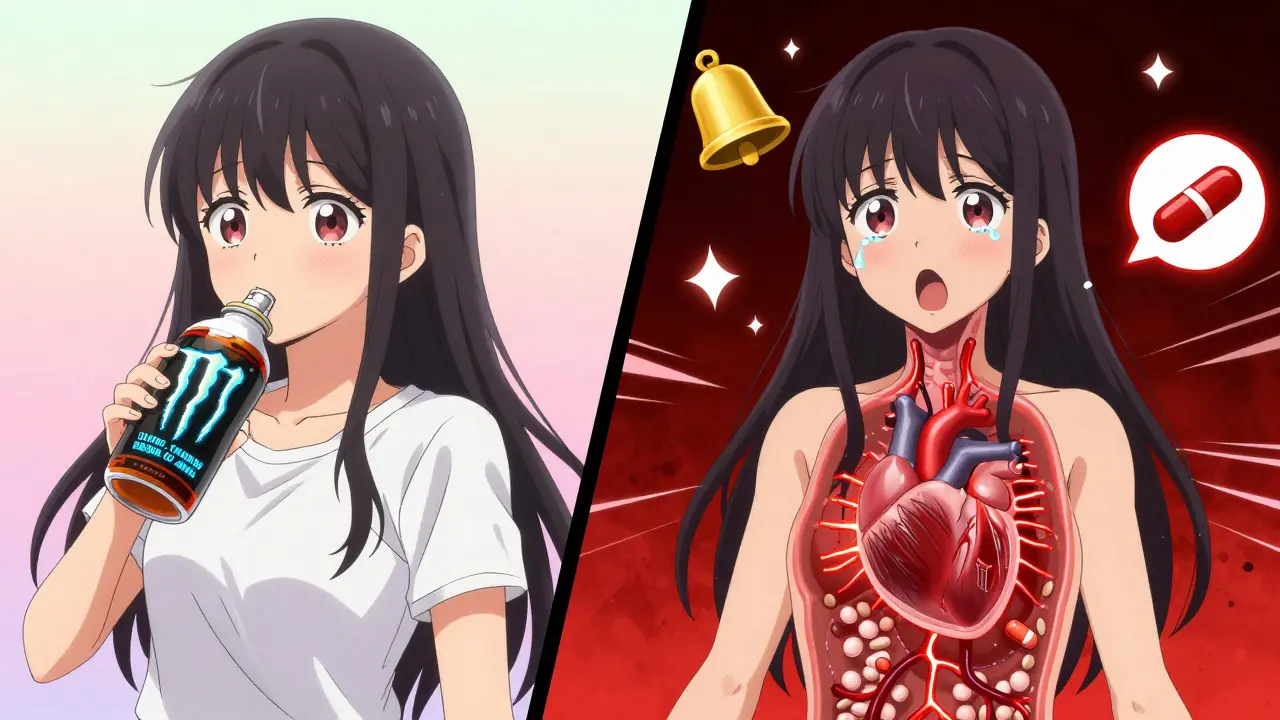
One cup of coffee has about 95-200 mg of caffeine. An energy drink? It can pack 80-300 mg-and that’s just the caffeine. They also contain taurine, ginseng, guarana, and sugar. These ingredients don’t just add flavor. They can independently affect drug metabolism and heart rhythm.
The FDA reported a 37% increase in caffeine-medication adverse events between 2020 and 2024. Energy drinks were behind 68% of the serious cases. A single can might be fine for a healthy person. But if you're on warfarin, theophylline, or a blood pressure med? That can be a recipe for trouble.
What You Should Do Right Now
You don’t need to quit coffee. But you do need to be smart.
- Check your meds. Look at the patient information leaflet. If it mentions caffeine, pay attention.
- Separate your coffee and meds. For levothyroxine: wait 60 minutes. For verapamil: wait 2 hours. For warfarin: keep your caffeine intake consistent. Don’t suddenly go from one cup to four.
- Track your intake. A tall Starbucks coffee is about 260 mg. A can of Red Bull is 80 mg. Know what you’re consuming.
- Don’t assume it’s safe. A 2024 JAMA study found 62% of patients had no idea caffeine could interfere with their meds-even though 89% drank it daily.
- Talk to your pharmacist. They’re trained to catch these interactions. Ask: “Does caffeine affect any of my medications?”
When to Call Your Doctor
Call if you notice any of these after changing your caffeine habits:
- Your blood pressure suddenly spikes or drops
- You feel unusually anxious, jittery, or heart palpitations
- Your thyroid levels (TSH) fluctuate without reason
- Your INR goes out of range for no clear reason
- Your antidepressant stops working
- You have unexplained bruising or bleeding
These aren’t normal side effects. They’re signs your medication isn’t working the way it should.
The Bigger Picture
This isn’t just about coffee. It’s about how we treat medication as something you just pop and forget. But your body is a complex system. What you eat, drink, or even take as a supplement can change how drugs behave.
Hospitals are starting to catch on. Epic Systems rolled out a caffeine-interaction alert in 47 hospitals in April 2025. Early results? A 29% drop in related adverse events. That means more people are being warned before something goes wrong.
By 2028, personalized caffeine guidance based on your genes could become standard. Some people metabolize caffeine fast. Others slow. That affects how much risk they face. Right now, we’re flying blind. But you don’t have to be.
Know your meds. Know your coffee. Talk to your doctor. Your safety isn’t about cutting out caffeine. It’s about understanding how it plays with the rest of your health.
Can I drink coffee if I’m on warfarin?
You can, but you must keep your caffeine intake consistent. Sudden increases-like going from one cup to three-can raise your INR by 15-25%, increasing bleeding risk. The FDA recommends avoiding large changes in daily caffeine consumption. If you normally drink coffee, keep it at the same level. Don’t start or stop abruptly.
How long after taking levothyroxine should I wait to drink coffee?
Wait at least 60 minutes. Coffee can reduce levothyroxine absorption by up to 55%. Even waiting 30 minutes isn’t enough. A 2023 study from University Hospitals confirmed that a full hour is needed for proper absorption. Take your pill with water on an empty stomach, then wait before your coffee.
Does caffeine make antidepressants less effective?
Yes, for some. Caffeine reduces absorption of fluvoxamine by about 33%. It can also worsen anxiety, which may make you feel like your SSRI isn’t working. If you’re on an SSRI and notice your mood or anxiety isn’t improving, cutting back on caffeine might help. Not all antidepressants are affected-bupropion, for example, doesn’t interact significantly.
Are energy drinks more dangerous than coffee with medications?
Yes. Energy drinks often contain 2-3 times more caffeine than a cup of coffee, plus other stimulants like taurine and ginseng that can interfere with drug metabolism. The FDA found that 68% of serious caffeine-medication interactions between 2020 and 2024 involved energy drinks. They’re not just caffeine-they’re chemical cocktails.
What should I do if I accidentally took my medication with coffee?
Don’t panic. One accidental mix-up won’t cause major harm. But don’t repeat it. For levothyroxine, wait until tomorrow to take your dose correctly. For warfarin, monitor for signs of bleeding (bruising, nosebleeds, dark stools) and mention it at your next INR check. If you’re on theophylline or a cardiac stress test drug, contact your doctor immediately.
Can I switch to decaf to avoid interactions?
Decaf coffee still has 2-15 mg of caffeine per cup-enough to interfere with some drugs, especially theophylline or if you’re a slow caffeine metabolizer. If you’re on a high-risk medication, it’s safer to avoid coffee altogether and stick with water, herbal tea, or caffeine-free beverages. Check with your pharmacist about your specific meds.
This post saved my life. I was on warfarin and drinking three cups of coffee a day without knowing it was messing with my INR. I had two scary bleeds in six months. After reading this, I cut back to one cup and kept it consistent. My INR stabilized within two weeks. Talk to your pharmacist. Seriously. They know more than your doctor sometimes.
Of course coffee interferes with meds. People are idiots. They think ‘natural’ means safe. Coffee is a stimulant drug. It’s not tea. It’s not ‘just a beverage.’ You’re literally poisoning your own treatment. If you can’t follow basic instructions, don’t blame the system.
Yo, I’m a pharmacist’s assistant and I see this ALL the time. People take Synthroid with their coffee and then wonder why they’re exhausted and gaining weight. I had a guy come in last week saying his ‘meds stopped working’-turns out he was chugging espresso right after his pill. We had to retest his TSH. He was shocked. But here’s the thing-most docs don’t even bring it up. That’s on the system, not the patient. Just ask. Always ask.
Energy drinks are the new devil. I used to think coffee was the problem, but then I saw a 22-year-old in the ER after mixing Red Bull with his beta-blocker. Heart rate hit 160. He thought it was ‘just a pre-workout.’ Bro. It’s not a game. You’re not a superhero. Your liver isn’t a superhero either.
Wait-so if I drink decaf, I’m still at risk?!!?? I thought decaf was safe!!?? I’ve been taking my blood pressure meds with decaf for years!!?? Is this why I’ve been dizzy??!!?? I need to call my doctor RIGHT NOW!! I feel like I’ve been lied to my whole life!!
They’re hiding this. The FDA knows. The drug companies know. They don’t want you to know coffee kills your meds. Why? Because they make billions selling you pills AND coffee. They want you sick. Wake up. This is a control tactic. You think your doctor cares? They’re paid by Big Pharma. Decaf is still poison. Water is the only safe thing.
Okay, but have you considered that caffeine is a mind-control agent? I mean, think about it-every morning, people are forced to drink this chemical to function. Who benefits? The corporations. The government. The hospitals. It’s all connected. The CYP1A2 enzyme? Probably a government lab experiment gone wrong. I’ve been off caffeine for 14 months. My anxiety dropped. My meds work. My dreams are clearer. You’re not just fighting coffee-you’re fighting the matrix.
It’s not about coffee. It’s about autonomy. We’ve been trained to see our bodies as broken machines that need constant pharmaceutical intervention. Caffeine isn’t the villain-it’s the mirror. It reveals how little we understand our own biology. We swallow pills like prayers and sip coffee like sacraments, never questioning the ritual. The real danger isn’t the interaction-it’s the belief that someone else knows what’s best for you. Your liver isn’t a highway. It’s a conversation. Are you listening?