
Bipolar Antidepressant Risk Calculator
Risk Assessment Tool
This calculator estimates your personalized risk of mood switching (mania or hypomania) when taking antidepressants for bipolar depression based on your specific circumstances. Please note: This is for informational purposes only and should not replace professional medical advice.
Your Risk Assessment
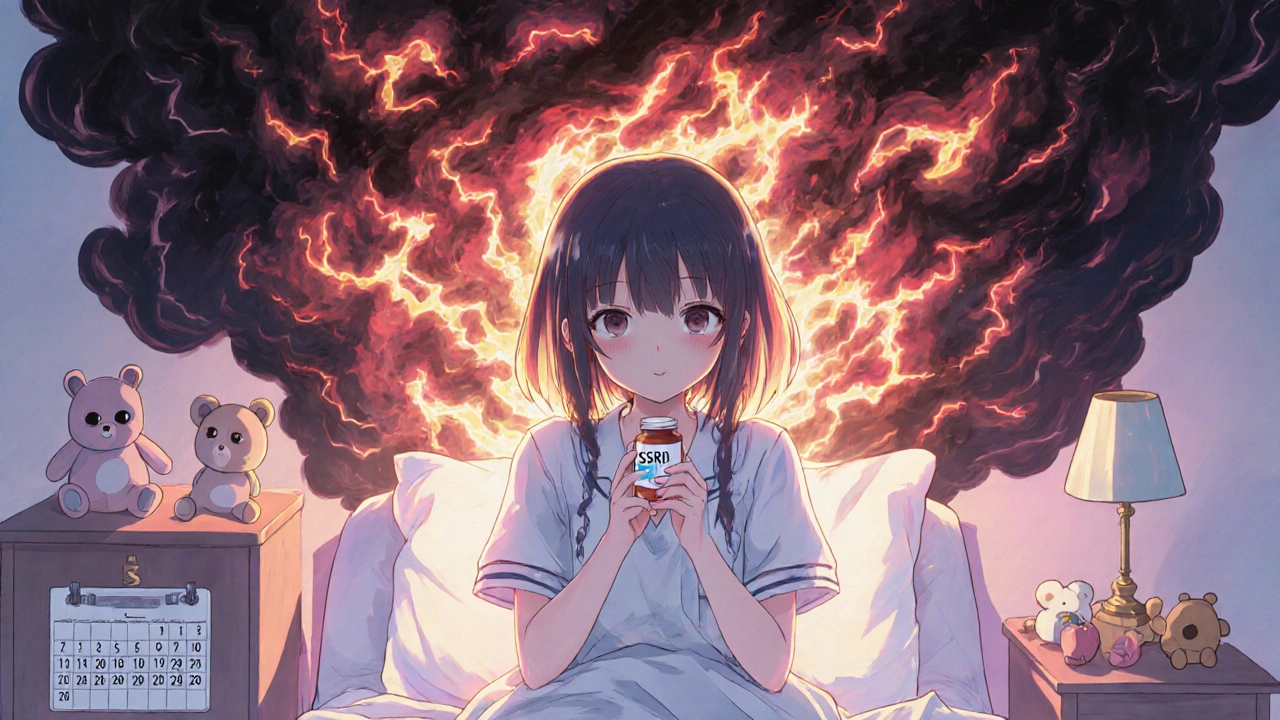
For decades, doctors treated bipolar depression the same way they treated regular depression: with antidepressants. It seemed logical. If the symptom is low mood, then lift the mood. But over time, a troubling pattern emerged. Many patients with bipolar disorder didn’t just feel better-they spiraled into mania, rapid cycling, or dangerous mixed states. The truth is, antidepressants can be dangerous in bipolar disorder, even when they’re used with good intentions.
Why Antidepressants Are a Double-Edged Sword in Bipolar Disorder
Antidepressants work by changing brain chemistry to ease sadness, fatigue, and hopelessness. In unipolar depression, they’re often the first line of defense. But bipolar disorder isn’t just depression with occasional highs. It’s a cycle of extreme mood swings, and antidepressants can accidentally flip the switch from depression into mania or hypomania. Studies show that about 12% of people with bipolar disorder who take antidepressants experience a mood switch-meaning they go from feeling low to feeling overly energetic, impulsive, or even psychotic. That number jumps to 31% in real-world, retrospective data. For comparison, the natural switch rate without any medication is around 10.7%. So antidepressants don’t just help-they add risk. The risk isn’t the same for everyone. People with Bipolar I, a history of antidepressant-induced mania, or rapid cycling (four or more mood episodes a year) are at much higher risk. One study found that if you’ve had one antidepressant-triggered episode before, you’re 3.2 times more likely to have another. And if you’re already in a mixed state-feeling depressed but also agitated, irritable, or restless-the chance of a switch can exceed 30%.Not All Antidepressants Are Created Equal
Some antidepressants are riskier than others. Tricyclics like amitriptyline and SNRIs like venlafaxine carry the highest risk-up to 25% for mood switching. SSRIs like sertraline or escitalopram are a bit safer, with switch rates around 8-10%. Bupropion (Wellbutrin) is often preferred because it doesn’t affect serotonin as much, and some studies suggest it’s less likely to trigger mania. But even SSRIs aren’t risk-free. One patient I spoke with started sertraline for what her doctor thought was depression. Within two weeks, she was sleeping only two hours a night, spending $5,000 on online shopping, and convinced she was going to start a tech company. She ended up in the hospital. Her doctor had missed the fact that she’d had two prior hypomanic episodes-signs of bipolar disorder, not just depression. The problem isn’t just the drug class. It’s the way antidepressants are used. Monotherapy-taking an antidepressant alone-is a major red flag. The International Society for Bipolar Disorders (ISBD) says it should never happen in Bipolar I. Even in Bipolar II, antidepressants should only be used short-term and always paired with a mood stabilizer like lithium or valproate, or an atypical antipsychotic like quetiapine or lurasidone.What Are the Alternatives?
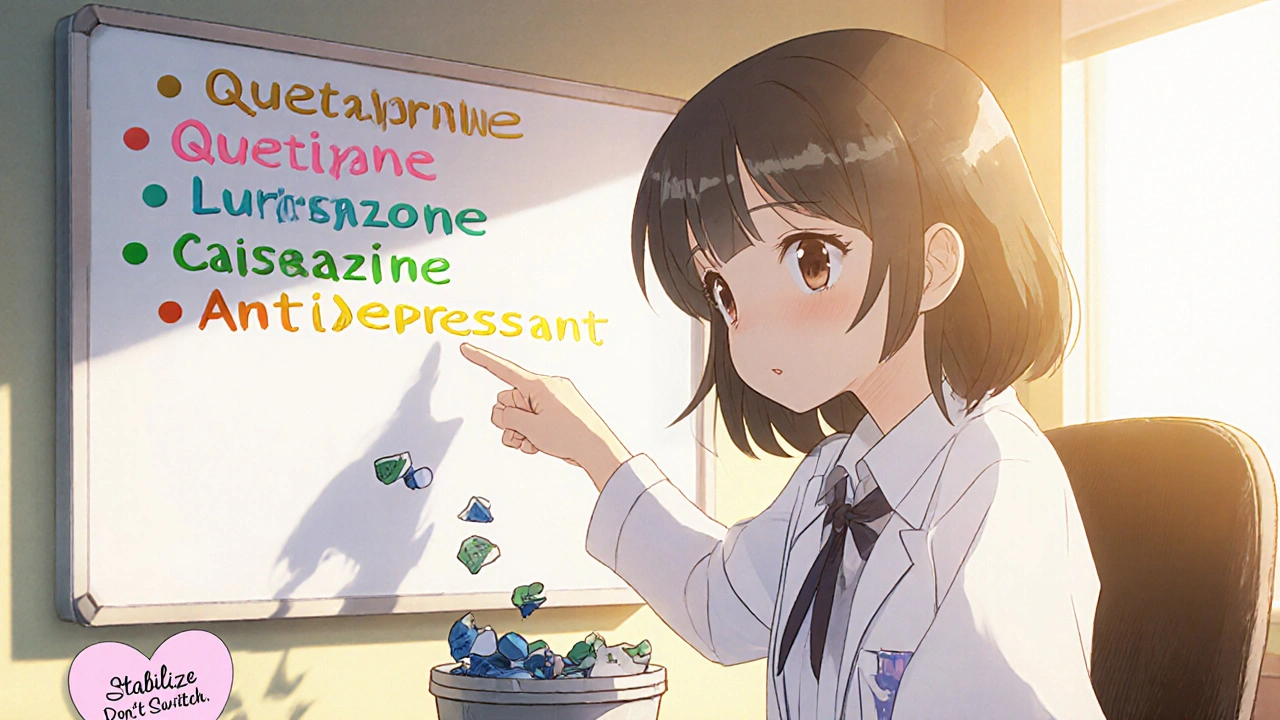
The FDA has approved four medications specifically for bipolar depression-not antidepressants:- Quetiapine (Seroquel): Works for about 50-60% of people, with less than 5% risk of switching.
- Lurasidone (Latuda): About 50% response rate, only 2.5% switch risk.
- Cariprazine (Vraylar): 48% response rate, 4.5% switch risk.
- Olanzapine-fluoxetine (Symbyax): A combo pill that works, but carries weight gain and metabolic risks.
When Might Antidepressants Be Used-And How?
There are rare cases where antidepressants might make sense. The ISBD guidelines say: only for severe, treatment-resistant depression after trying at least two FDA-approved options. And even then, only as a short-term bridge. Best practices include:- Always pair with a mood stabilizer or antipsychotic-never alone.
- Use only SSRIs or bupropion-avoid tricyclics and SNRIs.
- Limit use to 8-12 weeks. If there’s no improvement by then, stop.
- Monitor weekly for the first month. Watch for sleep loss, racing thoughts, irritability, impulsivity, or grandiosity.
- Stop immediately if any manic symptoms appear-even mild ones.
The Gap Between Guidelines and Real Life
Despite clear guidelines, antidepressants are still overused. In community clinics, up to 80% of bipolar patients get prescribed them. In academic centers, it’s closer to 50%. Why? Because it’s easier. Prescribing an SSRI feels familiar. It’s what patients expect. And many doctors aren’t trained in bipolar-specific care. There’s also pressure from patients. Someone in deep depression will beg for something that works fast. Antidepressants kick in in 2-4 weeks. Mood stabilizers can take 4-6 weeks or longer. So doctors give them the quick fix-and don’t always warn them about the long-term danger. The result? A $1.2 billion market in the U.S. alone for off-label antidepressant use in bipolar disorder. Meanwhile, the approved alternatives-safer, more effective-are underused.What About Suicide Risk?
Some argue that antidepressants reduce suicide risk in bipolar depression. One long-term study did find lower suicide rates in patients taking them. But other studies show the opposite-especially during mixed episodes, when people are both depressed and agitated. That’s when suicide risk is highest. The truth? We don’t have a clear answer. What we do know is this: mood stabilizers and atypical antipsychotics reduce suicide risk without triggering mania. Antidepressants might help some, but they can also push people over the edge.
What Patients Need to Know
If you have bipolar disorder and your doctor suggests an antidepressant, ask:- Have I been properly diagnosed? (40% of bipolar cases are misdiagnosed as unipolar depression at first.)
- Am I on a mood stabilizer or antipsychotic right now?
- What’s my risk of switching based on my history?
- How long will I be on this? What happens if I start feeling too energetic or irritable?
- Are there safer, FDA-approved alternatives?
The Future of Treatment
New treatments are on the horizon. Esketamine nasal spray (Spravato), approved for treatment-resistant depression, showed a 52% response rate in bipolar depression with only 3.1% switch risk in a 2023 trial. Researchers are also studying drugs that combine antidepressant and mood-stabilizing effects in one pill. Genetic testing might soon help predict who’s at risk for antidepressant-induced mania. One study found people with a certain version of the serotonin transporter gene (LL genotype) had over three times the risk of switching. But until these become standard, the safest approach is simple: avoid antidepressants unless absolutely necessary. And even then, use them briefly, with a mood stabilizer, and under close watch.Bottom Line
Antidepressants aren’t the villain. But in bipolar disorder, they’re rarely the hero. The data is clear: their benefits are small, their risks are real, and safer options exist. If you’re living with bipolar disorder, you deserve treatment that doesn’t just mask symptoms-it stabilizes your life.Can antidepressants cause mania in people with bipolar disorder?
Yes. Antidepressants can trigger mania or hypomania in people with bipolar disorder, especially if taken without a mood stabilizer. Studies show about 12% of patients experience a mood switch, with risk rising to 30% or higher in those with a history of rapid cycling, mixed episodes, or prior antidepressant-induced mania.
Are SSRIs safer than other antidepressants for bipolar depression?
SSRIs carry a lower risk of mood switching (8-10%) compared to tricyclics (15-25%) or SNRIs. Bupropion is also considered lower risk because it affects dopamine and norepinephrine more than serotonin. But no antidepressant is completely safe in bipolar disorder. Even SSRIs can trigger mania, especially without a mood stabilizer.
What are the FDA-approved treatments for bipolar depression?
The FDA has approved four medications specifically for bipolar depression: quetiapine (Seroquel), lurasidone (Latuda), cariprazine (Vraylar), and the combination of olanzapine and fluoxetine (Symbyax). These are preferred over antidepressants because they treat depression without increasing the risk of mania or rapid cycling.
How long should antidepressants be used in bipolar disorder?
If used at all, antidepressants should be limited to 8-12 weeks as a short-term adjunct to a mood stabilizer or antipsychotic. Long-term use increases the risk of rapid cycling and episode recurrence. Most guidelines recommend stopping them after this window, even if the depression improves.
Why do doctors still prescribe antidepressants for bipolar disorder?
Many doctors prescribe them because they’re familiar, patients ask for them, and it’s easier than managing complex mood stabilizers. Also, 40% of bipolar cases are initially misdiagnosed as unipolar depression. In community settings, up to 80% of bipolar patients receive antidepressants, despite guidelines recommending caution. Only 30% of community psychiatrists follow current best practices.
Can antidepressants make bipolar disorder worse over time?
Yes. Long-term use (over 24 weeks) is linked to more frequent mood episodes and faster cycling. One study found people on long-term antidepressants had a 1.7-fold increase in episode frequency. They may also interfere with the effectiveness of mood stabilizers. For many, the short-term relief isn’t worth the long-term instability.
They’re hiding the truth. Pharma’s pushing antidepressants because they make billions. Mood stabilizers? Cheap generics. No profit. That’s why your doctor doesn’t know the data.
I never realized how common this is. My cousin was on sertraline for a year and ended up in the ER after spending all her savings. No one told her it could trigger mania. This needs to be taught in med school.
Big Pharma owns your doctor. Watch out.
It’s appalling that so many clinicians still treat bipolar disorder like a simple mood swing. This isn’t just negligence-it’s malpractice dressed up as compassion. Patients deserve better than quick fixes and wishful thinking.
Let’s be real-antidepressants in bipolar are like handing a drunk driver the keys to a Ferrari. You think you’re helping, but you’re just setting them up for a crash. And yeah, the stats prove it. Stop pretending it’s ‘worth a try.’ It’s not.
I’ve been living with Bipolar I for 18 years, and I’ve seen this play out over and over. I was prescribed fluoxetine back in 2007 after a depressive episode. Within three weeks, I was working 20-hour days, convinced I was going to revolutionize the electric car industry, and I maxed out three credit cards. My psychiatrist called it ‘a good response.’ I spent six weeks in the hospital. It took me years to find a doctor who knew what they were doing. The system is broken. We need better training, better guidelines, and better accountability. And yes-I’m still on lithium. It’s not glamorous. But it keeps me alive.
As someone from India where mental health is still stigmatized, I’m so glad this article exists. In my community, people think bipolar is just ‘being dramatic’ or ‘not praying enough.’ But the science here is clear: antidepressants without mood stabilizers are dangerous. My brother was misdiagnosed for 5 years and put on sertraline-he had 3 manic episodes in 14 months. Now he’s on quetiapine and doing amazing. Please, if you or someone you love has bipolar, ask the right questions. Don’t let ignorance cost your stability.
This is such an important conversation. Thank you for sharing this with such clarity and care. For anyone reading this who feels hopeless or overwhelmed-please know that effective, safer treatments exist. You are not broken. You are not failing. You deserve care that honors the full complexity of your condition. And you are not alone in this journey.
The pharmacokinetic profiles of SSRIs in bipolar populations demonstrate a significant dysregulation of the HPA axis and serotonergic modulation, which synergistically potentiates dopaminergic hyperactivity during the depressive phase. This neurochemical cascade, compounded by genetic polymorphisms such as 5-HTTLPR LL genotype, creates a perfect storm for manic transmutation. The ISBD guidelines are not merely recommendations-they are neurobiological imperatives. Failure to adhere constitutes a violation of the principle of non-maleficence.
I’m a therapist, and I’ve seen so many clients come in after being misdiagnosed with depression. One woman came in crying because she’d been on antidepressants for three years and felt like she was losing her mind. She didn’t know she’d had hypomania before. Once we switched her to lamotrigine and stopped the SSRI, she said it was like someone turned off a loud alarm she didn’t know was screaming. It’s heartbreaking how often this happens. We need more education-not just for patients, but for primary care docs who are the first line.
My doctor put me on escitalopram for ‘depression’ and I didn’t realize I was going manic until I bought a jet ski and tried to sell my car to fund a podcast about alien contact. I didn’t know I had bipolar until I was hospitalized. Now I’m on lurasidone and I sleep through the night. Don’t let a quick fix ruin your life. Ask for the FDA-approved options.
So what? Maybe antidepressants cause mania… but maybe mania is just ‘awake’ and antidepressants just make you feel normal. Who says being depressed is the ‘real’ you? Maybe the high is the truth and the low is the lie.
…and yet… you know… people… still… take them…? Why? Why is this still happening? It’s not just ignorance… it’s… something deeper… isn’t it?
Let’s quantify the risk-benefit ratio with precision: NNT=29.4 for antidepressants in bipolar depression versus NNT=6.2 for quetiapine. The NNH (number needed to harm) for antidepressant-induced mania is 8.3. This is not a marginal trade-off. It is a catastrophic failure of evidence-based medicine. The continued off-label use of antidepressants in bipolar disorder is not clinical practice-it is a public health scandal.